Algeria
 Egypt
 Libya
 Morocco
 Sudan
 Tunisia
 Benin
 Burkina Faso
 Cabo Verde
 Côte d'Ivoire
 Ghana
 Guinea
 Guinea-Bissau
 Liberia
 Mali
 Mauritania
 Niger
 Nigeria
 Senegal
 Sierra Leone
 The Gambia
 Togo
 Cameroon
 Central African Republic
 Chad
 DR Congo
 Equatorial Guinea
 Gabon
 Republic of the Congo
 São Tomé and Príncipe
 Burundi
 Comoros
 Djibouti
 Eritrea
 Ethiopia
 Kenya
 Madagascar
 Malawi
 Mauritius
 Rwanda
 Seychelles
 Somalia
 South Sudan
 Tanzania
 Uganda
 Angola
 Botswana
 Eswatini
 Lesotho
 Namibia
 South Africa
 Zambia
 Zimbabwe
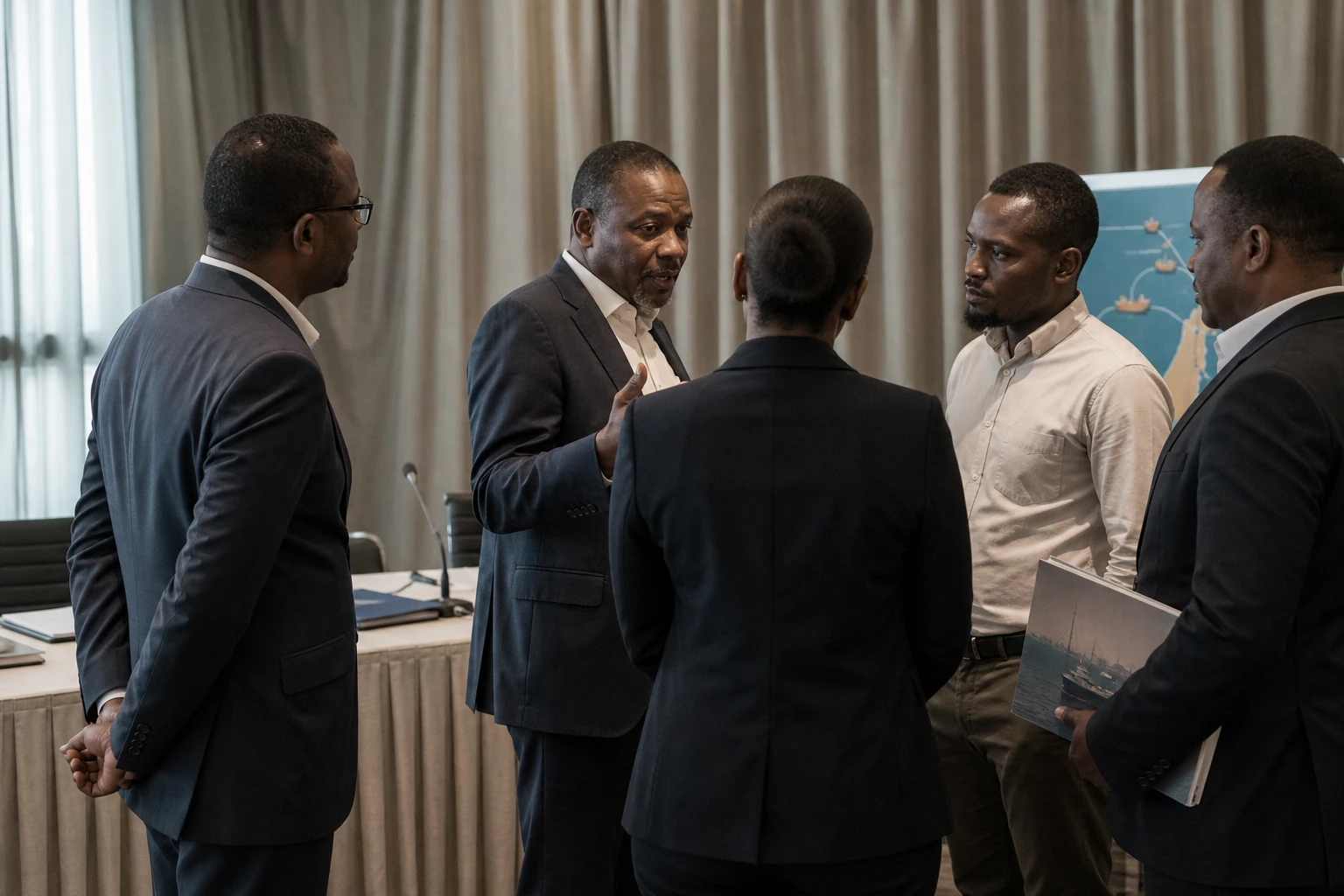
A gas project shaped by ports, logistics and local jobs
In Mozambique, major energy projects are measured not only by their financial returns. They are also judged by the role given to national companies, port infrastructure and skilled jobs that remain in the country. In Cabo Delgado, in northern Mozambique, this equation has become central to Rovuma LNG, ExxonMobil’s megaproject in the Rovuma Basin. The project is advancing in stages, and the latest contracts announced show that technical preparations are speeding up, even though a final investment decision has yet to be taken.
The issue, however, goes beyond the national context. Mozambique is a member of SADC, the Southern African Development Community, which has 16 member states, and of the African Union, which Maputo has belonged to since 1975. Across the region, gas projects are being scrutinised as engines of growth, sources of public revenue and tests of economic sovereignty.
What the latest contracts reveal
ExxonMobil Mozambique, on behalf of the Mozambique Rovuma Venture partners, has signed a letter of intent with Saipem and Jan de Nul for engineering, procurement and technical support services for the upstream part of the project. This step covers, in particular, the detailed development of 18 wells, as well as a network of subsea pipelines and manifolds, ahead of a final investment decision targeted for 2026.
At the same time, two Mozambican companies, CFML Logistic S.A. and Alistair Group Mozambique LDA, have won contracts to provide logistics base services in Pemba. CFML Logistic is expected to manage the land and basic infrastructure up to Pemba port terminal. Alistair Group Mozambique will provide support operations for drilling campaigns and offshore activities. For ExxonMobil, the awards demonstrate the principle of local content: the share of goods, services and skills supplied by businesses in the host country.
This series of contracts is part of a ramp-up already visible over the past few months. In June 2026, Standard Bank estimated that Rovuma LNG could add about $11 billion a year to Mozambique’s GDP. The same study cited an operational impact of $8 billion and around 150,000 job opportunities across the country. These projections should be treated with caution, as they depend on the project being delivered and production being ramped up. But they confirm the scale of the economic bet.
A project reworked after the 2021 suspension
Rovuma LNG is part of offshore Area 4, off the coast of Cabo Delgado province. The project envisages 12 trains of 1.5 million tonnes each, for total capacity of 18 million tonnes of liquefied natural gas a year. ExxonMobil also says that this initial phase would make RLNG one of the largest private investments ever made in Africa, provided the FID is approved.
The Mozambique Rovuma Venture consortium comprises state-owned Empresa Nacional de Hidrocarbonetos, Italy’s Eni, China National Petroleum Corporation, South Korea’s Korea Gas Corporation and XRG, the Emirati entity that acquired Galp’s stake. ExxonMobil is the project’s delegated operator. This structure illustrates the usual model for major Mozambican gas developments: a national resource, multiple partners and heavy reliance on international capital decisions.
The project was suspended after the 2021 armed attacks in northern Cabo Delgado, and the force majeure clause then froze work. ExxonMobil now says that force majeure has been lifted and that Rovuma LNG is continuing its FEED phase: the front-end engineering work that precedes the final investment decision. In practice, the lifting of force majeure does not yet guarantee that construction will begin, but it signals that the project has moved out of a complete standstill and back into active preparation.
The Mozambican government is also monitoring the progress of other gas projects in the Rovuma Basin. The gradual return of Mozambique LNG in Area 1 showed in January 2026 that security remains a decisive factor for investors and the state alike. That restart provides a framework for Rovuma LNG: in Cabo Delgado, the gas economy remains inseparable from security, public guarantees and the ability to protect staff, roads, ports and industrial sites.
What is at stake for Maputo, Cabo Delgado and the region
For Maputo, the stakes are twofold. On one hand are the promise of future revenues, jobs and infrastructure. On the other is the need to ensure that a project on this scale does not remain merely an offshore operation run from abroad. The contracts awarded to CFML Logistic and Alistair Group Mozambique are therefore more than symbolic. They show that the local value chain is beginning to be integrated into project preparations, particularly around Pemba, an important logistics hub for the north of the country.
For Cabo Delgado, the impact will depend above all on how these promises translate into practice. In a province scarred by armed violence and displacement, the issue is not only the scale of the revenues announced. It is also whether industrial activity will create stable jobs, markets for small and medium-sized businesses, and infrastructure useful beyond the gas sector. ExxonMobil also highlights local spending of about $6 billion and an impact on Mozambique’s workforce during the offshore and onshore phases. Here, too, the question will be how much is actually captured by companies and workers in the country.
At regional level, Rovuma LNG is part of a broader competition to attract capital, engineering expertise and contracts in the Indian Ocean and Southern Africa. SADC is watching these projects closely because they could boost export revenues, strengthen logistics corridors and, in time, support regional energy trade. But they also underline a simple reality: without lasting security, strong institutions and credible local content, megaprojects risk generating more value externally than domestic transformation.
The next step will therefore be the most sensitive: the final investment decision. If it comes in 2026 as expected, it will show whether Rovuma LNG is finally entering its decisive phase or remains subject to financial, technical and security considerations. For Mozambique, the project is about more than gas. It touches on a development strategy, economic sovereignty and regional integration whose contours Southern Africa is already following.