Algeria
 Egypt
 Libya
 Morocco
 Sudan
 Tunisia
 Benin
 Burkina Faso
 Cabo Verde
 Côte d'Ivoire
 Ghana
 Guinea
 Guinea-Bissau
 Liberia
 Mauritania
 Niger
 Nigeria
 Senegal
 Sierra Leone
 The Gambia
 Togo
 Cameroon
 Central African Republic
 Chad
 DR Congo
 Equatorial Guinea
 Gabon
 Republic of the Congo
 São Tomé and Príncipe
 Burundi
 Comoros
 Djibouti
 Eritrea
 Ethiopia
 Kenya
 Madagascar
 Malawi
 Mauritius
 Mozambique
 Rwanda
 Seychelles
 Somalia
 South Sudan
 Tanzania
 Uganda
 Angola
 Botswana
 Eswatini
 Lesotho
 Namibia
 South Africa
 Zambia
 Zimbabwe
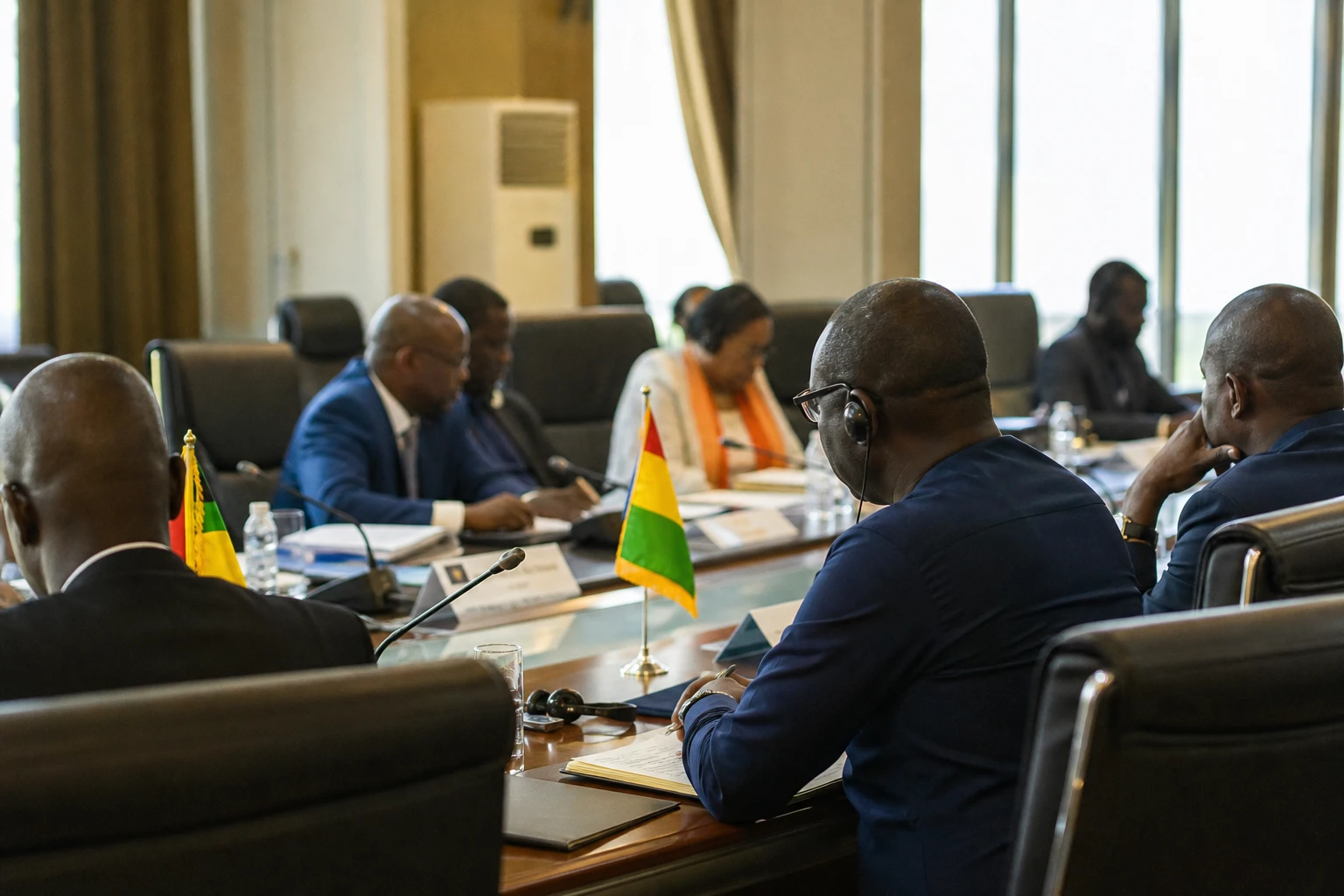
In Bamako, a legal case involving more than two people
In a capital where any public statement can quickly become a test for institutions, the case of Youssouf Bathily, better known as Ras Bath, says more than what will happen to a commentator. It also speaks to the tensions running through Mali between public order, social criticism and the space left for dissent in the public sphere.
The trial comes at a particular institutional moment. Mali has no longer been a member of ECOWAS since 29 January 2025, a withdrawal that is now effective, according to the West African organisation. At the same time, Bamako is part of the Alliance of Sahel States alongside its neighbours Burkina Faso and Niger, shifting some of the region’s usual reference points.
The Ras Bath case did not begin in 2026. Its roots lie in his arrest in March 2023, following remarks about the death of former Prime Minister Soumeylou Boubèye Maïga. Since then, several sources have described lengthy proceedings, marked by pre-trial detention and repeated adjournments before Bamako’s courts.
What the court of appeal is examining, and what the case says about Mali
According to the judicial calendar published in Bamako, the criminal division of the court of appeal has scheduled a hearing for Mohamed Youssouf Bathily on 10 August 2026. Other Malian media have confirmed the date, placing it among several closely watched cases, including those of Ben le Cerveau and Commander Daouda Konaté.
The charges mentioned at the hearing were “criminal conspiracy” and undermining the standing of the state, its institutions and its leaders. An activist also facing prosecution, known for her messages about the high cost of living, said she had wanted to alert the authorities to rising prices for basic necessities. The legal debate focused in part on audio recordings presented as evidence.
For the defence, the central question remains whether the proceedings were conducted properly and what weight should be given to the recordings submitted as evidence. The prosecution, by contrast, is seeking to establish a link between several defendants and an attempt to attack the institutions. Between the two, the court is not judging words alone. It is also testing the ability of Mali’s justice system to convince the public that it is acting on strictly legal grounds.
The social context gives the case particular resonance. The rising cost of living regularly fuels public statements, especially in Bamako, where inflation is immediately visible in markets, urban transport and household shopping baskets. A mobilisation against the high cost of living affects salaried households, informal-sector traders and rural households coming to sell in the city in different ways. The case thus highlights a real economic problem, as well as how it may be dealt with by political and judicial authorities.
At the same time, Mali’s authorities are seeking to show that they control the judicial calendar and are strengthening the capital’s security and oversight apparatus. Recent official communications about Bamako’s police, tax services and justice system all express the same ambition: to reassert control over the organisation of the state and public discipline. Ras Bath’s trial is part of this period of institutional consolidation, but it also reveals the limits of that effort as perceived by some members of the public.
The case’s significance extends beyond Mali. In the Sahel, trials involving political, trade union or media figures are watched as indicators of how open public debate is. In Bamako, as in Ouagadougou or Niamey, the question is not only who is being prosecuted. It is what space remains for criticism in an environment where states often invoke sovereignty, security and stability to justify their choices.
The case should therefore be followed on two fronts. First, for its legal outcome, which will show whether the charges stand up before the Bamako court of appeal. Second, for its political significance, as it measures the relationship between power, dissent and justice in Mali after ECOWAS, now more closely aligned with the Sahelian framework than with the traditional West African model.