Algeria
 Egypt
 Libya
 Morocco
 Sudan
 Tunisia
 Benin
 Burkina Faso
 Cabo Verde
 Côte d'Ivoire
 Ghana
 Guinea
 Guinea-Bissau
 Liberia
 Mali
 Mauritania
 Niger
 Nigeria
 Senegal
 Sierra Leone
 The Gambia
 Togo
 Cameroon
 Central African Republic
 Chad
 DR Congo
 Equatorial Guinea
 Gabon
 Republic of the Congo
 São Tomé and Príncipe
 Burundi
 Comoros
 Djibouti
 Eritrea
 Ethiopia
 Kenya
 Malawi
 Mauritius
 Mozambique
 Rwanda
 Seychelles
 Somalia
 South Sudan
 Tanzania
 Uganda
 Angola
 Botswana
 Eswatini
 Lesotho
 Namibia
 South Africa
 Zambia
 Zimbabwe
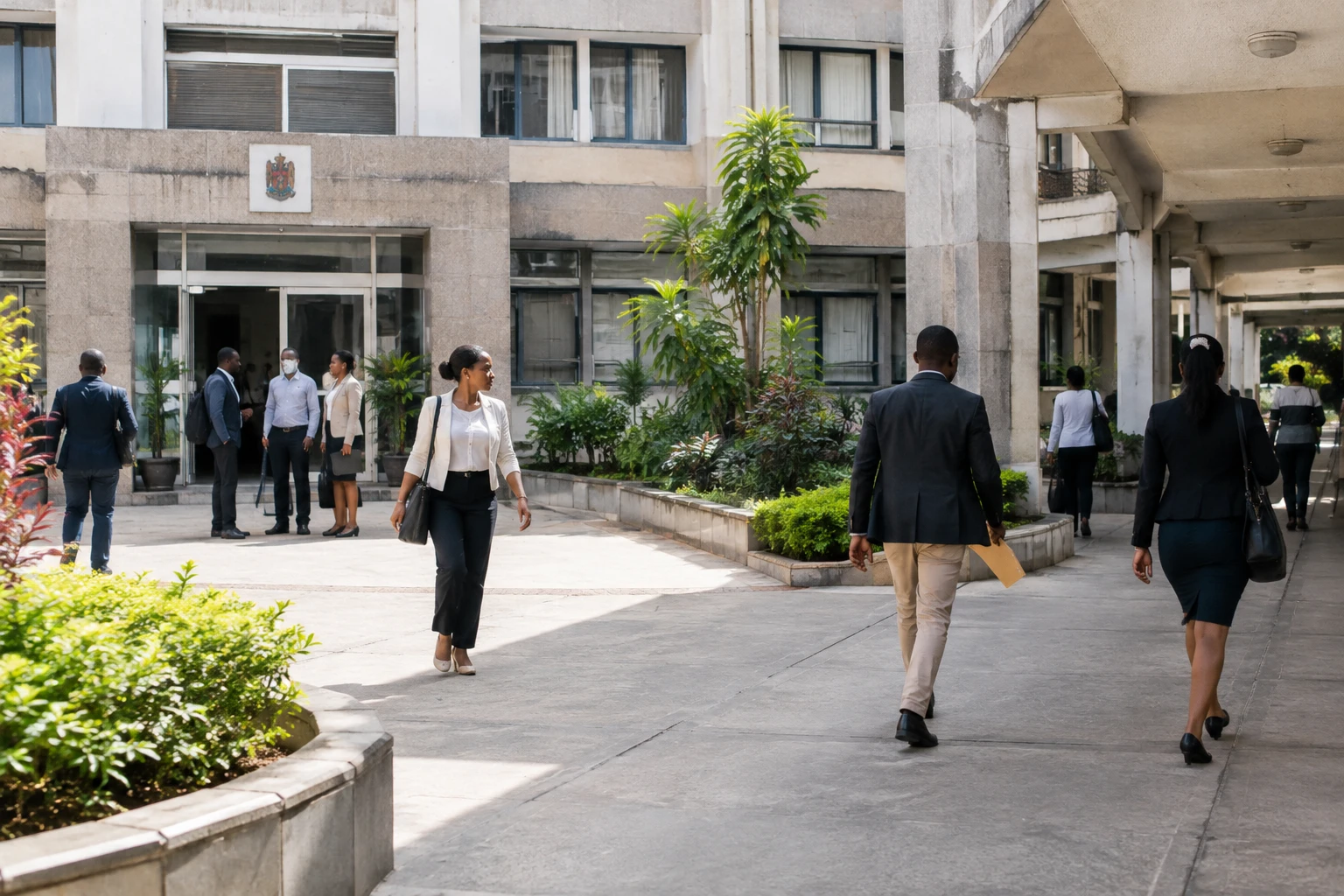
A year after the political rupture of 12 October 2025, Andry Rajoelina has not disappeared from the Malagasy political scene. But he no longer wields power from Antananarivo: since his departure, his most visible moves have taken place abroad, while Madagascar is still seeking a lasting political solution.
A crisis born in the streets, decided by the army
The chain of events that led to the former president’s fall began on 25 September 2025. Young people first took to the streets to protest water and electricity cuts. The mobilisation then broadened into a more general rejection of the government. Soldiers, including members of the CAPSAT unit, eventually joined the movement.
On 12 October, Rajoelina left Madagascar. The following day, he spoke from an undisclosed location without announcing his resignation. On 14 October, the military declared that it was taking power. Colonel Michaël Randrianirina was subsequently sworn in as president of the transition on 17 October. The rapid succession of these announcements fuelled controversy over the legality of the change of power.
Rajoelina’s departure does not erase the causes of the protests. Outages affecting essential services acted as a trigger, but the mobilisation also expressed distrust of institutions and political leaders. For residents, the immediate concern remains public services and living conditions. For the young people who mobilised, the challenge is also to ensure that their movement does not lead merely to a change of leaders.
From exile to the regional diplomatic stage
The former president is living in the United Arab Emirates, according to available information. His most notable public reappearance took place in Eswatini on 6 February 2026, during a meeting with King Mswati III. The pan-African news agency APA and TV5MONDE, citing AFP, both reported the visit.
The king described Rajoelina’s ousting as unconstitutional, according to accounts of the meeting. Madagascar’s transitional authorities disputed the right of a former head of state to present himself abroad as the country’s legitimate representative. The response turned a protocol visit into a diplomatic dispute. It shows that exile does not mean withdrawal: Rajoelina is seeking to retain a place in the regional debate, even without an official mandate.
Eswatini’s choice of venue matters. The kingdom is a member of the Southern African Development Community, or SADC, a regional organisation of which Madagascar is also a member. The welcome extended to the former president therefore touched on relations between neighbouring states and the rules of diplomatic representation. However, it did not in itself establish regional support for his return to power.
In August 2025, a few weeks before the protests, Antananarivo hosted the SADC summit, and Rajoelina held the organisation’s rotating presidency. The contrast is stark: the man who represented the organisation at the time left his country two months later, while the military transition had to respond to calls for the restoration of constitutional order from the African Union and SADC.
A divided former camp, justice still in question
In Madagascar, the former president’s camp has fragmented. Some of his former allies have joined the new authorities, while others have left the country or are facing prosecution. Press reports have cited detentions and convictions involving figures associated with the former administration. These cases must be examined individually: an arrest or conviction is not enough to establish the responsibility of other members of the ousted government.
Rajoelina’s own legal position remains a separate matter. Criticism concerning the management of public resources has been reported, but a trial requires verifiable procedural steps and judicial decisions. It is therefore necessary to distinguish between allegations, possible investigations and guilt established by a court. The available source material does not support presenting a trial or indictment of the former president as a confirmed fact.
Another sensitive issue: the transitional authorities stripped Rajoelina of Malagasy nationality after his French nationality came to light; several press reports say he acquired it in 2014. The issue had already sparked debate over his eligibility for the 2023 presidential election. The measure taken after his departure is a political and administrative act with significant consequences; its legal implications should not be confused with a ruling on the conduct of his former government.
For former officials and citizens alike, the credibility of the justice system will depend on procedures that are public, consistent and applicable to everyone. A transition that punishes its opponents without judicial safeguards risks undermining its promise of renewal. Conversely, a failure to act on documented allegations would fuel the distrust already expressed in the streets.
The transition at the centre of the next power struggle
The transitional president has announced a period of up to two years before new elections. This timetable leaves Madagascar’s institutions with a specific task: to define a road map, clarify the rules for the vote and organise a dialogue that is not limited to the authorities in power. The young people who mobilised, political parties, local authorities and civil society have different interests, but their participation will shape the process’s legitimacy.
The implications extend beyond Madagascar. The African Union has called for the restoration of constitutional order and is co-ordinating its efforts with SADC. The issue puts two principles in tension: condemning military seizures of power and responding to popular protests that weaken governments. For regional organisations, the challenge is not to reduce the crisis to a choice between the former president and the army, but to monitor the role given to civilians and the holding of credible elections.
A year after his departure, Rajoelina therefore remains an actor in the crisis, but is not its sole centre of gravity. His ability to secure foreign support says nothing about what the Malagasy people want, nor does it resolve questions of justice and the election timetable. The next test will be how the transition turns a mobilisation sparked by essential services into institutions capable of being held to account.