Algeria
 Egypt
 Libya
 Morocco
 Sudan
 Tunisia
 Benin
 Burkina Faso
 Cabo Verde
 Côte d'Ivoire
 Ghana
 Guinea
 Guinea-Bissau
 Liberia
 Mali
 Mauritania
 Niger
 Nigeria
 Sierra Leone
 The Gambia
 Togo
 Cameroon
 Central African Republic
 Chad
 DR Congo
 Equatorial Guinea
 Gabon
 Republic of the Congo
 São Tomé and Príncipe
 Burundi
 Comoros
 Djibouti
 Eritrea
 Ethiopia
 Kenya
 Madagascar
 Malawi
 Mauritius
 Mozambique
 Rwanda
 Seychelles
 Somalia
 South Sudan
 Tanzania
 Uganda
 Angola
 Botswana
 Eswatini
 Lesotho
 Namibia
 South Africa
 Zambia
 Zimbabwe
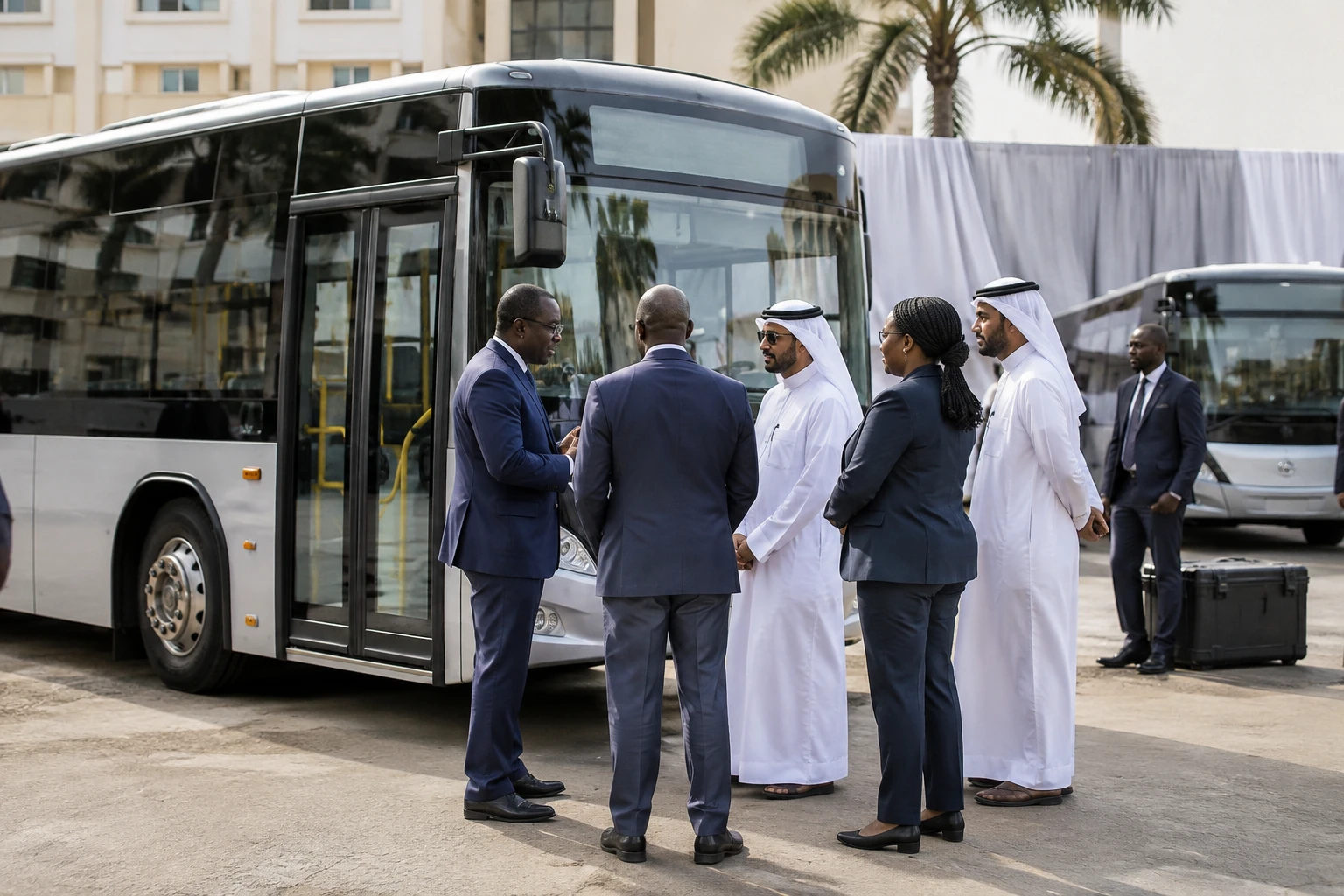
Just days before Dakar 2026 opens, 15 buses and security equipment are strengthening the resources of Senegal’s organising committee. Qatar’s contribution meets immediate needs. It also highlights a less visible challenge: Senegal’s ability to turn experience gained through the Games into lasting skills.
A first for Senegal and Africa
From 31 October to 13 November 2026, Dakar, Diamniadio and Saly will host the Summer Youth Olympic Games. Around 2,700 athletes are expected to compete in 25 sports. Ten other disciplines will feature in the engagement programme. It will be the first Olympic sporting event to be held on the African continent.
Senegal was awarded the Games in 2018. Initially scheduled for 2022, they were postponed by four years amid the Covid-19 pandemic. The delay extended preparations, but also required teams and projects to remain mobilised for a longer period.
The competition will extend beyond the capital. The venues in Dakar, Diamniadio and Saly will have to operate as a single system. Transporting teams, officials and equipment will therefore be a central concern. Daily journeys will also affect residents, particularly around sports venues and major roads.
The Games are taking place in Senegal, a member of ECOWAS, the Economic Community of West African States. Their significance therefore goes beyond the national sporting calendar: the event is expected to host international delegations and showcase the region’s organisational capabilities.
Fifteen buses and security equipment
Qatar has handed 15 buses and a consignment of security equipment to the Youth Olympic Games Organising Committee (COJOJ). The ceremony took place on Friday 23 October at the committee’s headquarters in Keur Ayo, in the presence of Senegalese and Qatari officials. Qatar’s ambassador to Senegal, Youssef Bin Shaaban Ibrahim Al Sada, handed over the equipment.
COJOJ president Mamadou Diagna Ndiaye and Dakar Dem Dikk chief executive Modou Bara Gaye were among those attending. The public transport operator is involved in the initiative, but the information released so far does not specify how the vehicles will be allocated, when they will enter service or exactly what the security consignment contains.
COJOJ describes the contribution as support for its operational capacity. In a statement reported by the Senegalese press, its general coordinator, Ibrahima Wade, said the donation was intended to support mobility, security and skills development. The wording points to a dual aim: providing equipment and sharing organisational expertise.
A Qatari media outlet has also confirmed the donation, specifying the number of buses and placing the assistance in the context of experience gained by Doha during the 2022 FIFA World Cup. The two reports therefore confirm the general nature and scale of the support. However, no public information is yet available to assess the value of the equipment or how long it will be used after the Games.
Logistics put organisers to a practical test
Fifteen buses alone cannot meet all the needs of an event spread across three cities. Their usefulness will depend on the routes chosen, the availability of drivers and mechanics, fuel supplies and coordination with other forms of transport. Security, too, depends on trained teams, procedures and coordination between services.
For athletes and delegations, reliable organisation can reduce delays between the Olympic Village in Diamniadio and competition venues. For the public, it can make it easier to attend events. Residents travelling to work or study will also need clear information on routes, possible restrictions and traffic changes.
The challenge also extends beyond the Games. If the vehicles and equipment remain in service, their maintenance and allocation will shape the legacy of the initiative. Transferring skills to Senegalese teams could, in turn, benefit other sporting or cultural events. Such benefits are not automatic, however: they will depend on the training actually provided and the decisions taken after November.
For Qatar, the support continues a strategy of sharing experience gained from hosting major competitions. For Senegal, it is a partnership that is useful in the short term and must form part of an operation led by local institutions and teams. Whether this is a one-off contribution or a lasting legacy will be measured by how the equipment is used and whether expertise is sustained.
An African showcase, with results still to be seen
Dakar 2026 will be more than an event for young athletes. The committee will have to manage venues, transport, hospitality and security across several hubs. Gender parity has been announced for the competitions, and a Refugee Olympic Team is also due to take part. Success will therefore be judged as much by the quality of the events as by the experience of athletes and spectators.
The first events are approaching: baseball5 is due to start on 30 October, ahead of the official opening on 31 October. The closing ceremony is scheduled for 13 November. Attention is now turning to when the buses enter service, how journeys between Dakar, Diamniadio and Saly will be coordinated, and how organisers will report on the resources deployed.
For Senegal and its West African neighbours, the challenge is tangible: to show that a major Olympic event can be organised on the continent while leaving capabilities that remain useful beyond the competition. Qatar’s donation provides visible support. Its real impact will depend on what Senegalese teams can do with it during the Games and after they end.
Verified information: the report on the handover of equipment to COJOJ, The Peninsula’s confirmation of the 15 buses and the IOC’s official information on Dakar 2026.