Algeria
 Egypt
 Libya
 Morocco
 Sudan
 Tunisia
 Benin
 Burkina Faso
 Cabo Verde
 Ghana
 Guinea
 Guinea-Bissau
 Liberia
 Mali
 Mauritania
 Niger
 Nigeria
 Senegal
 Sierra Leone
 The Gambia
 Togo
 Cameroon
 Central African Republic
 Chad
 DR Congo
 Equatorial Guinea
 Gabon
 Republic of the Congo
 São Tomé and Príncipe
 Burundi
 Comoros
 Djibouti
 Eritrea
 Ethiopia
 Kenya
 Madagascar
 Malawi
 Mauritius
 Mozambique
 Rwanda
 Seychelles
 Somalia
 South Sudan
 Tanzania
 Uganda
 Angola
 Botswana
 Eswatini
 Lesotho
 Namibia
 South Africa
 Zambia
 Zimbabwe
A mine is never just a mine
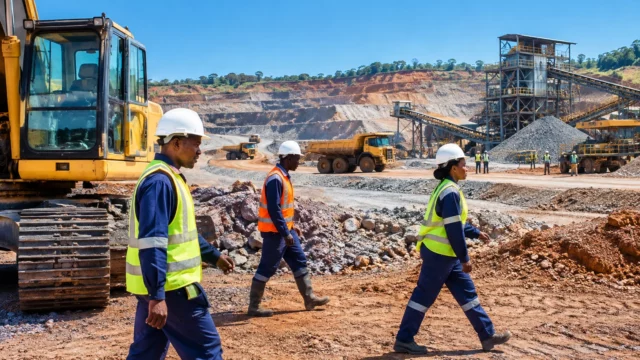
In central Côte d’Ivoire, gold is no longer just a matter of tonnes extracted and exported. It also flows through wages, service purchases, taxes, royalties and local investment. This is now where the real weight of a mining operator is measured: in the value that stays in the country, not just the metal taken from underground.
For Abidjan and Yamoussoukro, the country’s political capital, the issue has become strategic. Côte d’Ivoire wants to consolidate its rise as a gold producer, as several new projects move forward in the north and centre of the country. Ivorian authorities said in autumn 2025 that the country could become Africa’s leading gold producer within a few years.
What the new milestone shows
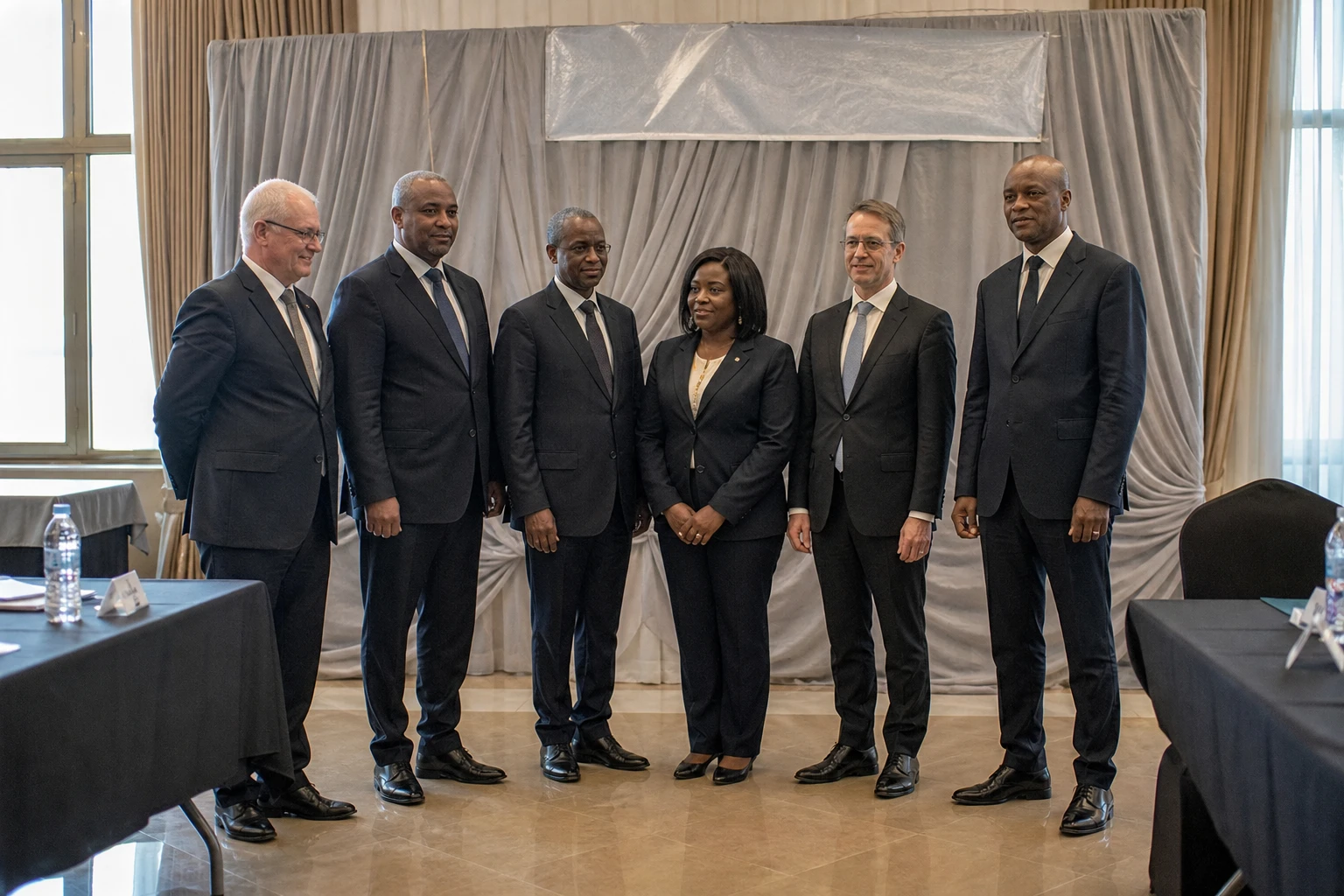
Australian gold-mining group Perseus Mining says it injected $1.18bn into the economies of its African host countries in the 2026 financial year, which ended on 30 June 2026. The group says this represents a 46% increase year on year. Its official website rounds the figure to about $1.19bn in locally distributed economic value.
Côte d’Ivoire came first, with $556.5m reported for the Yaouré and Sissingué sites. Ghana followed with $397.4m, thanks to the Edikan mine. Tanzania accounted for the remaining $229.4m, while the Nyanzaga project there is still under development. These figures combine several flows: local purchases, payroll, taxes, royalties and other payments to governments.
The group also said it produced 404,998 ounces of gold during the financial year, at an all-in cost of $1,750 an ounce. This performance helps explain the rise in payments to host countries: when gold prices remain high, mining revenues grow, but so does tax pressure.
Yaouré is about 40 kilometres north-west of Yamoussoukro, while Sissingué anchors the group’s operations further north in the country. Perseus’s Ivorian portfolio is therefore not a peripheral presence. It is at the heart of the country’s mining sector, where local value creation, subcontracting and skilled employment are now at stake.
Mining taxes: the state claims its share
This increase comes amid a more demanding environment for mining companies. In Ghana, a reform that took effect on 10 March 2026 replaced the fixed 5% rate on gold royalties with a progressive scale that can reach 12% when the gold price exceeds $4,500 an ounce. The country also cut its Growth and Sustainability Levy from 3% to 1% in March 2026.
In Côte d’Ivoire, 2025 saw the introduction of an 8% royalty on gold revenues, replacing a previous range of 3% to 6%. Industry sources cited by Reuters said the measure was being applied retroactively from January 2025. Perseus itself says in its annual report that its costs have risen as a result of higher gold prices, Ghana’s new progressive regime and a 2-point increase in royalties in Côte d’Ivoire.
In other words, gold is paying more to the state, but it is also making operations more expensive. Public revenues are rising, while companies are passing some of the tax shock on through their costs. For producing countries, the challenge is not simply to tax more. They must also preserve investment, jobs and local processing.
Perseus’s report also shows that the increase in its local contribution is not based on taxation alone. It also comes from domestic supply chains, service contracts and payroll. For a country such as Côte d’Ivoire, where the informal economy remains significant, this local circulation matters as much as production figures. It reaches transport operators, small and medium-sized service businesses, subcontractors, fuel suppliers and parts suppliers, far beyond the mining sites themselves.
An Ivorian perspective, with a West African reach
The trend goes beyond Perseus alone. It says something about the regional competition to capture gold revenues in West Africa. Ghana, Côte d’Ivoire and, more broadly, the ECOWAS region are all seeking to derive greater value from gold amid favourable global prices. Governments want more visible revenues. Mining groups, meanwhile, are seeking regulatory and tax stability.
For Côte d’Ivoire, the challenge is twofold. On the one hand, the country is consolidating a mining sector that has become one of the most dynamic drivers of growth in its economy. On the other, it is testing its ability to turn extractive revenues into jobs, infrastructure and a stronger local business base. The commissioning of new projects in the north-east and centre in the coming years will show whether this strategy delivers broader-based growth or merely concentrated revenues.
The continental significance is clear. Across Africa, gold remains a safe-haven asset for investors and a source of foreign currency for governments. But it is also becoming a more hard-fought arena for negotiating how value is shared. African governments are no longer content simply to attract capital; they are seeking to set the rules of the game on better terms. This power struggle will be seen in other producing countries, far beyond the Gulf of Guinea.
In this context, the $1.18bn figure should not be read as just an accounting record. It signals a deeper trend: African mines are increasingly judged by what they pay, employ, buy and leave in the country. In Côte d’Ivoire, this shift puts Yaouré and Sissingué at the centre of a very real debate about added value, economic sovereignty and the country’s place on the West African mining map.