Algeria
 Egypt
 Libya
 Morocco
 Sudan
 Tunisia
 Benin
 Burkina Faso
 Cabo Verde
 Ghana
 Guinea
 Guinea-Bissau
 Liberia
 Mali
 Mauritania
 Niger
 Nigeria
 Senegal
 Sierra Leone
 The Gambia
 Togo
 Cameroon
 Central African Republic
 Chad
 DR Congo
 Equatorial Guinea
 Gabon
 Republic of the Congo
 São Tomé and Príncipe
 Burundi
 Comoros
 Djibouti
 Eritrea
 Ethiopia
 Kenya
 Madagascar
 Malawi
 Mauritius
 Mozambique
 Rwanda
 Seychelles
 Somalia
 South Sudan
 Tanzania
 Uganda
 Angola
 Botswana
 Eswatini
 Lesotho
 Namibia
 South Africa
 Zambia
 Zimbabwe
A sector changing direction
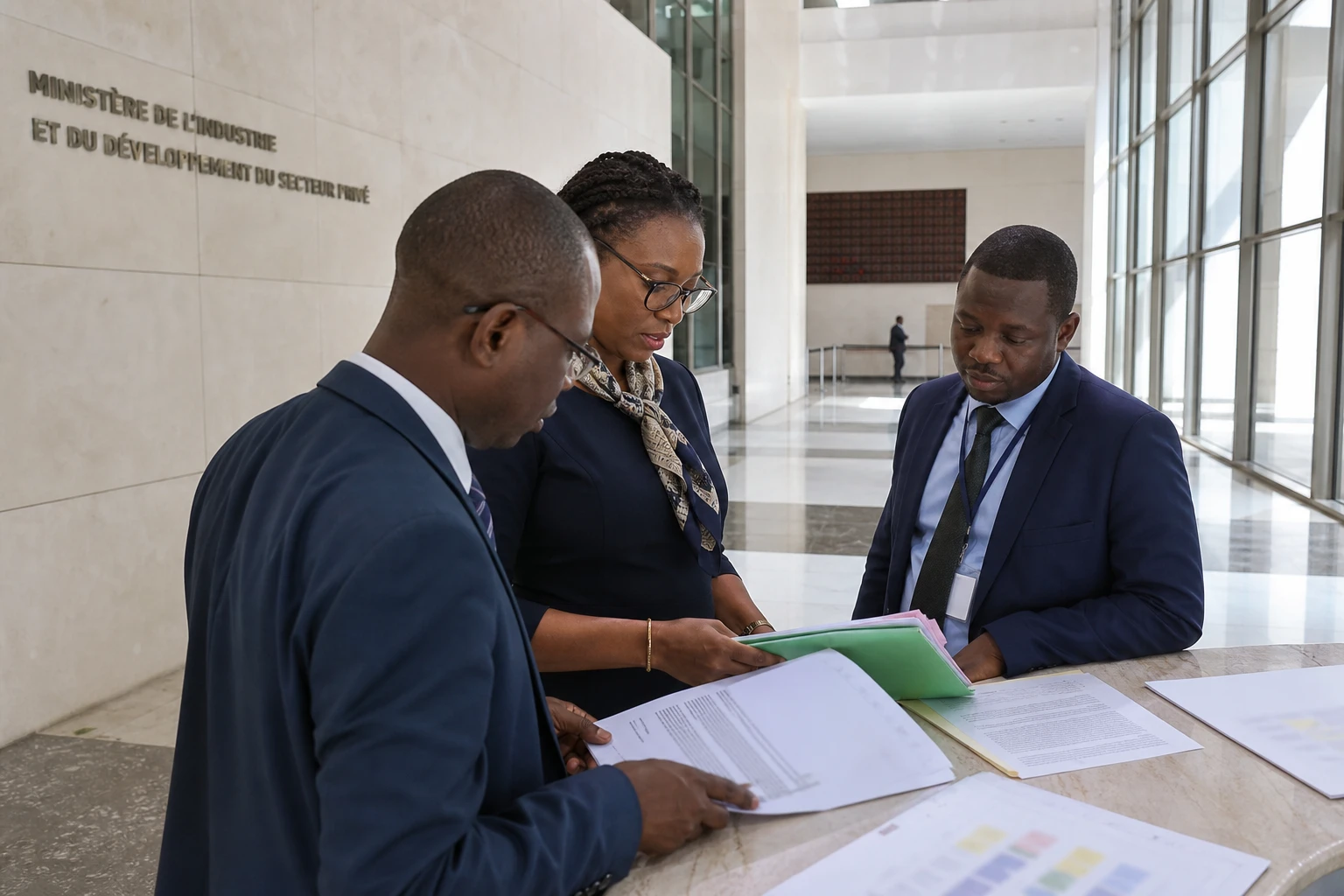
In Côte d’Ivoire, rubber is no longer simply about producing latex for export in its raw form. The sector is entering a more strategic phase, in which the challenge is not merely to produce volumes but to capture more value locally, from the plantation to the factory. In this shift, recent acquisitions of assets already in operation show that groups in the sector prefer to accelerate through consolidation rather than slowly build new facilities.
This evolution also reflects the position Côte d’Ivoire has taken in the West African economy. The country has become Africa’s leading producer of natural rubber and the world’s third-largest, with about 1.678 million tonnes in 2023, according to the government, followed by around 1.932 million tonnes in 2025, according to FIRCA. The sector now accounts for a significant share of national agricultural revenue. Regionally, the BCEAO notes that raw rubber supply remains sensitive to changes in Ivorian production, underscoring the country’s weight in the agricultural balance of WAEMU and ECOWAS.
Two deals, one industrial signal
On 17 August 2026, Olam Agri announced that it had completed the acquisition of Asia Africa Rubber Industry, or ASAF, an Ivorian natural rubber processing company. The group said the deal would enable it to almost double its processing capacity in Côte d’Ivoire. ASAF operates a factory in Azaguié Aoua, in the department of Agboville, with an announced annual capacity of 176,000 tonnes. Olam Agri already had two plants in Aniassué and Dibobli, each able to process 88,000 tonnes a year. Based on these stated capacities, the group therefore has a theoretical potential of about 352,000 tonnes a year in the country.
A few months earlier, on 28 January 2026, the Société africaine de plantations d’hévéas, SAPH, had also announced the acquisition of the shares of the Société civile agricole du Sud-Ouest, SCASO. The statement refers to a 2,871-hectare concession, nearly 1,500 hectares of which are planted with rubber trees, near the Rapides Grah site. SAPH says it intends to renew the plantation, diversify some plots with oil palm and turn the site into a reception point for private planters in the region. The direction is clear: major players are securing their industrial and agricultural base by taking control of more assets that are already productive.
The two deals do not concern the same link in the value chain, but they point to the same trend: the sector is consolidating. Olam Agri is strengthening industrial processing, while SAPH is consolidating its supply of raw materials. In both cases, the aim is to move faster towards profitable assets rather than bear the cost and lead time of building new facilities alone.
High capacity, but a ceiling to break through
The Ivorian government has for several years been pushing to increase local value added. In June 2025, it noted that Côte d’Ivoire had 40 functioning primary-processing plants and an estimated nominal capacity of 1.815 million tonnes a year. This expansion has enabled the sector to absorb a large share of national production, but it has also created a degree of saturation in the primary processing of latex. Against this backdrop, the Conseil hévéa-palmier à huile-coco, the CHPHC, decided in 2025 to stop issuing new permits to establish or expand primary-processing plants, according to regulatory information published by the Ivorian Customs authorities.
The policy signal is significant. After a decade of efforts focused on increasing volumes and expanding the industrial base, the government now wants to promote secondary processing: the local manufacture of finished or semi-finished products such as tyres, gloves, technical parts and other industrial components. The minister for trade and industry placed this priority back at the centre of economic discussions in 2025 and 2026, linking industrialisation, jobs and the processing of raw materials.
For planters, the issue is even more tangible. Consolidation led by major groups can stabilise outlets, but it does not automatically guarantee higher incomes. Everything depends on purchase prices, collection costs, plantation health and supply contracts. In rural areas around Agboville, Akoupé, Soubré and San Pedro, the sector supports thousands of households. It therefore affects local employment, transport, services and smallholders’ savings, far beyond the factories visible on the outskirts of towns.
What this means for Côte d’Ivoire and the region
Côte d’Ivoire’s trajectory illustrates a common shift in Africa’s more advanced agricultural economies: once production reaches critical mass, the question is no longer just one of yields, but of local industrialisation. This is true of cocoa and cashew, and now, more clearly, of rubber. Abidjan is seeking to turn a production advantage into an industrial one. The strategy also aligns with the state’s broader policy of diversification and structural transformation, set out in the 2021–2025 National Development Plan.
Across West Africa, the issue matters because natural rubber is an export product aimed at European and Asian markets, with a value chain still dominated by raw material volumes. When Côte d’Ivoire tightens regulation and encourages local processing, it also shapes the regional debate on value capture, industrial sovereignty and the place of African raw materials in global trade. ECOWAS is closely monitoring this kind of shift because it affects industrial employment, exports and tax revenues.
What happens next will depend on operators’ ability to move beyond primary processing alone. If the new positions taken by Olam Agri and SAPH are used mainly to secure latex flows and industrial margins, they will strengthen the influence of major groups. If they are accompanied by investment in chemicals, technical rubber and finished products, they could instead open a new phase for the Ivorian sector. That transition, far more than the acquisition announcements themselves, is what will need to be watched in the coming months.