Algeria
 Egypt
 Libya
 Morocco
 Sudan
 Tunisia
 Benin
 Burkina Faso
 Cabo Verde
 Côte d'Ivoire
 Ghana
 Guinea
 Guinea-Bissau
 Liberia
 Mali
 Mauritania
 Niger
 Nigeria
 Senegal
 Sierra Leone
 The Gambia
 Togo
 Cameroon
 Central African Republic
 Chad
 Equatorial Guinea
 Gabon
 Republic of the Congo
 São Tomé and Príncipe
 Burundi
 Comoros
 Djibouti
 Eritrea
 Ethiopia
 Kenya
 Madagascar
 Malawi
 Mauritius
 Mozambique
 Rwanda
 Seychelles
 Somalia
 South Sudan
 Tanzania
 Uganda
 Angola
 Botswana
 Eswatini
 Lesotho
 Namibia
 South Africa
 Zambia
 Zimbabwe

In Phnom Penh, the Francophonie avoided an immediate rupture without resolving the disagreement that caused it. For the Democratic Republic of the Congo (DRC), the succession at the head of the organisation has become a diplomatic issue linked to tensions with Rwanda. For the OIF, the compromise postpones a decision and opens a year of transition.
A succession caught up in Great Lakes tensions
The crisis between Kinshasa and Kigali extends beyond the borders of the two countries. Since fighting by the M23 resumed in eastern DRC, the Congolese government has accused Rwanda of supporting the armed group. Kigali rejects the accusations. The conflict and related diplomatic efforts have involved several regional and international actors, including the East African Community (EAC) and the Southern African Development Community (SADC).
This context has reached the International Organisation of La Francophonie (OIF), which brings together states and governments around the French language but also works on political and cooperation issues. Rwandan Louise Mushikiwabo’s bid for a third term met with opposition from Kinshasa. The DRC had put forward Juliana Amato Lumumba, a former culture minister.
The issue is sensitive for both capitals. Kinshasa threatened to leave the organisation if Mushikiwabo was reappointed. Such a decision would have deprived the OIF of an important member of the Francophone world and deepened divisions among member states. The dispute is therefore about more than one person: it tests the organisation’s ability to preserve a space for dialogue when its members are at odds over security issues.
A one-year compromise, not an appointment
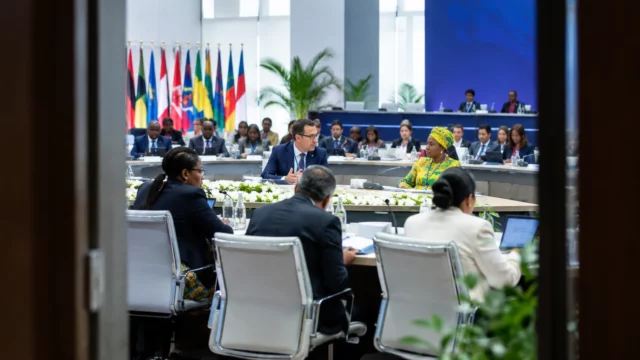
Meeting in Phnom Penh, Cambodia, leaders failed to reach consensus on the succession. On 16 November 2026, they chose to postpone the vote by 12 months. Louise Mushikiwabo will remain in office during this transitional period but is not expected to seek another term. Rwanda has pledged not to put forward a candidate in the next election, according to accounts of the compromise.
The postponement comes with an institutional review. Members agreed to reconsider the OIF’s operating rules and the arrangements for appointing its secretary-general. The stated aim is to strengthen the organisation’s framework after this impasse. The compromise also provides for Canada to host the next Francophonie summit in 2028. Member states still need to set out the timetable and arrangements for the vote expected in 2027.
The outcome marks a break with previous successions, which had all been settled by consensus since the post was created in 1997. The compromise defers the choice rather than deciding between the candidates. It gives the OIF time to avoid an open confrontation, but leaves unresolved the political disagreements that blocked the process.
Information published after the summit says several candidates, including Juliana Amato Lumumba, Mauritanian Coumba Bâ and Romanian Dacian Cioloș, could stand again. New candidacies would also remain possible. However, candidates and the applicable rules will need to be confirmed by the organisation during the transition period. The account of the Phnom Penh compromise sets out these provisions.
Stakes beyond diplomatic circles
For leaders, the immediate priority is to maintain a diplomatic channel within an organisation where both the DRC and Rwanda are members. For populations, particularly in eastern Congo, a change at the head of the OIF cannot by itself alter the situation on the ground. It does, however, show that regional tensions also influence institutions for cultural and political cooperation.
The decision also affects French speakers beyond government institutions. The OIF supports language, education and cooperation programmes. A prolonged crisis could divert attention from these missions and undermine trust among members. But the postponement, for now, prevents the Congolese threat to withdraw from becoming an immediate decision. It therefore preserves the possibility of dialogue, without guaranteeing that relations between Kinshasa and Kigali will improve.
For the DRC, the episode highlights the diplomatic weight the country is seeking to wield in an international organisation. For Rwanda, it underscores the difficulty of sustaining a candidacy opposed by a neighbour with which relations have sharply deteriorated. Neither issue is limited to the French language: both concern regional power dynamics and the role African states want to play in multilateral institutions.
A decisive year for the OIF
The next vote will show whether member states can return to a joint decision or will need to reconsider their rules more fundamentally. The announced review of the secretary-general’s appointment process will therefore be as important as the choice of the person who will lead the organisation.
Across Africa, the episode is a reminder that continental and international organisations are not immune to rivalries between states. It also raises questions about the Francophonie’s ability to remain a space for cooperation when its members disagree over regional conflicts. Until 2027, adherence to the compromise, the evolution of relations between the DRC and Rwanda, and preparations for the next summit in Canada will be concrete indicators of the agreement’s strength.
Several media outlets have reported the postponement, the transitional extension and the 2028 summit. Associated Press and Congolese outlet Digital Congo confirm, in particular, the postponement and Mushikiwabo’s temporary continuation in office.