
 Algeria
 Egypt
 Libya
 Morocco
 Sudan
 Tunisia
 Benin
 Burkina Faso
 Cabo Verde
 Côte d'Ivoire
 Ghana
 Guinea
 Guinea-Bissau
 Liberia
 Mali
 Mauritania
 Niger
 Nigeria
 Senegal
 Sierra Leone
 The Gambia
 Togo
 Cameroon
 Central African Republic
 Chad
 DR Congo
 Equatorial Guinea
 Gabon
 Republic of the Congo
 São Tomé and Príncipe
 Burundi
 Comoros
 Djibouti
 Eritrea
 Ethiopia
 Kenya
 Madagascar
 Malawi
 Mauritius
 Mozambique
 Rwanda
 Seychelles
 Somalia
 South Sudan
 Tanzania
 Uganda
 Angola
 Botswana
 Eswatini
 Lesotho
 Namibia
 Zambia
 Zimbabwe
Between personal safety and diplomatic pressure
In Johannesburg and Lagos, the same question arises: how can migrant workers be protected when tensions over immigration and unemployment rise? In South Africa, the answer now involves organised departures. In Nigeria, it has meant repatriating 1,490 citizens after several weeks of hostility towards foreigners portrayed as intruders.
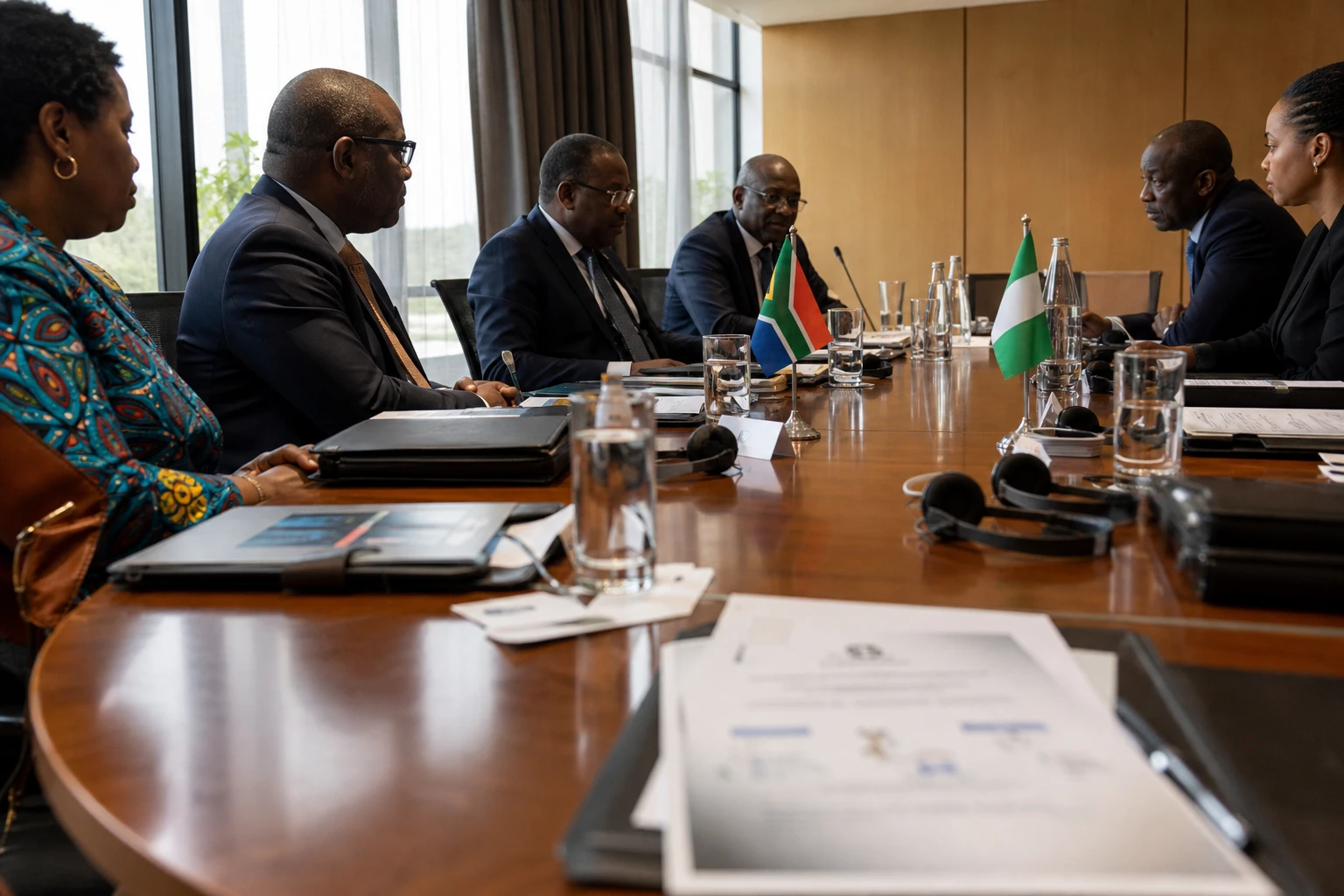
This issue goes beyond a simple consular operation. It concerns the movement of people in southern Africa, the safety of foreign communities and states’ ability to manage a crisis that has become political without allowing it to spill over. Pretoria has repeatedly stressed that enforcing immigration laws is primarily the responsibility of its own institutions. Abuja, for its part, has emphasised the protection of its citizens and the need for dialogue with South African authorities.
What happened between June and mid-July
The Nigerian government confirmed that it had completed the departure of its citizens from South Africa on 17 July 2026. The final flight carried 305 people from Johannesburg to Lagos, bringing the total number of returnees to 1,490 since 10 June. Nigerian authorities described the operation as voluntary and coordinated with their diplomatic mission in the country and commercial airlines.
The same movement had begun earlier in the month. On 11 June, the first group of 262 people had already arrived in Lagos. Nigerian officials said at the time that several people seeking to return had no longer been in order in terms of their documents, notably because their visas or passports had expired. This detail matters because it shows that the repatriation did not involve only victims of attacks, but also migrants caught up in a general hardening of the political climate.
Tensions escalated after anti-immigration protests and incidents targeting businesses run by foreigners. On 7 June, South African President Cyril Ramaphosa acknowledged strong public concerns about illegal immigration, borders, jobs and pressure on public services. The South African government subsequently said, on 26 and 30 June, that protests linked to immigration had been largely peaceful, while condemning acts of violence, looting and harassment against foreigners.
Why Abuja acted so quickly
Nigeria saw the situation deteriorating rapidly for its citizens. In May, its foreign minister had already called for a crisis unit to be set up for Nigerians living in South Africa. Abuja later said it had received reports of assaults, threats and a rise in hostile rhetoric. In this kind of situation, evacuation serves both as an immediate protective measure and as a diplomatic signal.
The Nigerian government also wanted to ensure the issue did not become simply one of forced return. From 30 June, its representatives raised the possibility of seeking compensation for property, businesses and vehicles left behind by returnees. The debate then shifted to broader legal and political questions: who is responsible for economic losses when a host country becomes hostile to part of its foreign population?
On arrival, Abuja promised medical, psychological and social support. The message is clear: returning does not solve everything. For many returnees, the problem is not only physical safety. It is also rebuilding an income, finding housing, restarting a business or reviving an interrupted migration project. The shockwaves therefore extend well beyond Lagos airport.
What the crisis says about South Africa and the region
In South Africa, tensions over immigration are not new. They flare up in cycles, often in poorer neighbourhoods, informal commercial areas and sectors where competition for jobs is most visible. Pretoria insists on the rule of law and the fight against irregular immigration. But neighbouring countries are also watching how that fight is conducted, especially when foreigners become targets of attacks, threats or looting.
The episode directly concerns SADC, the Southern African Development Community, which brings together South Africa and its neighbours. It also highlights a broader reality: intra-African mobility remains essential to trade, employment and services, even as political rhetoric becomes more inward-looking. A tougher stance in Pretoria therefore affects Senegalese people in Johannesburg, Mozambicans in border provinces, Zimbabweans in industrial cities and, of course, Nigerians who have invested in services or retail.
For West Africa, the issue carries a different significance. Nigeria is not just any country in the continent’s balance of power. It carries demographic, economic and diplomatic weight. When its citizens are threatened in southern Africa, the signal reaches the African Union and raises questions, at its heart, about the promise of smoother African integration. Responses often remain national, while migration, businesses and families cross borders.
What happens next will depend on two fronts. Pretoria will have to show that law enforcement and immigration services can contain violence without tolerating the hunting down of foreigners. Abuja, meanwhile, will have to turn emergency assistance into lasting support for returnees. Between them, the crisis highlights an often-forgotten truth: across the continent, the movement of people does not disappear under political pressure. It simply becomes more fragile, more expensive and more exposed.



