Algeria
 Egypt
 Libya
 Morocco
 Sudan
 Tunisia
 Benin
 Burkina Faso
 Cabo Verde
 Côte d'Ivoire
 Ghana
 Guinea
 Guinea-Bissau
 Liberia
 Mali
 Mauritania
 Niger
 Senegal
 Sierra Leone
 The Gambia
 Togo
 Cameroon
 Central African Republic
 Chad
 DR Congo
 Equatorial Guinea
 Gabon
 Republic of the Congo
 São Tomé and Príncipe
 Burundi
 Comoros
 Djibouti
 Eritrea
 Ethiopia
 Kenya
 Madagascar
 Malawi
 Mauritius
 Mozambique
 Rwanda
 Seychelles
 Somalia
 South Sudan
 Tanzania
 Uganda
 Angola
 Botswana
 Eswatini
 Lesotho
 Namibia
 South Africa
 Zambia
 Zimbabwe
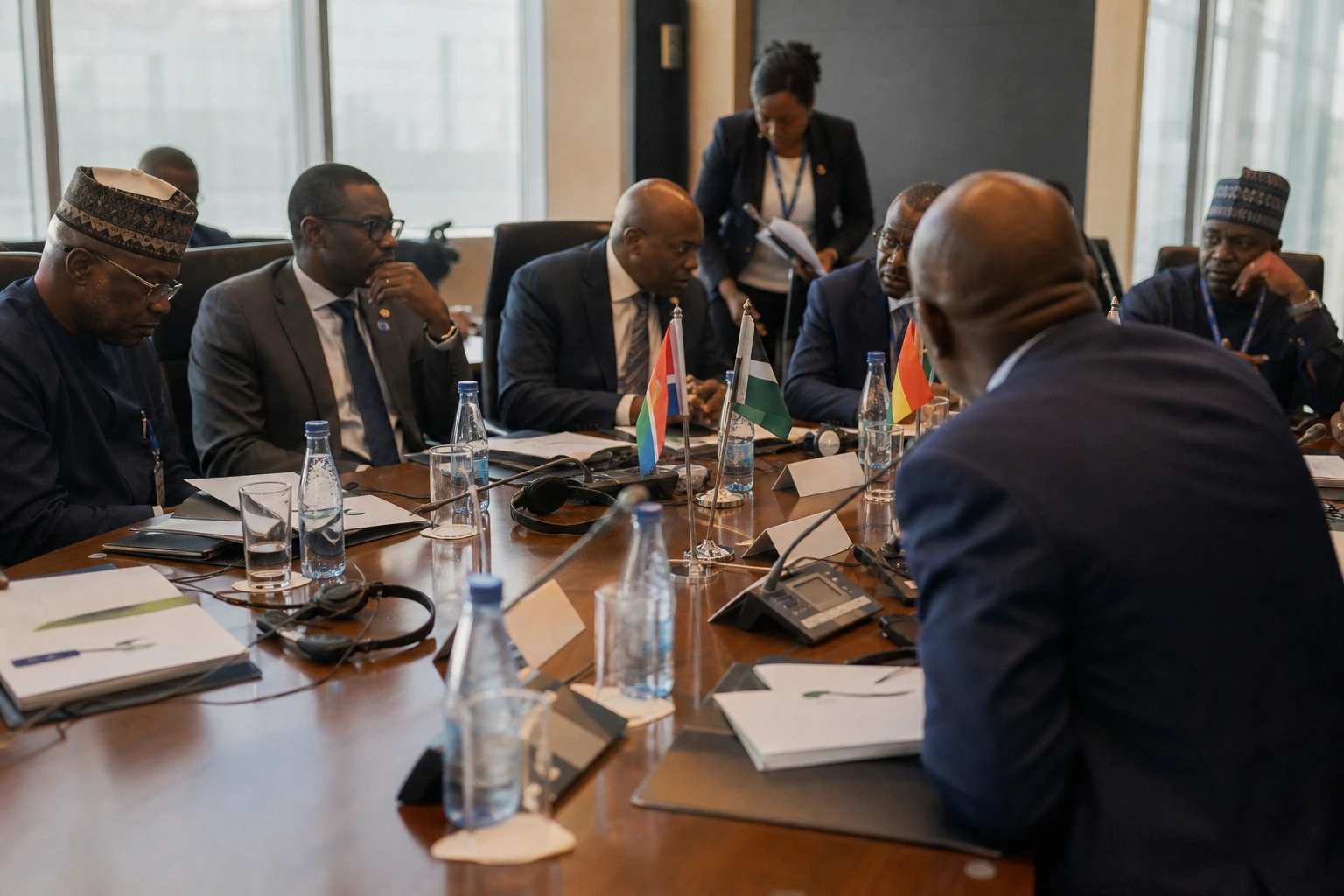
In Nigeria, crude remains the linchpin of industrial development
In Abuja, the debate is no longer only about Nigeria’s ability to refine its oil. It is about how to make refining sustainable, predictable and bankable. In a country that produces crude but has long relied on fuel imports, regular access to feedstock now determines far more than the prospects of an industrial site: it affects the foreign-exchange bill, pump prices and the credibility of energy reform.
The issue forms part of a shift that began in 2024. The federal government launched sales of crude and petroleum products in naira to ease pressure on the foreign-exchange market and support local refineries. The scheme initially targeted the large Lekki refinery, then was presented as a broader framework for transforming the sector. In practice, however, supplies to Nigerian refiners remain irregular and a source of commercial tensions.
A call for a permanent framework, not a one-off political intervention
The Crude Oil Refinery Owners Association of Nigeria, which brings together sector operators, is now calling for a presidential round table. The idea is simple: bring together refiners, crude producers, regulators, banks, infrastructure investors and relevant ministries to set a common road map for access to crude, pricing, transport and financing. The request, made public on Saturday 5 September, aims to move the sector beyond ad hoc negotiations.
The core of the demand is economic. Refiners argue that having access to volumes is not enough. They want a price that takes account of crude quality, the delivery point, evacuation and transport costs, as well as the cost of capital. In short, they are calling for a mechanism that makes local crude not merely available, but genuinely usable on sustainable terms.
The association also wants to formalise the naira-denominated sales scheme launched in October 2024. The idea was presented as a response to pressure on foreign exchange and the country’s reliance on imports of refined products. The principle remains politically significant. But without a stable framework, operators say they are chasing temporary solutions while their investments are designed to run over several years.
The Dangote example has changed the scale of the debate
The Dangote refinery, with a stated capacity of 650,000 barrels per day, has accelerated national thinking about local refining. It has also exposed the limits of the current model. Despite its size, the facility has struggled to secure enough Nigerian crude under the naira-for-crude programme, forcing it to supplement supplies from abroad. The situation has shown that a large plant is not enough if the upstream supply chain is not secured.
The figures illustrate the scale of the problem. In 2025, crude imported for the needs of Dangote Refinery’s operations reportedly reached $3.74 billion, according to data from the Central Bank of Nigeria cited by several Nigerian media outlets. The sum points to the fragility of the local market: a crude-exporting country still had to source a significant share of the feedstock for its largest refinery from abroad.
Officially, however, the authorities say the mechanism is making progress. The Ministry of Finance had announced that naira-denominated supply was due to begin on 1 October 2024, with a volume of about 385,000 barrels per day earmarked for Dangote. The upstream regulator, the NUPRC, says 53.7 million barrels of crude and condensates were delivered to local refineries between April and June 2026, with a performance rate of 97.4% in the second quarter of 2026. In other words, the system exists, but the question now is how robust it is and whether it can be extended to all operators.
What refiners really want: certainty, credit and logistics
Behind the fight over crude lies a fight over financing. CORAN is calling for a framework that brings together commercial banks, pension funds, infrastructure funds and development institutions to offer long-term loans, credit guarantees and refinancing mechanisms. This is central. Without affordable financing, modular units as well as large refineries remain exposed to high costs, especially in an environment of volatile interest and exchange rates.
Logistics are another blind spot in the debate. The association points to the importance of pipelines, storage terminals, depots, rail and maritime routes. Reliance on road transport currently raises operating costs and weakens the supply chain. This is therefore not just an energy issue. It is also a question of infrastructure, industrial competitiveness and economic security.
For producers, the issue is commercial. For refiners, it is security of supply. For households, the question is more immediate still: fuel availability, price stability and reduced dependence on external shocks. Every disruption leaves Nigerian consumers paying more, while the state faces greater pressure on foreign exchange and imports.
A Nigerian issue, but also a West African one
The debate extends well beyond Nigeria. Within ECOWAS, the ability of a major producer to refine its crude locally has a knock-on effect on regional prices, trade flows and energy security. If Abuja manages to stabilise its industry, pressure on regional fuel imports could ease. If it fails, West Africa will continue to rely heavily on refined products from elsewhere.
President Bola Tinubu therefore faces a political and industrial choice. The task is not simply to support refiners. It is also to build a clear framework for producers, banks, regulators and investors. That is where the credibility of the reform is at stake. Nigeria has the reserves, the players and now the basic infrastructure. What remains is to turn them into a stable system.
The next steps will depend on administrative and financial decisions in Abuja, as well as the sector’s ability to move from one-off agreements to permanent rules. Only then can local refining stop being a recurring promise and become a lasting industrial pillar.