Algeria
 Egypt
 Libya
 Morocco
 Sudan
 Tunisia
 Benin
 Burkina Faso
 Cabo Verde
 Côte d'Ivoire
 Ghana
 Guinea
 Guinea-Bissau
 Liberia
 Mali
 Mauritania
 Niger
 Senegal
 Sierra Leone
 The Gambia
 Togo
 Cameroon
 Central African Republic
 Chad
 DR Congo
 Equatorial Guinea
 Gabon
 Republic of the Congo
 São Tomé and Príncipe
 Burundi
 Comoros
 Djibouti
 Eritrea
 Ethiopia
 Kenya
 Madagascar
 Malawi
 Mauritius
 Mozambique
 Rwanda
 Seychelles
 Somalia
 South Sudan
 Tanzania
 Uganda
 Angola
 Botswana
 Eswatini
 Lesotho
 Namibia
 South Africa
 Zambia
 Zimbabwe
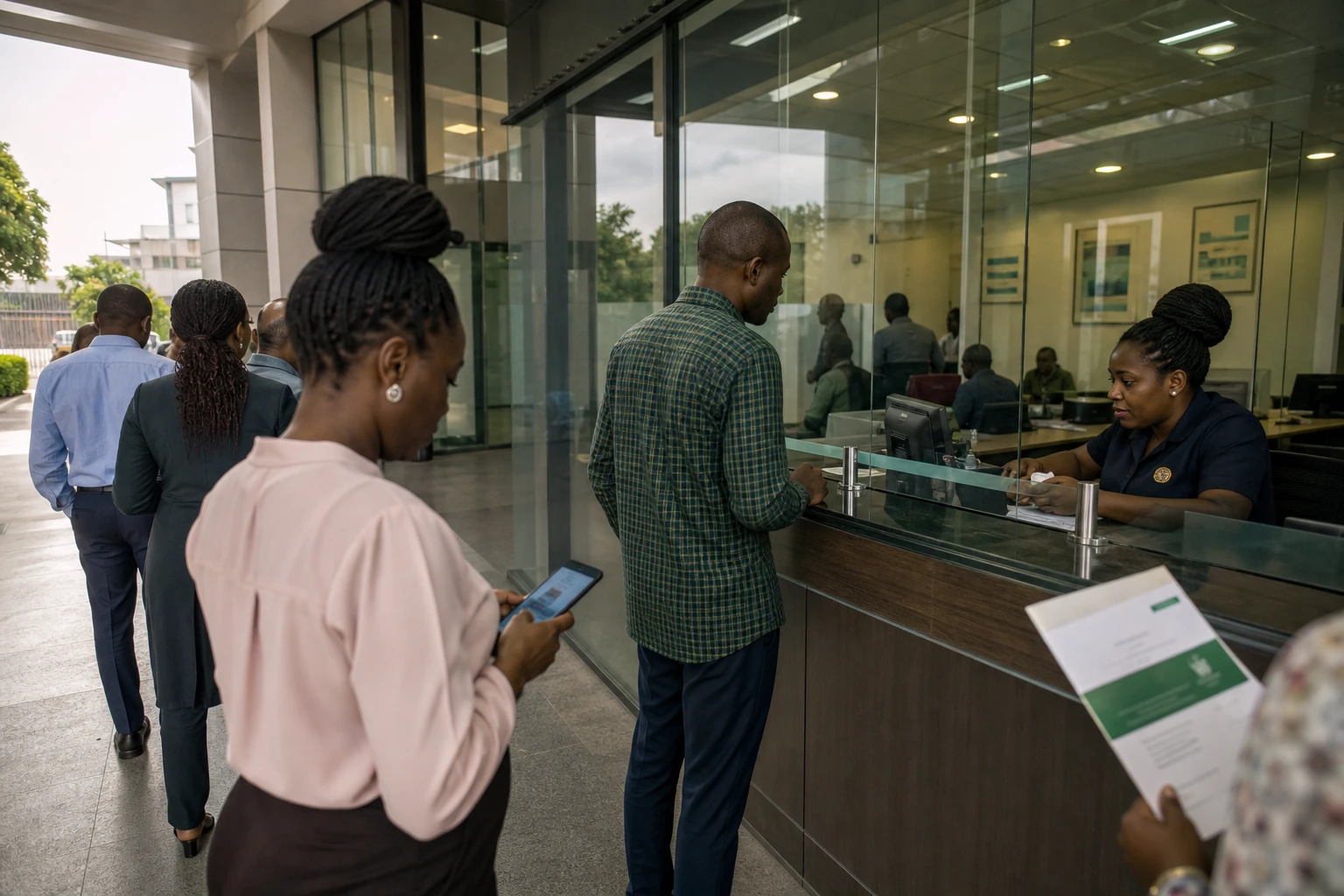
Nigeria’s diaspora becomes a player in housing
For many Nigerians living abroad, the challenge is no longer simply sending money home. It is also about turning these scattered savings into lasting wealth. The new mortgage launched by the Federal Mortgage Bank of Nigeria, the public housing bank, is built around precisely this idea.
The scheme is aimed at Nigerians living outside the country who contribute to the National Housing Fund. It gives them remote access to a mortgage of up to 100 million naira, at an interest rate of 9% and for a maximum term of ten years. Applications are made online, removing the need to return physically to Nigeria to submit an application or start the process.
This choice is no coincidence. In a country where international mobility among households has accelerated, the diaspora has become a key source of funding for families, private projects and, now, the property market. Housing is no longer only a social issue. It is also a tool for mobilising capital.
The FMBN said the product was part of its strategy to broaden access to home ownership while supporting construction activity and employment. The bank also said its official launch was scheduled to take place in London on 7 August 2026, evidence that its target market is primarily Nigerian communities in Europe and North America.
A property market under pressure, but central to the economy
Nigeria faces housing demand that far exceeds supply. Across the continent, UN-Habitat estimates that Africa has a housing deficit of more than 51 million homes, a shortfall that weighs particularly heavily on large urban economies such as Nigeria. In this context, every financing mechanism matters, especially when it targets a population that already regularly sends money to the country.
Housing also plays an important role in Nigeria’s macroeconomic balance. The National Bureau of Statistics says the property sector accounted for 13.10% of GDP in the first quarter of 2026. This is a high level, confirming that property is not merely a private investment. It is a substantial part of national economic activity, linked to materials, construction, financial services and rapid urbanisation.
At the same time, the Federal Mortgage Bank of Nigeria has sent multiple signals of a revival. The institution has, in particular, recovered a plot of land in Kaba District, Abuja, earmarked for 962 homes. It also wants to strengthen financing transparency and broaden the pool of borrowers. The new diaspora mortgage should therefore be seen as one part of a wider package, not as an isolated measure.
The federal government is making use of a more digitalised financial environment. The Central Bank of Nigeria has launched the Non-Resident Bank Verification Number, which allows Nigerians abroad to obtain their bank identification number remotely. This development makes it easier to open and manage accounts, and therefore to access housing-related financial products.
What the mortgage means for households and the state
For diaspora households, the aim is straightforward: to buy property in Nigeria without relying solely on family savings or an informal arrangement. The 100 million naira ceiling opens access to homes at a higher level than the FMBN’s previous products. It could also help finance a purchase in major cities, where prices have risen sharply.
But this promise must be viewed in the context of the market’s realities. The FMBN says in its documents that the programme will be backed by contributions to the National Housing Fund and strict eligibility criteria. In other words, it is not an automatic loan for everyone in the diaspora. Income profile, repayment capacity and banking compliance will remain decisive.
The 9% interest rate is, for now, as much a political signal as a financial tool. Against a backdrop of high policy rates in Nigeria, it is intended to be more accessible than conventional commercial credit. But the real test will be whether partner banks can process applications without excessive delays and manage foreign-exchange risks, since repayments will be made in naira.
For the Nigerian state, the benefits are twofold. On the one hand, it can make better use of money sent by Nigerians abroad. On the other, it is trying to channel that money into a productive asset. The strategy responds to a simple fact: the diaspora remains a pillar of the country’s foreign-currency inflows. Remittances reached $21.806bn in 2025, according to central bank data cited by the Nigerian financial press, and the CBN wants to go further by targeting about $1bn a month by the end of 2026.
This ambition also depends on trust. By strengthening formal channels, Abuja hopes to divert some transfers from informal routes to regulated institutions. This is where housing becomes a financial instrument. It is no longer just about building homes. It is about stabilising foreign-currency flows, expanding credit and better connecting the diaspora to the national economy.
A Nigerian model with a West African reach
The Nigerian case extends beyond its borders. Across West Africa, governments are all looking to make better use of the savings held abroad by their citizens. Nigeria, the largest economy in ECOWAS, is testing an approach that could interest other regional capitals: combining banking digitalisation, money transfers and access to housing.
This approach also says something about the country’s economic trajectory. Abuja no longer presents the diaspora merely as an emotional resource or a source of family support. It treats it as a financial partner capable of fuelling property, construction projects and urban employment. It is a way of recognising a long-standing fact: Nigerians abroad have long financed part of the real economy, but without sufficiently clear tools to turn these flows into lasting assets.
Two things will now need to be watched. First, the product’s practical implementation after its launch in London. Second, the banking system’s ability to handle demand without extending processing times or excluding middle-income applicants. If the scheme works, it could become a model for other African countries facing the same challenge: turning remittances, often absorbed by consumption, into a lever for investment and home ownership.
In a Nigeria where Abuja is seeking to broaden access to housing while modernising its financial channels, this diaspora mortgage is therefore more than a simple banking product. It is a test of trust between the state, its citizens abroad and a property market that remains one of the country’s major challenges.