
 Algeria
 Egypt
 Libya
 Morocco
 Sudan
 Tunisia
 Benin
 Burkina Faso
 Cabo Verde
 Côte d'Ivoire
 Ghana
 Guinea
 Guinea-Bissau
 Liberia
 Mali
 Mauritania
 Niger
 Senegal
 Sierra Leone
 The Gambia
 Togo
 Cameroon
 Central African Republic
 Chad
 DR Congo
 Equatorial Guinea
 Gabon
 Republic of the Congo
 São Tomé and Príncipe
 Burundi
 Comoros
 Djibouti
 Eritrea
 Ethiopia
 Kenya
 Madagascar
 Malawi
 Mauritius
 Mozambique
 Rwanda
 Seychelles
 Somalia
 South Sudan
 Tanzania
 Uganda
 Angola
 Botswana
 Eswatini
 Lesotho
 Namibia
 South Africa
 Zambia
 Zimbabwe
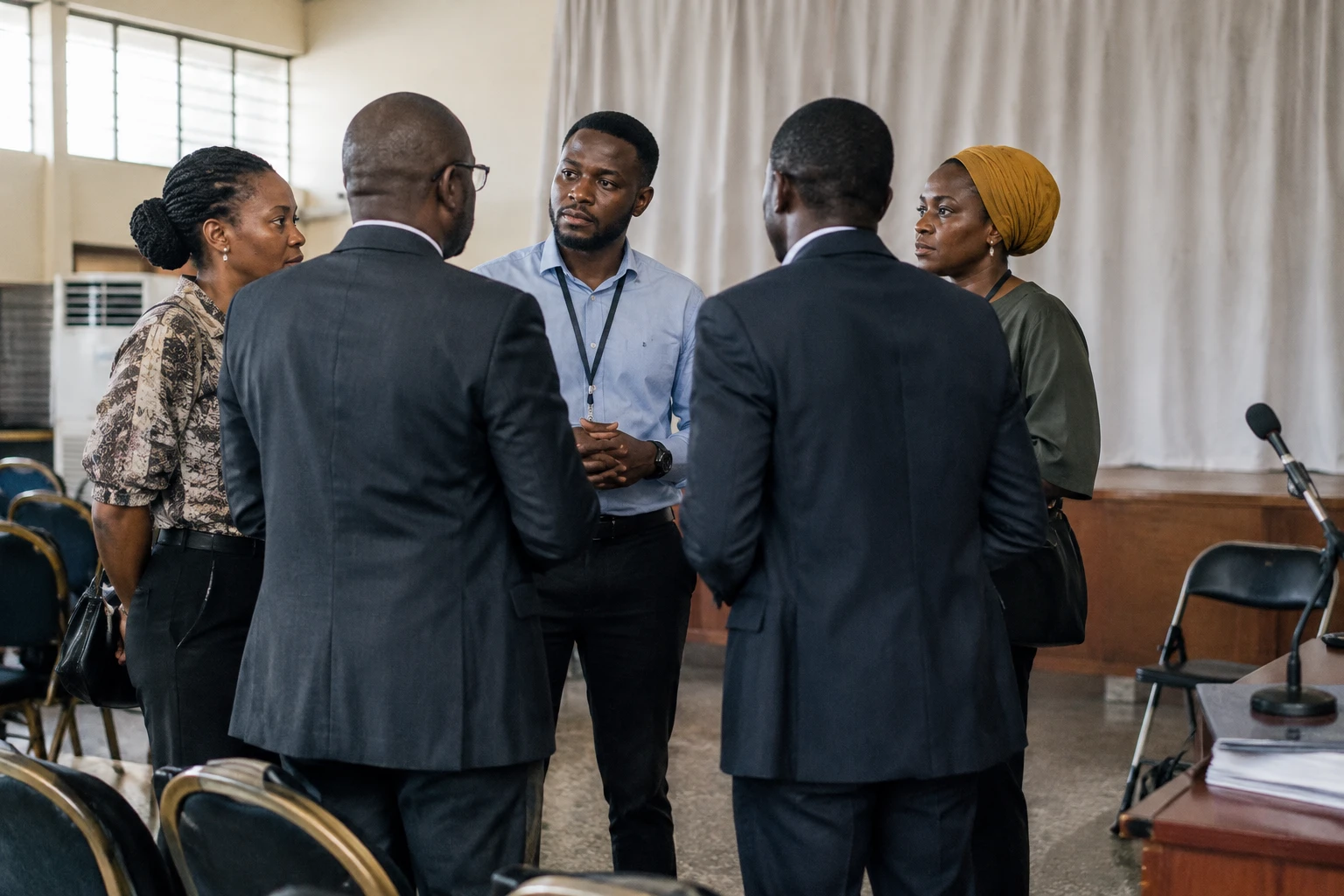
Violence interrupted a political meeting in Lagos before Peter Obi had even arrived. With two months to go before Nigeria’s presidential election, the incident is a reminder that candidates’ ability to campaign without intimidation matters as much as alliances and policies.
A campaign under strain, from Lagos to Calabar
The incident took place in Lagos State, in south-western Nigeria. The economic hub is also a contested political battleground: in 2023, Peter Obi won more votes there than Bola Tinubu, then the candidate of the All Progressives Congress (APC), according to national election results.
The presidential election is scheduled for 16 January 2027. Peter Obi, the candidate of the Nigeria Democratic Congress (NDC), will face, among others, incumbent President Bola Tinubu. The opposition remains fragmented, while legal disputes are complicating the campaigns of other candidates. This situation increases the importance of rallies and local support.
The Lagos incident comes days after an attack was reported on Obi’s convoy in Calabar, in Cross River State. The circumstances of that episode are the subject of disputed allegations. These incidents, occurring close together, have fuelled concerns about the security of political activities, but do not by themselves establish the existence of a co-ordinated strategy.
Accounts from witnesses, but no detailed public inquiry yet
On Thursday 12 November, men armed with sticks, machetes and axes burst into a hall where NDC supporters had gathered in Oregun, in the Ikeja district. Peter Obi and his running mate, Rabiu Kwankwaso, had not yet arrived, according to witnesses cited by several Nigerian media outlets.
The meeting was interrupted. Participants fled the hall, and clashes continued outside. Police used tear gas to disperse the crowd. Vehicles were reportedly damaged and people injured. The information available, however, does not allow a full assessment of the toll or independent confirmation of every detail.
Journalists were also reportedly targeted. A reporter for TheCable was allegedly beaten and robbed of his equipment. The allegation, reported in early accounts of the incident, highlights an additional risk: when reporters cannot document events, it becomes harder to distinguish witness accounts, partisan accusations and established facts.
The NDC accused members of the APC of being linked to the attack. The ruling party rejected the accusations and called for evidence. Its campaign council also condemned attacks on political gatherings and urged security services to identify those responsible. At this stage, no individual responsibility can be presented as established.
Security, a practical condition for electoral choice
A disrupted meeting affects more than political leaders. It deprives party activists of a space to hear a candidate, ask questions and organise their campaign. Local residents may also face immediate consequences: disrupted streets, property damage and fears of further incidents. Businesses and local transport are exposed when crowds scatter into the streets.
Attacks and threats may also weigh more heavily on parties with fewer resources to protect their events or move them elsewhere. They risk reducing the participation of volunteers and voters, particularly when violence goes unpunished. But the known evidence is insufficient to measure this effect or attribute the attack to a political camp.
For the police and the Lagos authorities, the task now is to establish the facts: document injuries and damage, gather witness accounts, protect journalists and determine whether weapons were used. A credible inquiry will also need to make its progress public and ensure that parties’ accusations do not take the place of judicial findings.
The precedent set by Calabar gives this task national significance. Cross River State authorities rejected allegations of APC involvement after the incident involving Obi’s convoy. The recurrence of alleged violence in different states therefore makes it essential to distinguish carefully between verified facts, partisan accounts and the findings of investigations.
An issue for Nigeria and West Africa
The electoral timetable means the coming months will be closely watched. The Independent National Electoral Commission (INEC), which is responsible for organising elections, will have to ensure that parties can reach voters and campaign safely. Compliance with these conditions will also matter to Nigerian and regional observers following the process.
Across West Africa, the stability of Nigeria’s elections carries particular weight. Nigeria is the region’s most populous country and plays a major role in ECOWAS, the Economic Community of West African States. The credibility of the election will depend not only on the vote, but also on the ability to campaign without violence and to handle complaints transparently.
For now, the Lagos attack does not make it possible to conclude who organised it. But it raises an immediate question: will the authorities be able to protect meetings held by all parties and establish responsibility before the campaign intensifies? The answer will weigh on voters’ confidence in Lagos and across the country.
Details of the attack have been cross-checked against reports by Nigerian media. Details that remain disputed or unconfirmed are attributed to witnesses or the parties concerned. Channels Television’s report on the disrupted meeting in Lagos and the International Centre for Investigative Reporting’s investigation provide local detail. The APC campaign council’s public response helps distinguish the party’s condemnation from the NDC’s accusations.



