Algeria
 Egypt
 Libya
 Morocco
 Sudan
 Tunisia
 Benin
 Burkina Faso
 Cabo Verde
 Côte d'Ivoire
 Ghana
 Guinea
 Guinea-Bissau
 Liberia
 Mali
 Mauritania
 Nigeria
 Senegal
 Sierra Leone
 The Gambia
 Togo
 Cameroon
 Central African Republic
 Chad
 DR Congo
 Equatorial Guinea
 Gabon
 Republic of the Congo
 São Tomé and Príncipe
 Burundi
 Comoros
 Djibouti
 Eritrea
 Ethiopia
 Kenya
 Madagascar
 Malawi
 Mauritius
 Mozambique
 Rwanda
 Seychelles
 Somalia
 South Sudan
 Tanzania
 Uganda
 Angola
 Botswana
 Eswatini
 Lesotho
 Namibia
 South Africa
 Zambia
 Zimbabwe
Anniversary in Niamey with no end to the crisis in sight
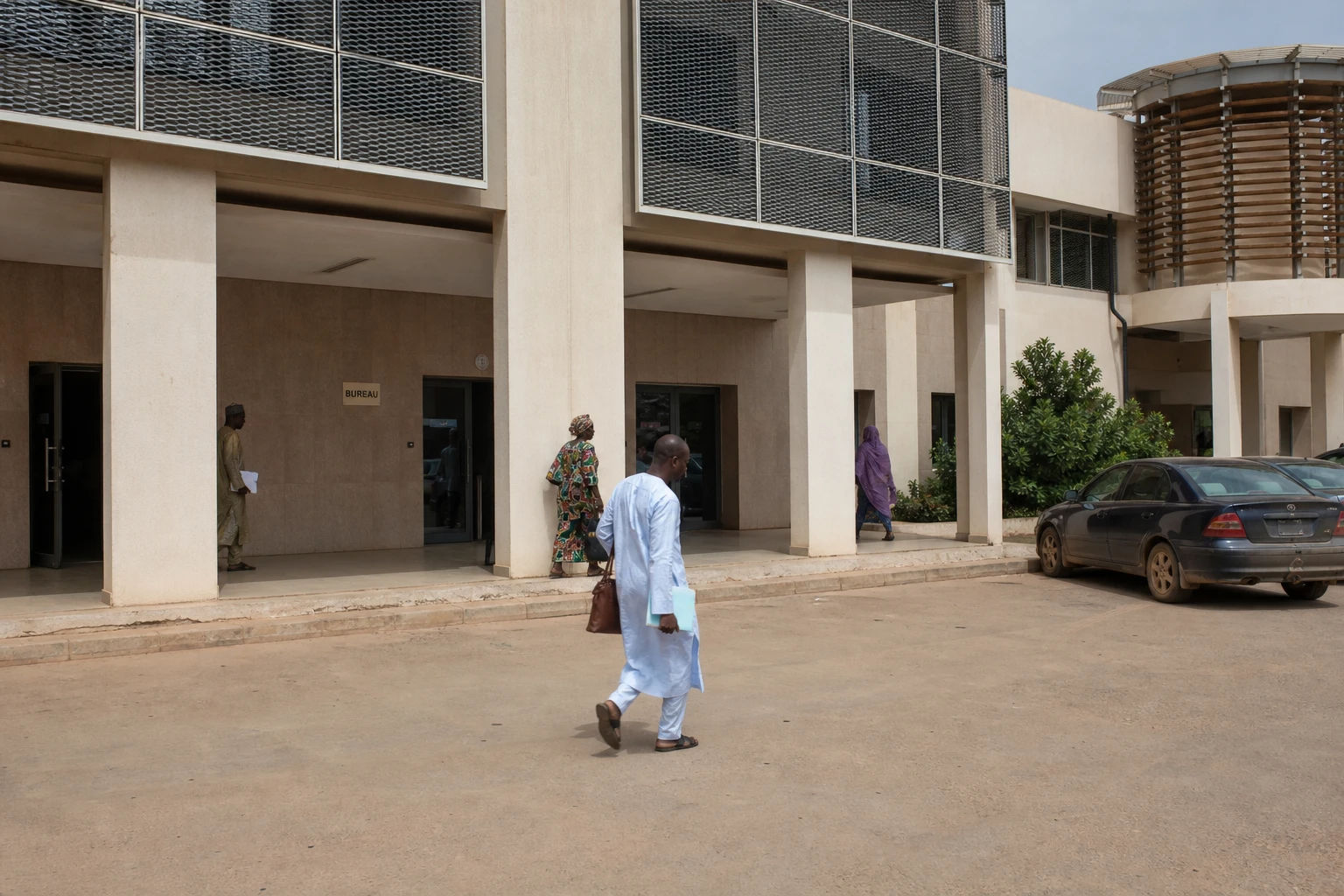
Power changed hands in Niamey on 26 July 2023 in the name of security. Three years later, the promise of a new beginning has not dispelled doubts. Niger remains under the leadership of General Abdourahamane Tiani and the National Council for the Safeguard of the Homeland, while Mohamed Bazoum and his wife remain detained within the presidential compound. A United Nations working group has ruled their detention arbitrary, and calls for their release have been repeated over the months.
On 26 July 2026, the issue at stake goes beyond the Bazoum case alone. It also concerns the credibility of Niger’s institutions, relations with ECOWAS, the Economic Community of West African States, and Niger’s place in a Sahel where military transitions have multiplied. Since 2023, Niamey has broken with several regional frameworks, then formalised its withdrawal from ECOWAS alongside Mali and Burkina Faso, a shift that continues to reshape West African balances.
Security, freedoms and the economy: a mixed record
The authors of the coup based their case on insecurity. Yet observers following the region mainly see a persistent threat in the west, particularly in Tillabéri, which borders Burkina Faso and Mali. Human Rights Watch says the security situation has deteriorated further, with repeated attacks by groups linked to al-Qaeda and Islamic State in the Sahel, as well as counter-insurgency operations sometimes accused of abuses.
The area around Niamey has not been spared this pressure. Human Rights Watch reports attacks on the perimeter of the capital’s airport, while public debate has been marked by a severe crackdown on civic space. The dissolution of parties, suspension of organisations, arrests of journalists and restrictions on prison visits are among the measures documented by human rights groups. In March 2026, a new penal code also strengthened the criminalisation of consensual same-sex relations, illustrating a security-focused approach that extends well beyond the military sphere.
For Nigeriens, the consequences are tangible. Urban centres are living with a more restricted political space. The countryside of Tillabéri, meanwhile, remains exposed to armed groups. Journalists and trade unions face greater pressure. And instead of easing political conflict, the justice system has become a source of deadlock. The fact that Bazoum has still not been tried, or formally brought before an investigating judge, according to his lawyers, reinforces the impression of a country living under a prolonged state of exception.
Economically, the picture is less uniform than it might seem. The World Bank and the IMF report a rebound in activity in 2024, driven by oil exports and a good agricultural season. The World Bank estimates that growth in 2025 remains supported by rising oil production, while the IMF forecasts still-strong growth of around 7.9% for 2025. But this momentum depends on a limited number of drivers, chiefly oil and rain-fed agriculture, and is therefore vulnerable to volatility.
This is where the sharpest divide emerges. The central state benefits from oil revenues and the gradual restoration of some financing headroom. Households, meanwhile, are mainly seeing the delayed effects: jobs remain scarce, public services are fragile, transport costs are sensitive to regional disruptions, and informal activity depends on cross-border trade. Normalisation with Benin, the main export corridor for Nigerien crude, remains crucial. As long as the border and trade are not fully operational, macroeconomic growth does not automatically translate into improved daily life.
What this turning point says about Niger and the Sahel
Niger is now a textbook case of the military transitions in the Sahel. The rhetoric of rupture has enabled the junta to consolidate its power. But it has brought neither a credible election timetable nor a visible institutional transition. Human Rights Watch now describes a government that has extended the transition without a roadmap to democratic elections. This lack of clarity weighs on investors, security cooperation and trust between Niamey and its African partners.
The regional implications are clear. In the Sahel, Niger stands at the intersection of several fault lines: the fight against armed groups, competition between models of sovereignty, and the reshaping of regional organisations. Leaving ECOWAS, partial normalisation with some neighbours and the resumption of talks with the United States show that Niamey is seeking to preserve room for manoeuvre. But this strategy remains fragile as long as the cases of political detainees, security in the west and the framework for the transition remain unresolved.
For West Africa, the Niger case is a reminder of a political truth: security cannot be durably restored simply by overthrowing a civilian government. It requires institutions, a timetable, oversight of the armed forces and a minimum of public space. Three years after the coup, Niger is facing more than a governance crisis. It remains caught between security stabilisation, the concentration of power and the search for a new regional architecture.