Algeria
 Egypt
 Libya
 Morocco
 Sudan
 Tunisia
 Benin
 Burkina Faso
 Cabo Verde
 Côte d'Ivoire
 Ghana
 Guinea
 Guinea-Bissau
 Liberia
 Mali
 Mauritania
 Nigeria
 Senegal
 Sierra Leone
 The Gambia
 Togo
 Cameroon
 Central African Republic
 Chad
 DR Congo
 Equatorial Guinea
 Gabon
 Republic of the Congo
 São Tomé and Príncipe
 Burundi
 Comoros
 Djibouti
 Eritrea
 Ethiopia
 Kenya
 Madagascar
 Malawi
 Mauritius
 Mozambique
 Rwanda
 Seychelles
 Somalia
 South Sudan
 Tanzania
 Uganda
 Angola
 Botswana
 Eswatini
 Lesotho
 Namibia
 South Africa
 Zambia
 Zimbabwe
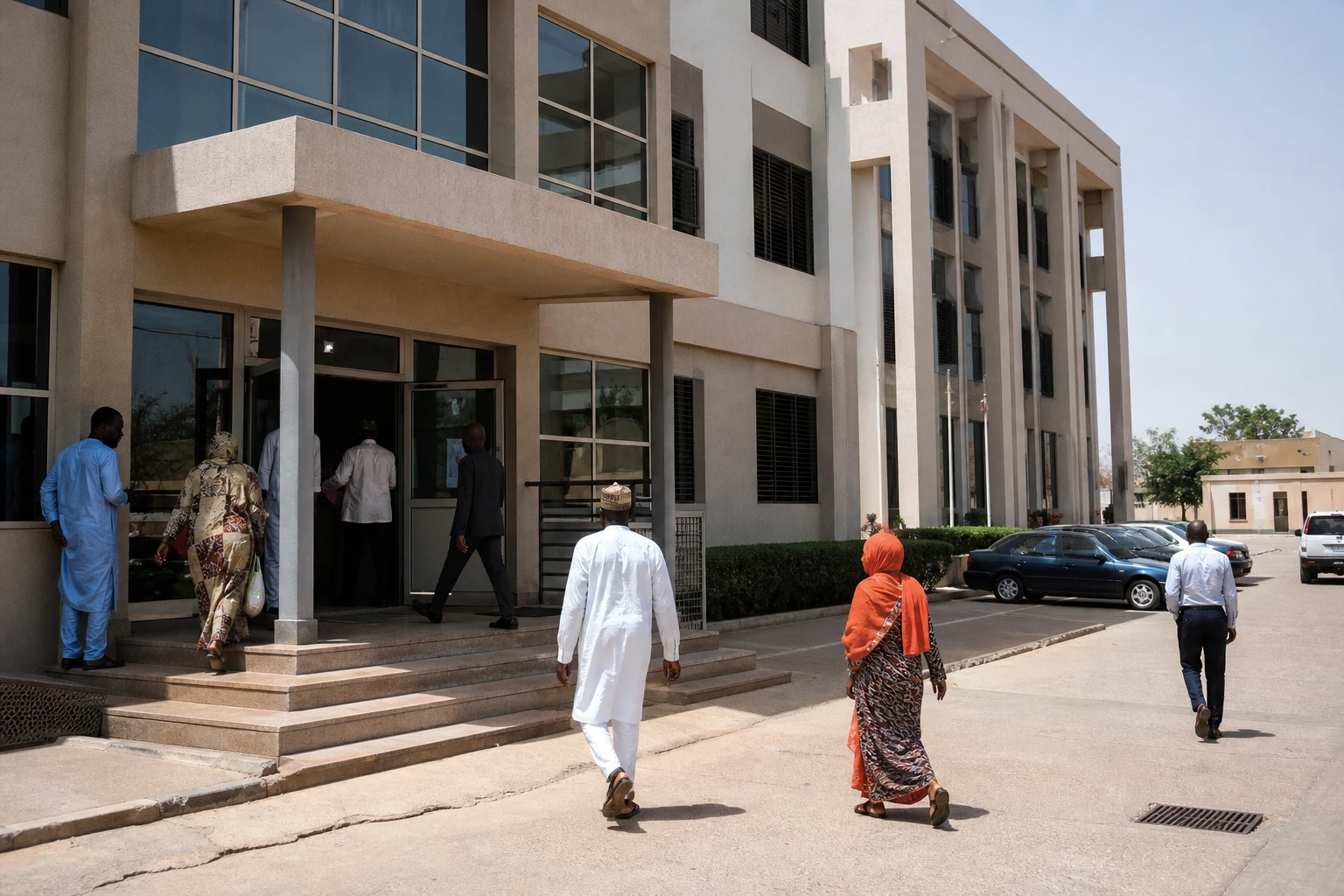
In Niamey, the issue is no longer only security. It is also military.
In Niger, events that began in late August have underscored a truth often underestimated in Sahelian capitals: when the chain of command falters, the entire balance of power comes under strain. In Niamey, General Abdourahamane Tiani’s regime responded by swiftly taking control of the military high command, signalling that internal loyalty is now being treated as a political as well as a military priority.
Niger’s capital remains at the centre of a fragile security apparatus, in a country undergoing a profound reshaping of its alliances since the coup of 26 July 2023. Since January 2025, Niger has no longer been a member of ECOWAS, the Economic Community of West African States, and has become more closely aligned with the Confederation of the Alliance of Sahel States, alongside Burkina Faso and Mali. This regional shift is also changing how Niamey manages its security, borders and partnerships.
A reshuffle to close a breach in the army
On 11 September 2026, by decrees reported by state television and confirmed by the Nigerien News Agency, Abdourahamane Tiani appointed Brigadier-General Mamane Sani Kiaou chief of staff of the armed forces, replacing Major-General Moussa Salaou Barmou. The same move brought further changes to the military hierarchy, including the appointment of General Abdourahamane Abou Zataka as head of the army.
The reshuffle follows the mutiny in Niamey on the night of 28-29 August. According to the Associated Press and several African media outlets, gunfire and explosions were heard near Diori Hamani International Airport, the presidential palace and a military base. The authorities subsequently described the episode as an attempt at destabilisation that was quickly contained. Casualty figures reported in the immediate aftermath varied between sources and should therefore be treated with caution.
Moussa Salaou Barmou’s name is no minor detail in this affair. Before becoming chief of staff of the armed forces in August 2023, he had led the Intelligence and Surveillance Battalion, a unit at the heart of Niger’s security apparatus. Several sources, including Nigerien media, report that some of those involved in the mutiny belonged to the Special Operations Command’s Research and Surveillance Battalion. In this context, his removal appears less like a simple reshuffle than a political sanction and an attempt to tighten control.
Restoring a clear chain of command—but to address what?
In essence, Tiani’s decision is intended to reduce pockets of autonomy within an army already under considerable strain. Since 2023, Nigerien forces have had to contend with several areas of insecurity, notably in the so-called tri-border region between Niger, Mali and Burkina Faso. In such an environment, the loyalty of elite units matters as much as their operational effectiveness. Even a short-lived mutiny is enough to undermine the perception of authority at the top.
The choice of Mamane Sani Kiaou is no more neutral. The sources consulted describe him as an officer reputed to be close to the junta leader and already at the heart of the army. By promoting him, Niger’s government is favouring a conventional figure from within the institution rather than a compromise candidate. The message to the barracks is clear: the chain of command must once again be vertical, clear and unambiguous.
For the population, the immediate impact is more political than symbolic. Such a reshuffle may offer short-term reassurance by showing that the state controls its weapons. But it does not resolve the strain on the home front, professional grievances or tensions between security services. For mid-ranking officers, it may also be read as a warning. In an army where personal loyalties still matter greatly, discipline is often reinforced through targeted appointments, but also through swift dismissals.
This tightening of control at the top comes against a broader regional backdrop. In recent months, Niamey’s authorities have made a series of institutional overtures to the AES, while ECOWAS has managed the effective withdrawal of Niger, Mali and Burkina Faso. This reshaping reduces some traditional frameworks for co-operation, but also pushes the three Sahelian states to devise their own mechanisms for security and integration. Tiani’s decision is therefore part of a drive for armed sovereignty, but also of a regional architecture that is still taking shape.
Beyond Niger, a signal to the entire Sahel
The continental significance of this affair extends well beyond Niamey. It shows that a military government installed in the name of stability can itself face internal divisions. In the Sahel, where military-led transitional governments have gradually drawn closer, the challenge is not only the fight against armed groups. It also concerns the ability of armies to remain cohesive, particularly when they serve simultaneously as political arbiter, security force and instrument of sovereignty.
This episode also raises questions for Niger’s partners. The reshaping under way in the region, from relations with Algiers to new AES co-operation, shows that the Sahel is seeking alternative channels for defence, economic ties and infrastructure. The Algerian prime minister’s visit to Bamako on 14 September 2026, following discussions on major corridors, is a reminder that diplomatic and security alignments are shifting at the same time. Niger is watching this closely, because its own military and political choices will determine its place in this changing landscape.
In the short term, the question to watch is whether Niger’s command structure is genuinely stable. The reshuffle signals a closing of ranks. But in the coming weeks, it will show above all whether Niamey has brought a temporary crisis to an end or exposed a deeper fault line within its security apparatus.