Algeria
 Egypt
 Libya
 Morocco
 Sudan
 Tunisia
 Benin
 Burkina Faso
 Cabo Verde
 Côte d'Ivoire
 Ghana
 Guinea
 Guinea-Bissau
 Liberia
 Mali
 Mauritania
 Nigeria
 Senegal
 Sierra Leone
 The Gambia
 Togo
 Cameroon
 Central African Republic
 Chad
 DR Congo
 Equatorial Guinea
 Gabon
 Republic of the Congo
 São Tomé and Príncipe
 Burundi
 Comoros
 Djibouti
 Eritrea
 Ethiopia
 Kenya
 Madagascar
 Malawi
 Mauritius
 Mozambique
 Rwanda
 Seychelles
 Somalia
 South Sudan
 Tanzania
 Uganda
 Angola
 Botswana
 Eswatini
 Lesotho
 Namibia
 South Africa
 Zambia
 Zimbabwe
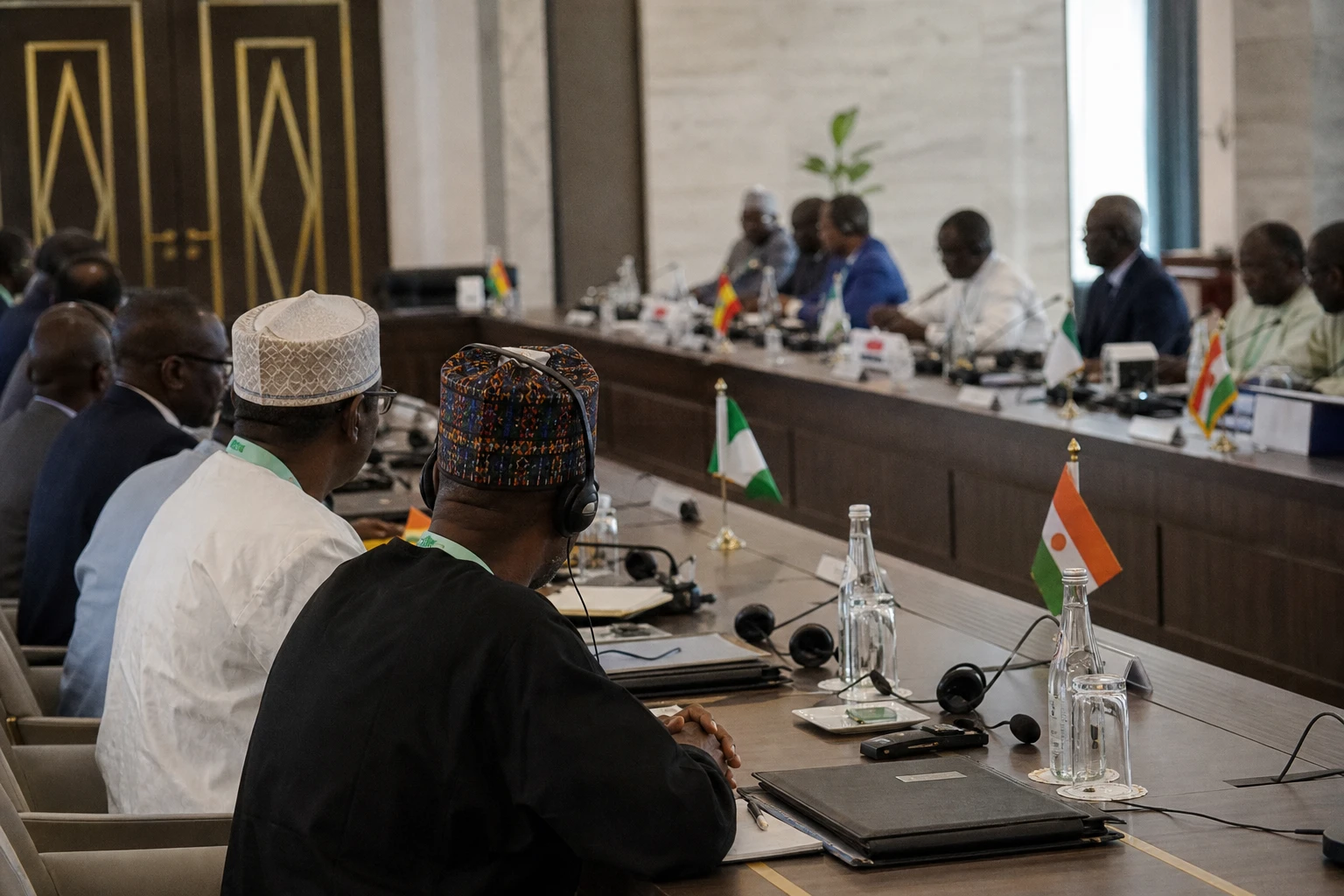
In Niamey, the chain of command remains under strain
In Niger’s capital, a military reshuffle says more than a simple change of posts. It tells of a government seeking first to secure its own security apparatus, after a mutiny served as a reminder that stability is decided in barracks as well as in official speeches.
Niger has entered a new political phase since the coup of 26 July 2023. Since then, the country has been led by General Abdourahamane Tiani, head of the National Council for the Safeguard of the Homeland, amid a persistent armed threat and a far-reaching reorganisation of the state. The break with ECOWAS, which took effect on 29 January 2025, has also shifted the country’s regional centre of gravity towards the Alliance of Sahel States, alongside Mali and Burkina Faso.
A change at the top to close the breach
On Friday, Niger’s authorities reshuffled the military high command. General Maman Sani Kiaou was appointed chief of staff of the armed forces, according to several decrees read out on national television. He replaces General Moussa Salaou Barmou; no official explanation was given for the decision.
The move also affects the army. General Kiaou, until now chief of staff of the army, has changed roles at a time when the military government wants to show that the chain of command remains intact. The key point here is not the name alone. It is the signal sent to the military establishment: loyalty and obedience remain the most closely watched political criteria at present.
The reshuffle comes two weeks after gunfire and fighting in Niamey around strategic sites. The authorities described the events as a mutiny, while media outlets and news agencies reported clashes near the presidency, Diori Hamani International Airport and Base 101. Several sources later said that soldiers had been arrested or killed, but reported tolls remain uncertain and vary between accounts.
What the episode reveals about Niger’s army
The mutiny exposed a political fragility that is often invisible when the government presents itself as monolithic. In a country facing recurring jihadist attacks, internal discipline matters as much as operational capabilities. A divided army, even briefly, leaves the capital exposed, slows the alert chain and forces the government to choose between a firm response, targeted purges and reassurance.
The choice of Maman Sani Kiaou fits this logic. According to the Nigerien News Agency, his name was already among the officers promoted in 2025, showing that he belongs to the circle of senior officers incorporated into the new military order established after the 2023 coup. In other words, the regime is not betting on a sharp break, but on tightening the loyal core.
For rank-and-file soldiers and units deployed on several fronts, the issue is also material. Tensions can arise over postings, rotations, living conditions or a sense of inequality between elite units and troops deployed in the field. In the Sahel, such internal grievances often combine with the pressure of operations against armed groups. The government knows this, which is precisely why it reacts quickly whenever a crack appears.
The authorities’ response is also political. After the mutiny, the Union of School and Student Unions of Niger called for restraint and responsibility, while the Alliance of Sahel States voiced its support for Niger’s institutions. This dual response illustrates the current framework: on the one hand, the regime seeks to prevent any internal contagion; on the other, it casts the episode as part of a narrative of threatened sovereignty.
A Nigerien and Sahelian reading of the balance of power
The regional context weighs heavily. Since withdrawing from ECOWAS, Niger has no longer operated in the same institutional space as before, although the economic and diplomatic consequences of its departure continue to be closely watched in Abuja and other West African capitals. At the same time, the Alliance of Sahel States, with Mali and Burkina Faso, provides a political framework for closer cooperation between military regimes.
In this landscape, every security incident becomes a test of credibility. A military government that claims to be restoring sovereignty must prove that it also controls its own ranks. Otherwise, its message of taking back control loses its force. That is what gives this reshuffle its real significance: it is not just about replacing a chief, but about reassuring the state apparatus, allies and the urban population of Niamey, who are most exposed to the symbolic shocks of this kind of event.
Across the continent, the case of Niger is a reminder of a wider reality: in several Sahelian countries, the army is no longer just an instrument of defence. It has become the arbiter of power, the locus of loyalties and, at times, a mirror of the state’s fractures. What happens next will depend on the Niamey regime’s ability to stabilise its hierarchy, prevent further tensions in the barracks and maintain security pressure on external fronts. The coming days will show whether the reshuffle closes a crisis or merely buys time.