Algeria
 Egypt
 Libya
 Morocco
 Sudan
 Tunisia
 Benin
 Burkina Faso
 Cabo Verde
 Côte d'Ivoire
 Ghana
 Guinea
 Guinea-Bissau
 Liberia
 Mali
 Mauritania
 Nigeria
 Senegal
 Sierra Leone
 The Gambia
 Togo
 Cameroon
 Central African Republic
 Chad
 DR Congo
 Equatorial Guinea
 Gabon
 Republic of the Congo
 São Tomé and Príncipe
 Burundi
 Comoros
 Djibouti
 Eritrea
 Ethiopia
 Kenya
 Madagascar
 Malawi
 Mauritius
 Mozambique
 Rwanda
 Seychelles
 Somalia
 South Sudan
 Tanzania
 Uganda
 Angola
 Botswana
 Eswatini
 Lesotho
 Namibia
 South Africa
 Zambia
 Zimbabwe
Another factory, but above all a question of access
In Niger, access to smartphones remains unequal. This is not just a matter of convenience. A smartphone is a gateway to education, payments, administrative procedures and a growing share of everyday economic activity. When a device remains unaffordable, the entire digital chain slows down.
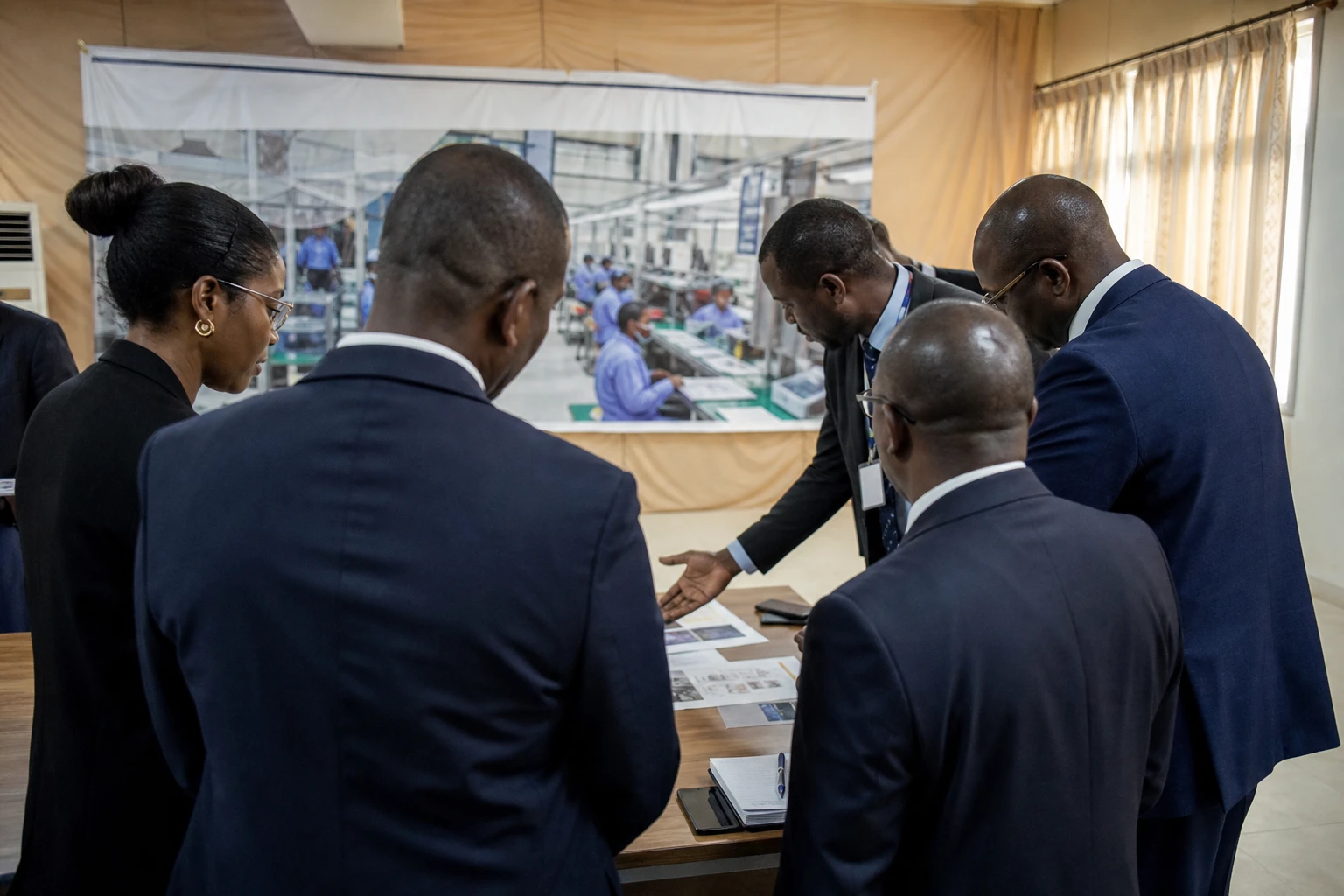
Against this backdrop, Niamey is pushing ahead with a local assembly project in Hamdallaye, in the Tillabéri region, west of the Nigerien capital. The aim is easy to state but difficult to achieve: make digital equipment more affordable while laying the foundations for industry in a country where electronics manufacturing remains underdeveloped.
The project, its figures and its timetable
The project involves a plant to assemble multimedia electronic equipment, including smartphones, tablets and computers. In January 2026, it was already being presented as an investment of nearly 2.94 billion CFA francs, or about €4.5 million, with a promise of 275 permanent jobs and a 36-month implementation period. The chosen site is in Hamdallaye, in the rural municipality of the same name.
In August 2026, a ministerial visit confirmed that construction was progressing. The authorities cited a completion rate of 63% and said the plant was due to begin operating by the end of October. This figure, reported by local and specialist media, shows that the project has moved beyond the announcement stage to become a facility expected on the ground.
The choice of Hamdallaye is not incidental. It locates the industrial facility outside central Niamey, in an area close to the capital but large enough to signal an ambition to decentralise production. In a country where infrastructure and formal jobs remain highly concentrated, this relocation matters as much as the machinery itself.
Why the factory is arriving at the right time
Available figures point to a market that is still limited, but real. In 2024, 63.9% of people over the age of 15 in Niger owned a mobile phone, according to the ITU DataHub. That does not mean everyone has a smartphone. On the contrary, the World Bank and available data on the country’s digital development show that access to digital services remains narrower than simple phone ownership.
Across the region, price remains a central issue. The GSMA says that in sub-Saharan Africa, the median price of an entry-level smartphone reached $39 in 2024. This amounted to 26% of average monthly income, and far more for the poorest households. For the poorest 40%, the device represented 64% of income. For the poorest 20%, it was 87%. The relative burden was also higher for women than for men.
In other words, the question is not simply whether devices can be made locally. Above all, they must be made at a cost that matches local incomes. That is how the Hamdallaye plant will be judged. If it can reduce logistics costs, shorten some import routes and offer more affordable devices, it could widen digital access. If it produces equipment that is too expensive or poorly suited to users’ needs, it will remain more of a symbol than a lever for change.
An industrial test for technological sovereignty
Niger is not starting from scratch. For several years, the authorities have spoken of local processing, productive sovereignty and developing digital skills. The Presidency of the Republic of Niger also presents the country as pursuing a path of domestic development, with greater attention to infrastructure and the capacity to produce locally. This approach is part of a broader drive to regain economic control, also visible in sectors such as energy, agro-industry and mining.
The Hamdallaye project is also part of a wider African trend. Several countries are seeking to assemble computers, tablets and smartphones locally to capture more value at home. Mali, Burkina Faso, Kenya and Nigeria, among others, have already launched a number of initiatives in this direction. The idea is the same everywhere: reduce dependence on imports and create a local technical base. But implementation varies greatly according to energy availability, market size, taxation and maintenance capacity.
In Niger’s case, the social dimension is immediate. For urban households and some rural families, smartphones have become a way to contact the administration, transfer money, access information and use services. For businesses, they support sales, delivery and customer relations. For public services, they can facilitate e-health, distance learning and online procedures. The real issue is therefore not only industrial. It is also civic and economic.
What to watch in Niamey and across the sub-region
The first thing to watch is the start-up date. If the end-of-October deadline is met, Niger will be able to point to a tangible project in a regional environment where industrial announcements are plentiful but delivery is often slower. If the timetable slips, the project’s credibility will immediately be put to the test.
The second concern is the business model. An assembly plant does not automatically create a market. It needs suppliers, reliable electricity, effective distribution, after-sales service, spare parts and a tax policy that does not push up the final price. Without these, the locally made product risks remaining marginal in the face of brands already established in the entry-level segment.
The third concern is regional. Niger is part of West Africa, even though its political ties with partners in the Alliance of Sahel States have recently been reshaped. In a context where supply chains still run across several neighbouring countries, a plant in Hamdallaye could serve the domestic market and, eventually, some sub-regional niches — provided it can keep costs, quality and volumes under control.
This project therefore says something broader than the assembly of a phone. It reflects a state’s ambition to turn consumer demand into a means of production. It also points to the pressure on an African market where digital use is growing, but access is too often held back by price. In Hamdallaye, Niger is not just making devices. It is trying to build its place in the digital economy of the future.