Algeria
 Egypt
 Libya
 Morocco
 Sudan
 Tunisia
 Benin
 Burkina Faso
 Cabo Verde
 Côte d'Ivoire
 Ghana
 Guinea
 Guinea-Bissau
 Liberia
 Mali
 Mauritania
 Nigeria
 Senegal
 Sierra Leone
 The Gambia
 Togo
 Cameroon
 Central African Republic
 Chad
 DR Congo
 Equatorial Guinea
 Gabon
 Republic of the Congo
 São Tomé and Príncipe
 Burundi
 Comoros
 Djibouti
 Eritrea
 Ethiopia
 Kenya
 Madagascar
 Malawi
 Mauritius
 Mozambique
 Rwanda
 Seychelles
 Somalia
 South Sudan
 Tanzania
 Uganda
 Angola
 Botswana
 Eswatini
 Lesotho
 Namibia
 South Africa
 Zambia
 Zimbabwe
Niamey on edge as an army confronts its divisions
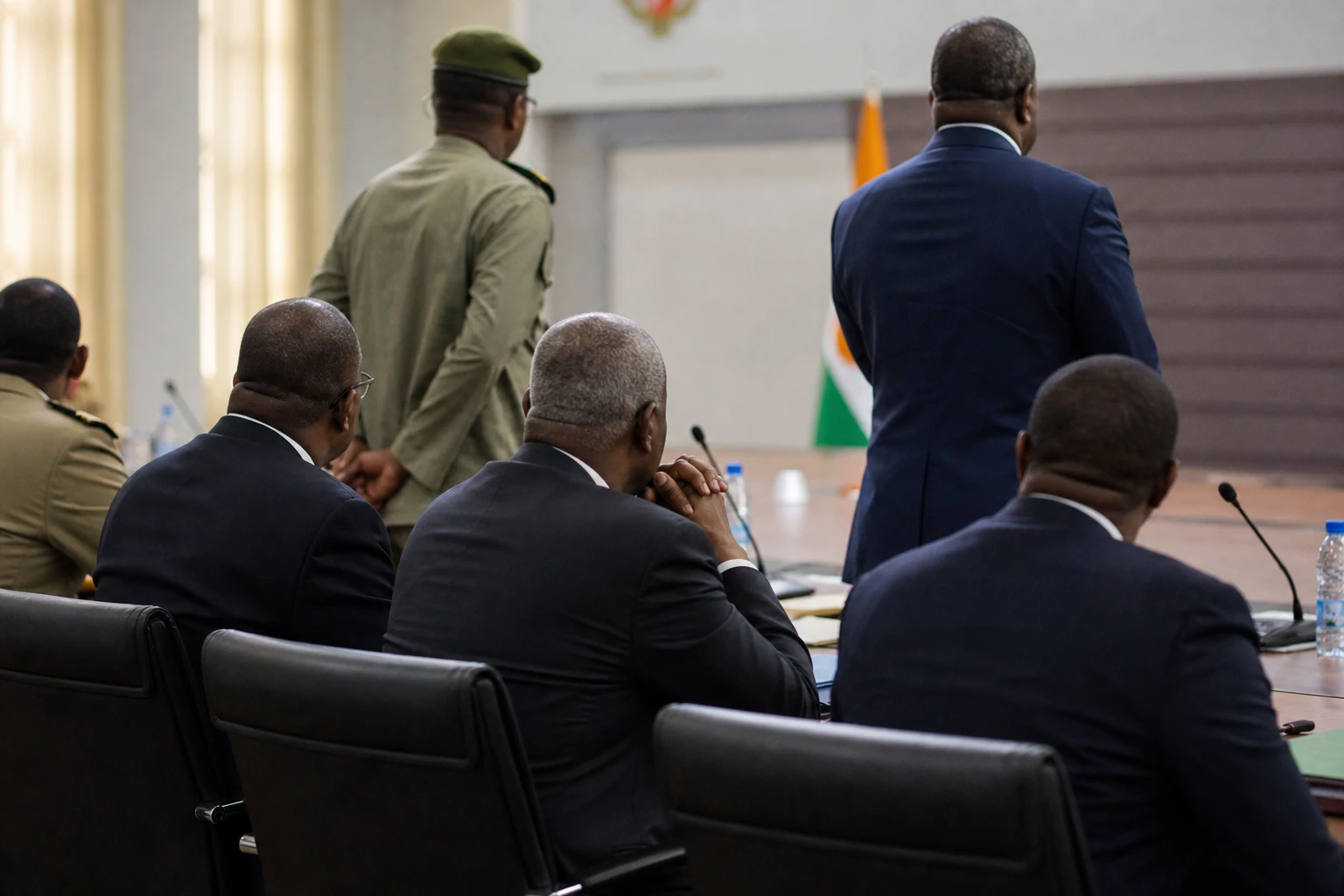
In Niger, the gunfire in Niamey did more than disturb a night. It recalled a truth often left unspoken in military-led transition regimes: when the armed forces fracture, the entire promise of order is put at risk. In the Nigerien capital, 31 August was described as calm after a weekend of exchanges of fire, but the episode left a pressing question behind: what drives soldiers to turn against their own chain of command?
The context is a country already undergoing profound political and strategic realignment since the coup of 26 July 2023, led by the National Council for the Safeguard of the Homeland, the CNSP. Since then, Niamey has tightened its alliances in the Sahel, within the Alliance of Sahel States, the AES, which brings together Niger, Mali and Burkina Faso. At the same time, relations with ECOWAS, the Economic Community of West African States, have deteriorated following the announcement that the three countries would withdraw.
What the established facts show
Nigerien authorities described the incident as a “fit of anger” by soldiers. In their statement, they said a group of military personnel, described as having broken with regulations, had taken fellow soldiers hostage at Niamey’s Base 101 before firing on several sensitive sites in the capital on the night of 28 to 29 August 2026. The swift response by loyal forces reportedly enabled them to gradually retake the positions targeted. No full official casualty toll has been released so far.
Several media outlets and news agencies subsequently confirmed the seriousness of the episode. The AP reported an assault by young soldiers on sensitive positions, followed by a return to calm the next day, with the support of Russian Africa Corps troops. Le Monde also reported that the attempt had exposed the fragility of the transitional government and the importance of the Russian presence in Niamey.
Institutionally, Niger’s Ministry of Defence remains the main official source on these events. Its website notes that the Nigerien Armed Forces operate across a vast territory of 1,267,000 sq km under constant security pressure. This reminder matters. It explains why every internal incident in the army immediately takes on national significance in Niger.
Why anger is spreading through the ranks
The precise motives for the mutiny have not been made public. This is where caution is necessary. Several sources, however, point to longer-standing discontent among combat troops. According to the AP, the mutinous soldiers came mainly from units deployed on the front line against jihadist groups, where losses are heaviest and living conditions harshest. The same source cites recurring complaints about food, equipment and operational support. This account is consistent with other analyses published over recent months on the strain on Nigerien forces as they face repeated attacks in the south-west and near Niamey.
Another factor features in testimony gathered by several observers: a sense of inequality between certain units. The presidential guard remains a force apart: better protected, more visible and politically closer to the top of the state. Ceremonies honouring members of this guard, while soldiers die at the front without comparable recognition, fuel long-standing resentment. In an army under pressure, symbolic rank matters as much as military hierarchy. This is an analytical hypothesis, but it sheds light on the tensions revealed by the gunfire in Niamey.
The presence of Russia’s Africa Corps in the capital adds a sensitive dimension. Since the shift in 2023, Nigerien authorities have favoured alternative security partnerships, breaking with former Western arrangements. On 29 August, several media outlets reported that Russian personnel had taken part in retaking the sites under attack. Moscow was not a mere observer. This changes how the event is perceived in the barracks: for some military personnel, seeing a foreign force intervene against Nigerien soldiers may be experienced as a strong political signal, or even as a humiliation.
What this says about Niger and the Sahel
Niger is not an isolated case. Across the Sahel, military transitions have often promised to restore security before confronting the realities on the ground. The AES was conceived as a vehicle for military and political sovereignty, but this mutiny shows that an external front can conceal far more complex domestic tensions. The real question is not just whether a unit is loyal. It is whether the state can maintain cohesion in its army while waging a long war against armed groups.
The episode also matters regionally because it affects a pivotal country. Niamey is a crossroads between the Niger Basin, Nigeria, Mali, Burkina Faso and Algeria. When the capital is shaken, the entire balance of the Sahel is affected. ECOWAS remains a point of reference, even though Niger has chosen to leave it alongside its AES neighbours. The African Union, for its part, continues to stress that the stability of the Sahel is inseparable from that of the continent. Niger therefore remains at the heart of a balance of power shaped by proclaimed sovereignty, security dependencies and pressure from armed groups.
The next point to watch is clear: the response of Niger’s military leadership. If no sanctions, internal investigation or sign of a lasting restoration of control follows, the risk is not merely a repeat. It is that doubt takes hold among the troops. In a country where the army is at once a security institution, a political actor and a symbol of sovereignty, that doubt could endure. This is where, beyond Niamey, part of Niger’s future is at stake.