Algeria
 Egypt
 Libya
 Morocco
 Sudan
 Tunisia
 Benin
 Burkina Faso
 Cabo Verde
 Côte d'Ivoire
 Ghana
 Guinea
 Guinea-Bissau
 Liberia
 Mali
 Mauritania
 Nigeria
 Senegal
 Sierra Leone
 The Gambia
 Togo
 Cameroon
 Central African Republic
 Chad
 DR Congo
 Equatorial Guinea
 Gabon
 Republic of the Congo
 São Tomé and Príncipe
 Burundi
 Comoros
 Djibouti
 Eritrea
 Ethiopia
 Kenya
 Madagascar
 Malawi
 Mauritius
 Mozambique
 Rwanda
 Seychelles
 Somalia
 South Sudan
 Tanzania
 Uganda
 Angola
 Botswana
 Eswatini
 Lesotho
 Namibia
 South Africa
 Zambia
 Zimbabwe
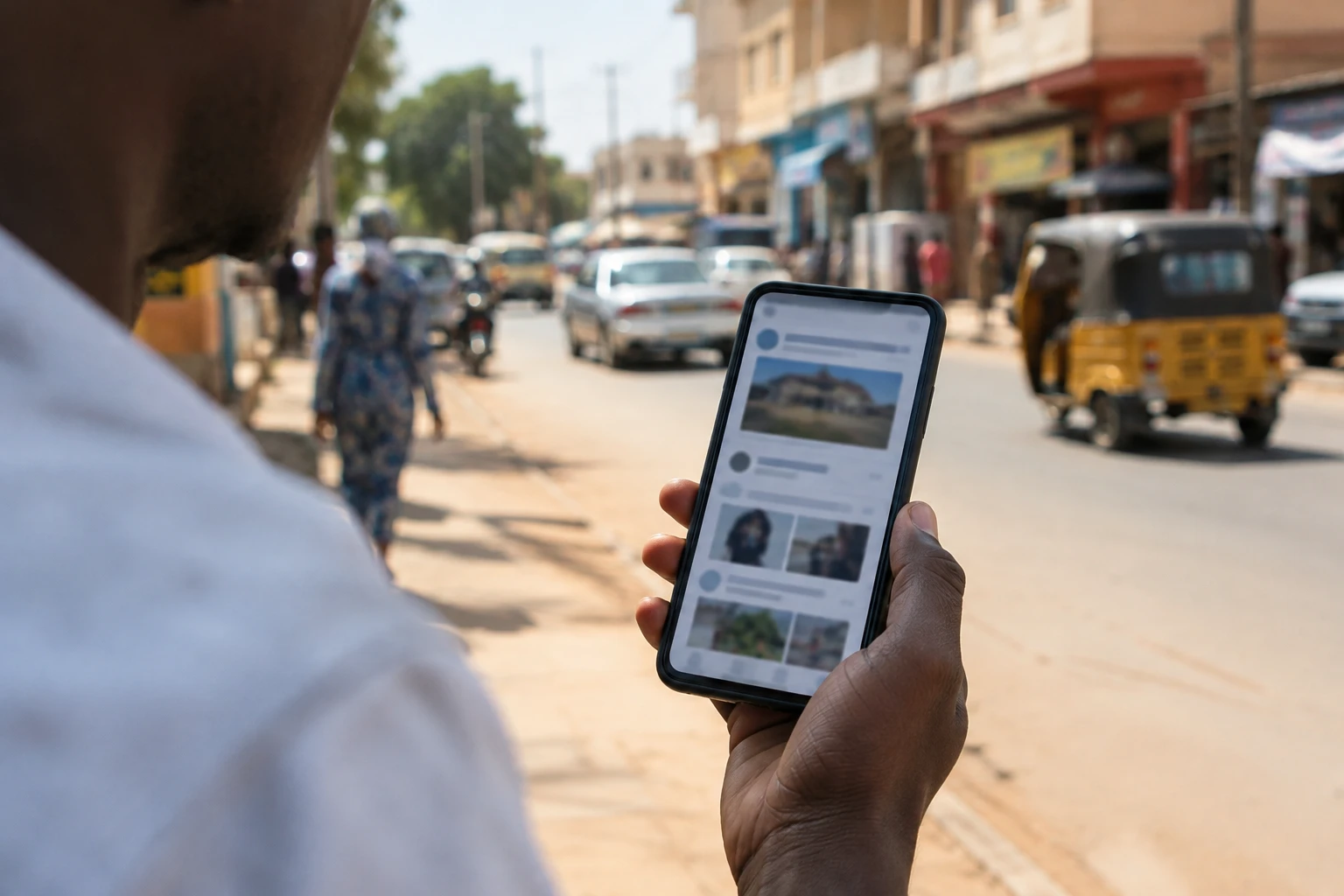
In Niamey, one sentence changed the nature of a disappearance: Nigerien journalist Moussa Kaka is alive and being held by the authorities. But his family and colleagues do not know where he is or on what grounds he has been deprived of his liberty. In a state, announcing that a person is alive is no substitute for access to a lawyer or judicial oversight.
Detention confirmed, but location still unknown
Moussa Kaka left the offices of Radio Télévision Saraounia in Niamey on the evening of 31 August 2026. He was heading home but never arrived. His relatives and colleagues then received no information about his fate for several weeks, according to the World Organisation Against Torture and the International Federation for Human Rights.
On 6 October, Niger’s Minister of Justice and Human Rights, Alio Daouda, confirmed to Reporters Without Borders that the journalist was being held by the authorities. He reportedly said: “He is alive and his family knows it.” This confirmation, also reported by TV5MONDE, does not specify the place of detention or the reasons given. It therefore does not, on its own, establish whether regular judicial proceedings have been initiated.
A former RFI correspondent and director of the private Saraounia channel, Moussa Kaka already knows the consequences of doing journalistic work under pressure. He spent more than a year in detention from 2007 before being released in October 2008. That earlier episode does not prove the reasons for his current detention, but it is a reminder that tensions between the authorities and the press in Niger are not new.
Distinct cases in the Sahel, the same question of safeguards
Moussa Kaka’s case arises in a Sahelian region where military authorities regularly invoke national security and the fight against disinformation. These are real concerns. They do not, however, exempt states from accounting for arrests, disclosing places of detention and upholding the rights of the defence. Comparing the situations makes it possible to examine these safeguards without conflating the facts or national responsibilities.
In Burkina Faso, investigative journalist Atiana Serge Oulon, editor of the newspaper L’Événement, was abducted in June 2024 by men in civilian clothes. In May 2026, Reporters Without Borders said, based on its investigation, that he had been detained until at least the end of 2025 in a villa in Ouagadougou used as an unofficial detention centre. This revelation contradicts the authorities’ account in October 2024, according to which the journalist had been sent to the front. These details are attributed to RSF: they do not constitute a court ruling.
In Mali, the criminal chamber of the Bamako Court of Appeal sentenced commentator Mohamed Youssouf Bathily, known as Ras Bath, and activist Rokia Doumbia, nicknamed “Rose vie chère”, to ten years in prison, three of them suspended, on 17 August 2026. The Media Foundation for West Africa says the charges include, in particular, criminal conspiracy and undermining the credibility of the state through information technologies. It would be inaccurate to reduce the case to a conviction for speaking about the price of tomatoes or holding a microphone: the judicial authorities made specific accusations, which rights advocates contest.
These cases are not identical. One concerns a detention that Niger’s government has just acknowledged without making its location public; another, an alleged disappearance and secret detention in Burkina Faso; the third, a sentence handed down by a Malian court. Considered together, they highlight regional concern about freedom of expression and avenues for legal redress. They do not allow us to conclude that the proceedings or facts are interchangeable.
Sovereignty is also measured by how justice works
In Niger, this question arises amid a period of political change. The country has been ruled by military authorities since the July 2023 coup. Together with Burkina Faso and Mali, it founded the Alliance of Sahel States (AES), a confederation presented as a framework for political and security cooperation. The three countries left the Economic Community of West African States (ECOWAS), the regional integration organisation, on 29 January 2025.
AES governments advocate greater autonomy and criticise external pressure, notably that exerted through sanctions against Niger in 2023. These arguments form part of a real political debate about sovereignty and regional power dynamics. But a state’s sovereignty is not simply a matter of distancing itself from former partners. It is also judged by how its institutions protect people from arbitrariness.
The reference to the “lettres de cachet” of the French monarchy, used before the Revolution to imprison people without trial, can serve as an image for questioning an opaque detention. It must not stand in for legal evidence or historical equivalence. In Moussa Kaka’s case, the established facts are more precise: his disappearance on 31 August, followed by the ministerial confirmation of his detention on 6 October. The location, the reasons and access to legal counsel remain the key points that need to be clarified publicly.
A Nigerien case with regional repercussions
For the public, the impact of an undocumented detention extends beyond the fate of a single journalist. Newsrooms do not know what limits to place on their work; families are left without a clearly identified contact; and the public loses a potential source of verified information. In Niamey and across the regions, this uncertainty can encourage self-censorship without any need to officially close a media outlet.
For Niger’s authorities, disclosing the place of detention, the legal grounds for the measure and arrangements for access by the family or a lawyer would turn a bare confirmation into verifiable safeguards. The regional significance of the case will also be determined here. The AES says it is building a distinct model of cooperation, while ECOWAS seeks to maintain practical relations with its former members. The credibility of Sahelian institutions will also depend on their ability to reconcile security, sovereignty and fundamental rights.
At this stage, no corroborated public information establishes where Moussa Kaka is being held or what charges he faces. The next decisive development will therefore be an official clarification of these two points, as well as the journalist’s ability to communicate with his relatives and a lawyer. The statement “he is alive” has lifted part of the veil of silence. It has not yet dispelled uncertainty about his rights.