Algeria
 Egypt
 Libya
 Morocco
 Sudan
 Tunisia
 Benin
 Burkina Faso
 Cabo Verde
 Côte d'Ivoire
 Ghana
 Guinea
 Guinea-Bissau
 Liberia
 Mali
 Mauritania
 Nigeria
 Senegal
 Sierra Leone
 The Gambia
 Togo
 Cameroon
 Central African Republic
 Chad
 DR Congo
 Equatorial Guinea
 Gabon
 Republic of the Congo
 São Tomé and Príncipe
 Burundi
 Comoros
 Djibouti
 Eritrea
 Ethiopia
 Kenya
 Madagascar
 Malawi
 Mauritius
 Mozambique
 Rwanda
 Seychelles
 Somalia
 South Sudan
 Tanzania
 Uganda
 Angola
 Botswana
 Eswatini
 Lesotho
 Namibia
 South Africa
 Zambia
 Zimbabwe
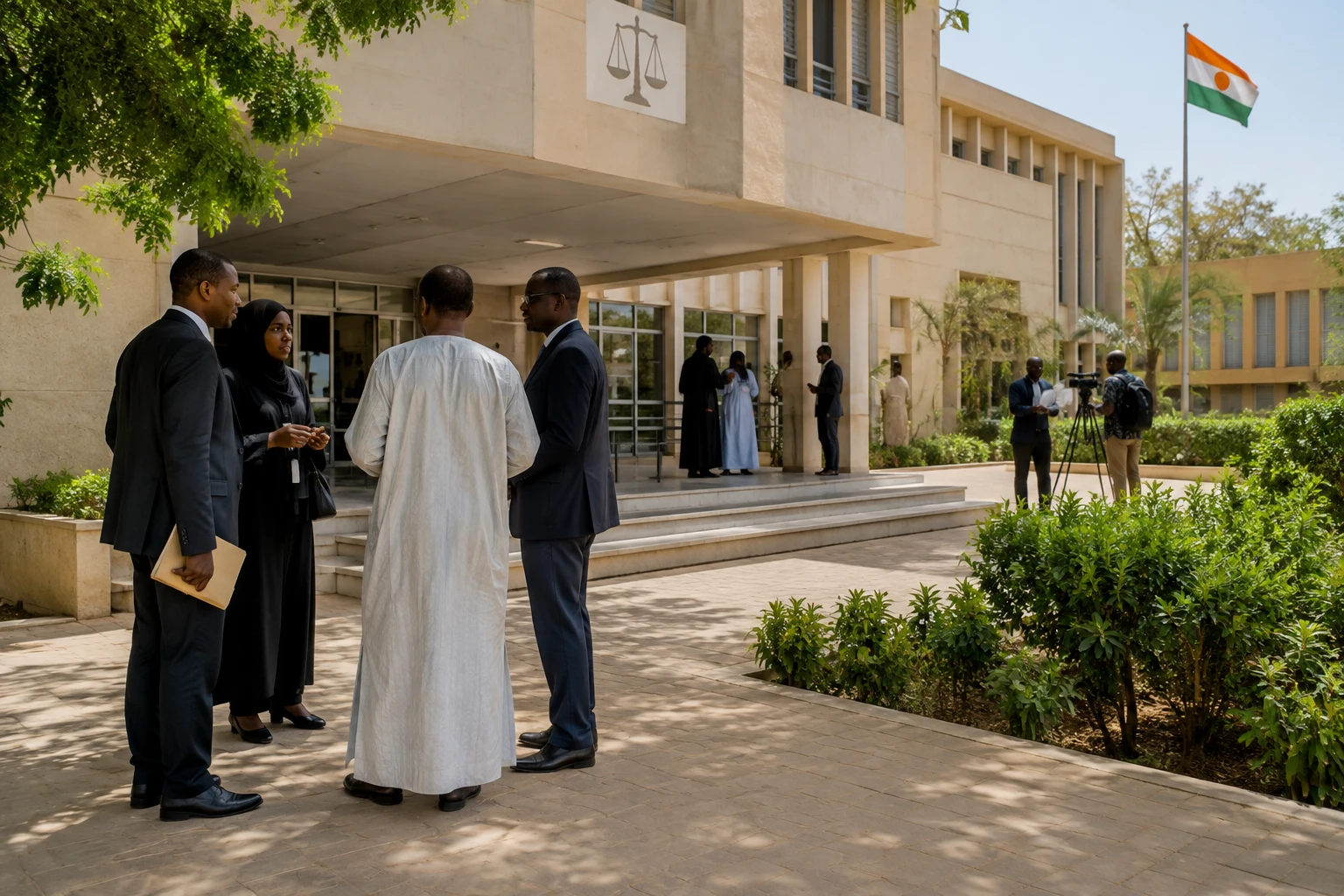
A journalist can be officially declared alive while remaining inaccessible to his relatives and lawyer. In Niger, the case of Moussa Kaka now raises a concrete question: what does detention mean if the place, grounds and judicial safeguards are not made public ?
On 14 October, the Togolese association Journalistes pour les droits de l’homme (JDHO) sent an open letter to General Abdourahamane Tiani, leader of Niger’s transitional authorities. It is asking for details of where the journalist is being held, his conditions of detention and the allegations against him. The organisation is also calling for a judicial investigation.
A disappearance followed by an official statement
Moussa Kaka heads Radio Télévision Saraounia. On 31 August 2026, at about 7pm, he left his media outlet’s premises in Niamey to go home. He never arrived. His family and colleagues have had no direct news of him since. These details were reported by Reporters Without Borders (RSF) and the Observatory for the Protection of Human Rights Defenders, which brings together the International Federation for Human Rights and the World Organisation Against Torture.
Niger’s justice minister, Alio Daouda, said on 25 September, during Niger’s Universal Periodic Review in Geneva, that the journalist was in detention and would have to answer before the courts. He also told RSF on 6 October that Moussa Kaka was alive. The minister referred to an offence, but the public information consulted does not specify its nature or the legal basis for the detention.
The statement changes the nature of the questions, but does not resolve them. It is an official indication of the journalist’s fate. However, it does not enable his family, lawyer or the public to verify his place of detention, his state of health or his access to due process. The ministry has not made these details public in the information cross-checked here.
The JDHO’s demands and judicial safeguards
For Richard Aziagué, president of the JDHO, Moussa Kaka is a prominent figure in Nigerien journalism and heads a media group. In its letter, the association is not asking the courts to refrain from examining any alleged offences. It is calling for the allegations to be made known to the journalist and for his situation to be clarified. Several Togolese reports on the initiative have described these demands.
The distinction is essential: stating that someone is in detention is not enough to establish the reasons for their deprivation of liberty or whether their rights are being respected. Without verifiable information about the place and conditions of detention, relatives cannot pursue their normal enquiries. For Nigerien journalists, the uncertainty also fuels fears of working without knowing what protections apply when an authority invokes an offence.
RSF considers that concealing the whereabouts of a detained person may amount to an enforced disappearance under the international convention ratified by Niger. This is the organisation’s characterisation, not a judicial ruling. RSF says it has petitioned United Nations mechanisms and is urging the authorities to disclose the journalist’s fate. The FIDH-OMCT Observatory had already reported his disappearance on 7 September and called for urgent measures.
A tense political and media climate
The disappearance occurred two days after a mutiny was reported at several military facilities in Niamey, according to RSF. At this stage, no public information that has been cross-checked demonstrates a link between this episode and Moussa Kaka’s detention. The security context therefore provides no basis either to attribute a motive to his arrest or to draw conclusions about responsibility. It does, however, make precise and verifiable official communication all the more necessary.
The journalist’s career highlights what is at stake for the sector. He founded Radio Saraounia in 1999, then launched a television channel in 2011. RSF reports that the group employs about 70 people and has stations outside the capital, including in Tahoua, Maradi and Madaoua. His disappearance therefore affects a newsroom and teams beyond Niamey, as well as an audience that relies on local media to follow the news.
The case also comes amid a period of political realignment. Following the July 2023 coup, the transitional authorities reshaped the country’s institutions and regional relations. Niger, Mali and Burkina Faso left the Economic Community of West African States (ECOWAS), the regional integration organisation, on 29 January 2025. They co-operate within the Confederation of Sahel States (AES). The withdrawal changes the frameworks for dialogue between Niamey and its neighbours, but does not remove Niger’s national and international human rights obligations.
A case followed beyond Niger
The JDHO’s mobilisation, based in Lomé, shows that the case extends beyond Niger’s borders. Appeals to African and UN mechanisms provide additional avenues for follow-up, even though they do not replace a national investigation or the family and lawyer’s access to the detainee. The question is therefore one of institutions’ ability to account for a detention, including amid security tensions and regional reorganisation.
The next decisive steps are concrete: disclosing where Moussa Kaka is being held, formally notifying him of the precise allegations, granting his lawyer and family access, and establishing that an announced investigation is under way and can be verified. Until this information is available, the minister’s statement that he is alive addresses only some of the concerns. For Nigerien journalists and their colleagues across the region, what happens next will show whether judicial safeguards can be scrutinised beyond official announcements.