Algeria
 Egypt
 Libya
 Morocco
 Sudan
 Tunisia
 Benin
 Burkina Faso
 Cabo Verde
 Côte d'Ivoire
 Ghana
 Guinea
 Guinea-Bissau
 Liberia
 Mali
 Mauritania
 Nigeria
 Senegal
 Sierra Leone
 The Gambia
 Togo
 Cameroon
 Central African Republic
 Chad
 DR Congo
 Equatorial Guinea
 Gabon
 Republic of the Congo
 São Tomé and Príncipe
 Burundi
 Comoros
 Djibouti
 Eritrea
 Ethiopia
 Kenya
 Madagascar
 Malawi
 Mauritius
 Mozambique
 Rwanda
 Seychelles
 Somalia
 South Sudan
 Tanzania
 Uganda
 Angola
 Botswana
 Eswatini
 Lesotho
 Namibia
 South Africa
 Zambia
 Zimbabwe
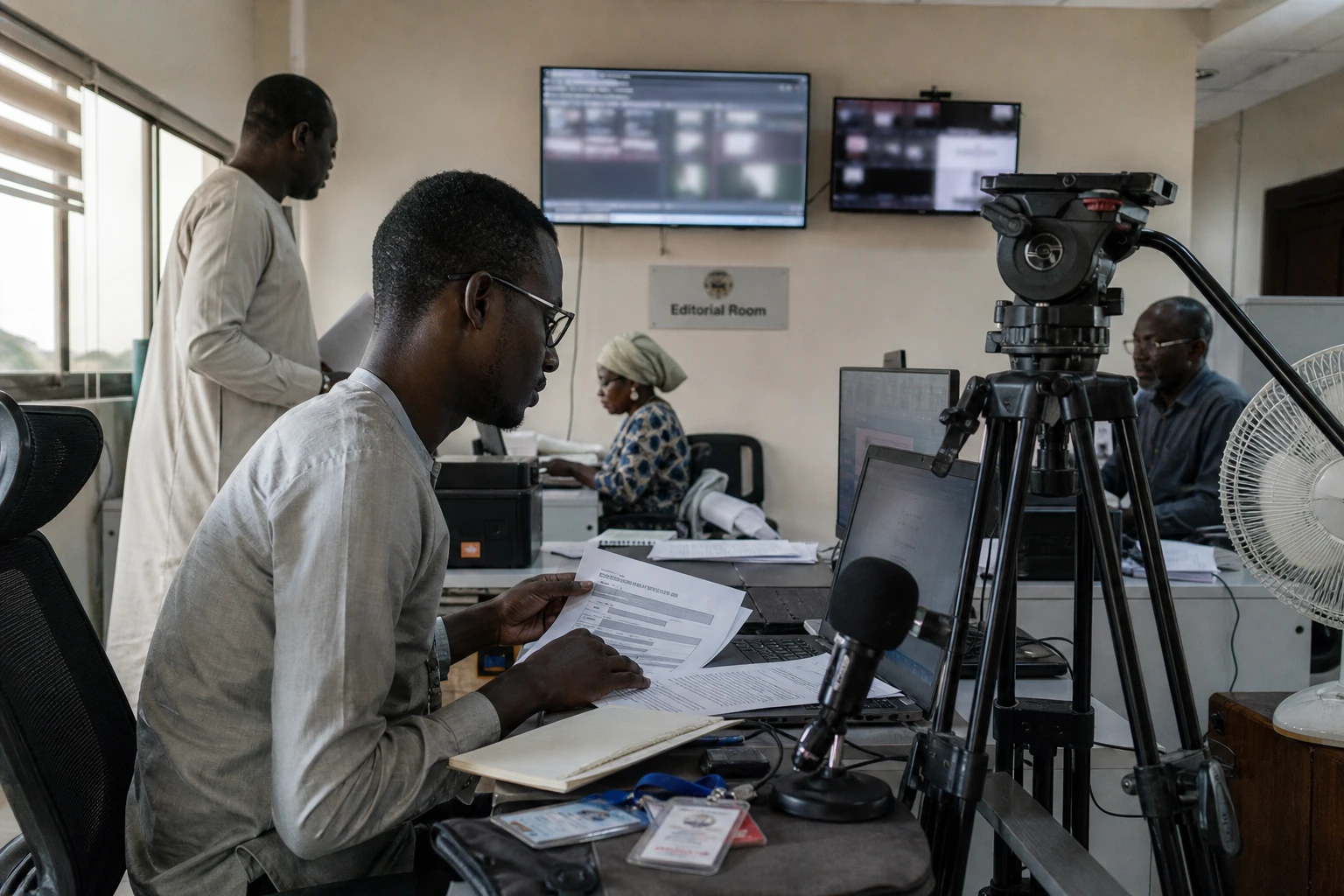
In Niamey, mining sovereignty is also shaped by contracts
In northern Niger, uranium is more than a resource. It is a negotiating lever, a source of public revenue and a means of strategic visibility. In Arlit, in the Agadez region, each permit now tells a story that goes beyond geology alone: it reflects how the Nigerien state wants to regain control of an industry long structured by foreign partners.
This phase is part of a trajectory that began after the change of power in Niamey on 26 July 2023. Since then, the authorities have taken a series of decisions affecting mining assets, amid a break with several Western partners and a reshaping of regional alliances. The country remains tied to its West African environment, but it has also changed its relationship with ECOWAS, whose sanctions accompanied the 2023 crisis, before the climate became more pragmatic on some economic issues.
What was decided for Madaouela I
On 21 August 2026, the Council of Ministers adopted a draft decree re-awarding the large-scale uranium mining permit for “Madaouela I” to Madaouela Mining Company, or MAMICO, in the urban commune of Arlit, Agadez region. The following day, the government’s official statement said the permit had been withdrawn in July 2024 and had returned to the state’s public domain under a decree dated 31 July 2024.
The same statement sets out the terms of this new phase: an initial flat fee of $10 million, local-content commitments, around 1,000 jobs for young Nigeriens, and priority for local companies in services and supplies related to the project. It adds that the company will also have to help build the capacity of mining officials and support local development in the communities concerned.
In terms of ownership, the announced structure marks a clear change from the GoviEx era. The Australian company, now known as Atomic Eagle following its takeover, will hold 60% of the project and operational control, while the Nigerien state will own 40%. Several specialist financial media outlets have reported this split, based on information from the company and the Nigerien authorities.
The arrangement also includes significant financial provisions. The state has a $40 million credit facility to cover its future contributions, without immediate dilution, while Atomic Eagle must pay $10 million for the permit. These terms are accompanied by shared marketing rights over production, with pre-emption or requisition mechanisms subject to limits and safeguards, capped at 50% of production.
A compromise after a two-year stand-off
The case did not move forward all at once. In June 2026, Reuters had already reported that technical and legal discussions had begun in Niamey between the company and the Ministry of Mines to prepare a new mining agreement. A month earlier, the company said it had asked for a temporary suspension of the international arbitration launched after the permit was withdrawn in 2024, to allow time to negotiate an amicable settlement with the Nigerien state.
The original dispute dates back to July 2024, when the Nigerien authorities withdrew the Madaouela I permit from GoviEx, saying at the time that the project was progressing too slowly. According to the company’s financial documents, the withdrawal triggered international arbitration proceedings based on the mining agreement signed in 2007. Yet the project remains one of the country’s largest uranium deposits, with a historical resource estimate of 116.5 million pounds of U3O8.
This outcome differs from that of other mining cases in Niger. In the case of Orano, the authorities withdrew the Imouraren permit in June 2024, then moved more decisively to take control of the uranium industry’s industrial assets. Orano says in its 2024 annual report that its Nigerien subsidiaries were deconsolidated and that the Imouraren permit was withdrawn on 19 June 2024. The case remains contentious. By contrast, Madaouela has led to a renegotiated agreement, showing that in Niamey mining sovereignty does not always follow the same approach.
This contrast matters for Niger, but also for the global uranium market. The OECD Nuclear Energy Agency notes that the country has long accounted for a notable share of African supply, and that the development of new mines such as Madaouela could once again increase employment and production capacity in the sector. In other words, the challenge is not simply to renegotiate a permit. It is to turn a deposit into a lasting industrial, fiscal and social asset.
What the agreement changes for Niger and the region
For the Nigerien state, the new agreement combines three objectives that are rarely easy to achieve together: capturing more value, securing investment and retaining a degree of control over a sensitive resource. The government also wants to show that it can negotiate without abandoning its red lines. It is a way of telling mining operators that Niger remains open for business, but under rules rewritten in Niamey, not elsewhere.
For the people of Arlit and Agadez more broadly, the expected impact is primarily on jobs, subcontracting and local revenues. But the promise depends on how quickly the project is carried out. The government statement refers to a ten-year period, renewable in five-year increments, feasibility studies to be updated within two years, and the need to secure financing before work can actually begin. Until the mine is built, the impact remains suspended between a political announcement and a project still needing funding.
At continental level, the case reflects a broader trend: several African states want a greater share of mining value chains without shutting the door to foreign capital. Niger, an ECOWAS member now undergoing political realignment after the 2023 crisis, shows how a country can seek a middle way between nationalisation, partnership and greater control over revenues. For other African capitals, Madaouela will serve as a test: can mining sovereignty deliver a project quickly, with financing, jobs and revenue, without endlessly extending deadlines?
What happens next will depend on MAMICO and the Nigerien state’s ability to move from legal compromise to industrial execution. The next two years will be decisive for updating the studies, securing funds and bringing the project into line with a simple expectation: proving that taking back control of resources can also create tangible value for Nigeriens.