Algeria
 Egypt
 Libya
 Morocco
 Sudan
 Tunisia
 Benin
 Burkina Faso
 Cabo Verde
 Côte d'Ivoire
 Ghana
 Guinea
 Guinea-Bissau
 Liberia
 Mali
 Mauritania
 Nigeria
 Senegal
 Sierra Leone
 The Gambia
 Togo
 Cameroon
 Central African Republic
 Chad
 DR Congo
 Equatorial Guinea
 Gabon
 Republic of the Congo
 São Tomé and Príncipe
 Burundi
 Comoros
 Djibouti
 Eritrea
 Ethiopia
 Kenya
 Madagascar
 Malawi
 Mauritius
 Mozambique
 Rwanda
 Seychelles
 Somalia
 South Sudan
 Tanzania
 Uganda
 Angola
 Botswana
 Eswatini
 Lesotho
 Namibia
 South Africa
 Zambia
 Zimbabwe

Cereals again drive up the cost of household food
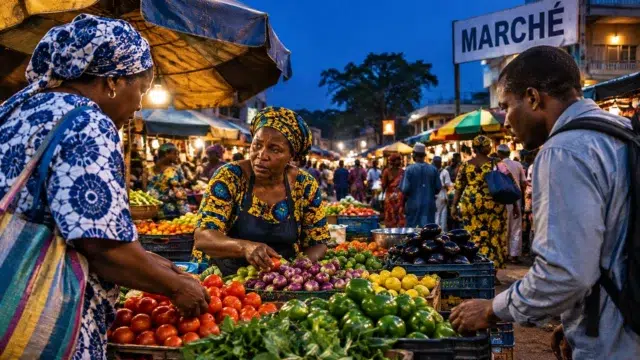
In Niger, the cost of living is reflected not only in the tables of the National Institute of Statistics. It is also felt in the markets of Niamey, Maradi and Zinder, where the price of a sack of millet, sorghum or maize has an immediate impact on the evening meal. Between April and July 2026, households in Niger were reminded of this reality as inflation picked up, driven first and foremost by food.
The trend is not an isolated one. It is unfolding in a country where agriculture and livestock remain major economic pillars, accounting for more than 40% of GDP and a large share of employment. This dependence means that even slight pressure on harvests, stocks or supply chains has a direct effect on prices.
Moderate rise, but driven by essential goods
According to the Harmonised Index of Consumer Prices, monthly inflation in Niger rose from 0.7% in April 2026 to 1.2% for food and non-alcoholic beverages, then to 1.2% for the overall index in July, according to an economic note published by Niger’s Ministry of Finance on 7 September 2026. The document states that the increase was driven mainly by staple goods.
In April 2026, the overall index stood at 98.8 points, compared with 106.8 in April 2025, meaning prices were still down 7.5% year on year. But food was no longer easing the pressure. Prices for “food and non-alcoholic beverages” rose by 1.2% month on month, 4.2% over three months and 15.2% year on year. Cereal prices rose by 1.2% month on month, while fresh, chilled or frozen meat fell by 5.2% over the month but remained 11.5% higher year on year.
Among individual products, the price of a 100kg sack of millet rose by 6.0% in April, sorghum by 1.3% and imported broken rice by 1.1%. Maize, by contrast, fell by 1.3% that month, but the seasonal trend remained firm in July, with maize up 4% and millet and sorghum up 3%, according to the joint bulletin of SIMA, Niger’s agricultural market monitoring system.
Lean season, Tabaski and strained markets
The period from April to July coincides with the lean season, when stocks from previous harvests run down before the next harvests. It also overlapped with Tabaski, which boosted demand for meat and, more broadly, food. The result was additional pressure on cereal markets, already sensitive to fluctuations in supply.
This pattern is well known in Niger. When households have fewer reserves, they buy earlier, more often and sometimes at higher prices. When demand for livestock or festive occasions rises, meat and cereals increase in price together. SIMA’s bulletin notes that in July 2026 the average food basket cost 39,200 CFA francs, 2% more than in June, although prices remained below those of July 2025.
The good news, if it can be called that, is that imported rice remained broadly stable in the markets monitored. This stability limited the overall increase. But it is not enough to offset the importance of locally grown cereals in everyday diets, especially in areas where households depend more on markets than on their own production.
What this means for households and Niger’s economy
The picture in July 2026 is mixed. On the one hand, Niger remains below the 3% ceiling set by the WAEMU Commission for monitoring convergence criteria, with average annual inflation still negative at -8.5% in April 2026. On the other, pressure on staple goods is a reminder that a country can report broadly contained inflation while household food budgets come under strain week after week.
Urban households often adjust by changing the quantity, quality or frequency of their purchases. Rural households face pressure compounded by variable harvests, transport costs and, in several regions, access difficulties linked to insecurity and climate hazards. The FAO says the humanitarian crisis in Niger is driven by insecurity, chronic poverty, seasonal flooding and recurring droughts.
The regional contrast is stark. Niger is not starting from scratch: the country has an active statistical system, agricultural market monitoring and harmonised indicators in the WAEMU format. The challenge is therefore not only to measure the increase, but to contain it where it hits hardest: in secondary markets, in remote areas and among households that already spend most of their income on food.
A warning for West Africa
What is happening in Niger resonates beyond Niamey. The country remains a useful indicator of food vulnerabilities in the Sahelian part of West Africa: dependence on the climate, the importance of locally grown cereals, sensitivity to religious festivals, the decisive role of commercial networks and the importance of public monitoring systems. When the lean season coincides with stronger seasonal demand, prices can rise again even in a year when average inflation appears contained.
What happens next will depend above all on the coming harvests, the performance of regional markets and the smooth flow of supplies to inland regions. Across the continent, Niger is a reminder that low average national food inflation can mask very real local pressures, which national and regional statistical tools must continue to monitor closely.