Algeria
 Egypt
 Libya
 Morocco
 Sudan
 Tunisia
 Benin
 Burkina Faso
 Cabo Verde
 Côte d'Ivoire
 Ghana
 Guinea
 Guinea-Bissau
 Liberia
 Mali
 Mauritania
 Nigeria
 Senegal
 Sierra Leone
 The Gambia
 Togo
 Cameroon
 Central African Republic
 Chad
 DR Congo
 Equatorial Guinea
 Gabon
 Republic of the Congo
 São Tomé and Príncipe
 Burundi
 Comoros
 Djibouti
 Eritrea
 Ethiopia
 Kenya
 Madagascar
 Malawi
 Mauritius
 Mozambique
 Rwanda
 Seychelles
 Somalia
 South Sudan
 Tanzania
 Uganda
 Angola
 Botswana
 Eswatini
 Lesotho
 Namibia
 South Africa
 Zambia
 Zimbabwe
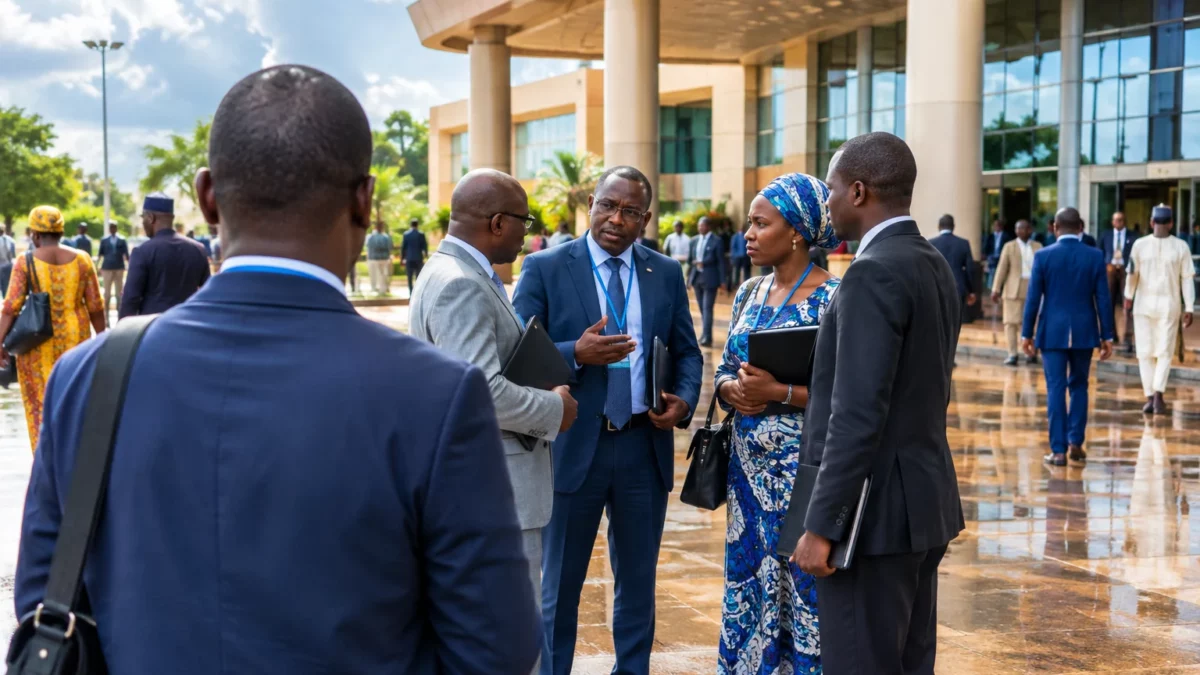
For Niger, the success of the International Investment Forum will not be measured solely by the amount announced. It also hinges on a practical question: will the projects presented in Niamey attract financing, get under way and create value in the country ?
The event, held from 24 to 26 November 2026, comes as the authorities seek to diversify the economy and process more resources locally. It is taking place against a regional backdrop reshaped by Niger’s withdrawal from ECOWAS and its closer ties with Burkina Faso and Mali within the Confederation of Sahel States (AES).
Projects on show, agreements still to be delivered
The Nigerien government is holding the first edition of the International Investment Forum in Niamey, with support from the United Nations Development Programme (UNDP). The Mahatma Gandhi International Conference Centre is hosting proceedings until 26 November. The programme includes meetings between investors, businesses and public authorities, as well as project presentations and site visits.
The portfolio on show comprises 50 projects across 13 sectors. Organisers are targeting 5 500 billion CFA francs in investment commitments or agreements. The UNDP puts this at the equivalent of about $9.6 billion. The figure represents an ambition to mobilise funds: at this stage, it does not mean that the money has already been invested or that all contracts have been signed.
The sectors highlighted include agriculture and agribusiness, renewable energy, mining, natural resource processing, infrastructure and digital technology. The initiative is intended to bring project developers together with financial partners. But interest generated during a forum guarantees neither final financing nor the start of work.
The UNDP presents private investment as a means of developing productive capacity and employment. The decisive question will therefore be follow-up: which projects will secure financing, on what timelines and with what benefits for Nigerien businesses and workers ?
An economic strategy amid a national refoundation
The forum is part of the Republic’s Refoundation Programme for 2025-2029. This framework emphasises, among other things, economic diversification, the local processing of raw materials and greater participation by young people in productive activities. The government is thus looking to the private sector as a partner to complement public action and finance some projects.
This ambition coincides with strong economic growth, but that needs to be interpreted precisely. The IMF estimates that Niger’s economy grew by 6.9 % in 2025 and forecasts growth of 7 % in 2026. These figures describe the expansion of economic activity as a whole; on their own, they do not show how income and jobs are distributed among sectors, regions and households.
For the authorities, major projects can boost production and strengthen processing within the country. For small businesses, rural producers and workers in the informal sector, however, the benefits will depend on their ability to access markets, infrastructure, skills and the supply chains linked to investment. The promised job creation remains a goal to be tested as projects are implemented.
Investors, for their part, will assess project profitability, financing terms, access to energy and infrastructure, as well as economic and security risks. The preparation of proposals, transparent procedures and stable rules will matter as much as the resources available. The forum can open discussions; it cannot automatically remove these constraints.
The challenge of trade across borders
The regional dimension matters directly. Niger’s withdrawal from the Economic Community of West African States (ECOWAS), an organisation for economic and political integration, took effect on 29 January 2025. The country remains engaged with Burkina Faso and Mali in the AES. This reshaping makes the question of markets, trade corridors and the movement of goods and services all the more important.
For mining, agricultural or industrial projects, domestic demand is not always enough. Access to neighbouring markets and transport routes can determine whether an investment is viable, particularly for a landlocked country. Potential investors will therefore also assess regional trade relations and the practical arrangements for transporting equipment and goods.
What happens next will be determined after the meetings in Niamey. Announcements, letters of intent, financing agreements and investments actually made will need to be distinguished. The number of projects that reach the financing and construction stages will provide a more reliable measure of the forum’s impact than the target amount announced during those three days.
Data on growth and the national programme are available in the IMF assessments of Niger’s economy and the United Nations 2025 annual report on Niger. The regional framework is set out in the ECOWAS statement on Niger’s withdrawal.