Algeria
 Egypt
 Libya
 Morocco
 Sudan
 Tunisia
 Benin
 Burkina Faso
 Cabo Verde
 Côte d'Ivoire
 Ghana
 Guinea
 Guinea-Bissau
 Liberia
 Mali
 Mauritania
 Nigeria
 Senegal
 Sierra Leone
 The Gambia
 Togo
 Cameroon
 Central African Republic
 Chad
 DR Congo
 Equatorial Guinea
 Gabon
 Republic of the Congo
 São Tomé and Príncipe
 Burundi
 Comoros
 Djibouti
 Eritrea
 Ethiopia
 Kenya
 Madagascar
 Malawi
 Mauritius
 Mozambique
 Rwanda
 Seychelles
 Somalia
 South Sudan
 Tanzania
 Uganda
 Angola
 Botswana
 Eswatini
 Lesotho
 Namibia
 South Africa
 Zambia
 Zimbabwe
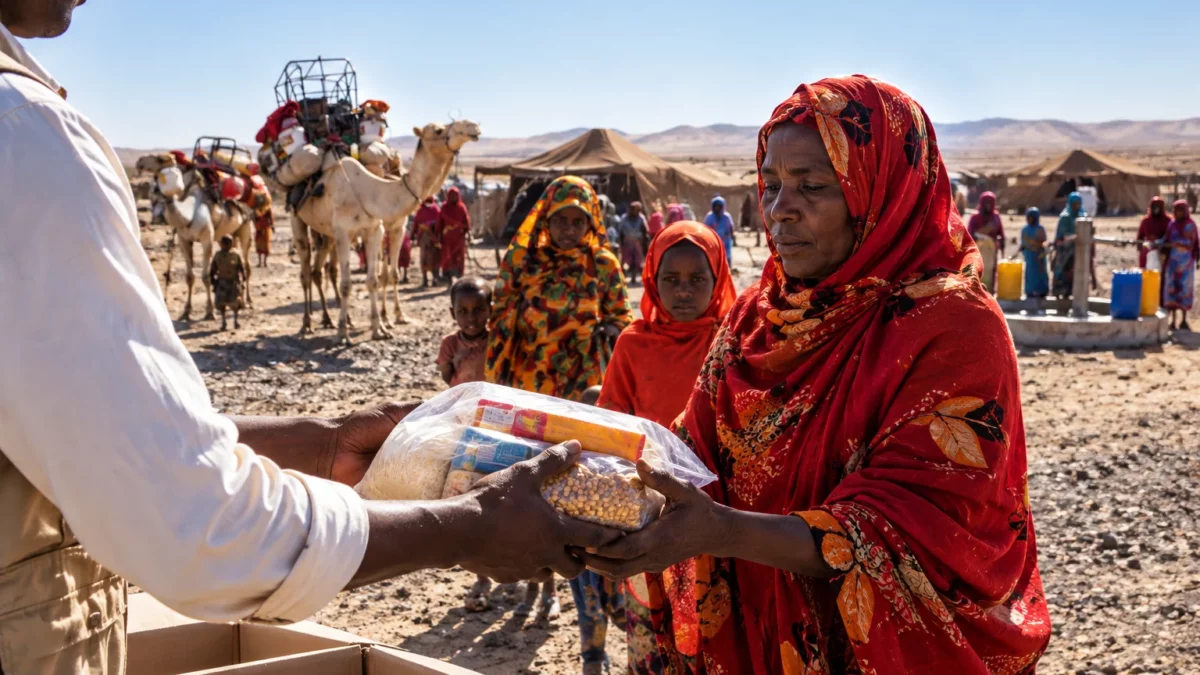
In Daboua, in Chad’s Lake Province, the emergency is not limited to providing tents and food. Authorities must also establish who crossed the border, as the families concerned dispute their expulsion from Niger and their nationality is contested by the two states.
In Diffa, a disputed decision leads to departures
Niger’s Diffa region borders Chad and lies in the Lake Chad Basin. Families have long moved between these territories. But the region also faces insecurity linked to armed groups, as well as tensions over land, grazing areas and water.
Nigerien authorities cite security concerns and administrative status to justify their decision targeting the Mahamid community. Officials in Diffa have referred to alleged links between some members and criminal networks and arms trafficking. These allegations remain to be established on an individual basis: they do not demonstrate the collective responsibility of a community.
The announced deadline has itself been presented in different ways. Reports carried by several media outlets refer to a deadline of 31 December 2026, while the Nigerien News Agency reports that a two-month period was communicated at a meeting in Chetimari in November. The precise scope and arrangements of the measure therefore remain to be clarified.
The case recalls a previous episode: in 2006, Niger had already considered expelling Arabs living in the Diffa region, before abandoning the operation. This repetition highlights the persistent difficulty of resolving questions of residence, nationality and access to resources without turning suspicions about individuals into a collective measure.
1,072 people registered near Daboua
In Chad, the National Commission for the Reception and Reintegration of Refugees and Returnees (CNARR) says that 1,072 people, in 179 families, have arrived at the Algezira site near Daboua. According to information published on 24 November by Tchadinfos, they are receiving emergency aid.
Chad’s Ministry of Social Action has contributed to the distribution of food and tents. Partners have also dug wells about ten metres deep. These initial facilities meet immediate needs, but the arrival of more households could increase demand for water, shelter and basic services.
CNARR must also verify the circumstances of those it is hosting. Its provincial delegate, Bachar Oumar, explained that the large turnout at distributions made an identification process necessary. Verification should distinguish new arrivals from other people who have come seeking assistance, without denying families protection because their status remains uncertain.
This administrative question intersects with a political disagreement. N’Djamena says that some of those expelled are Nigerien and should not automatically be sent back to Chad. Nigerien authorities, meanwhile, describe the Mahamid as a population from Chad. Each person’s status must therefore be examined on a case-by-case basis, rather than inferred from their community affiliation.
Balancing protection and pressure on resources
The Chadian government has condemned collective expulsions and invoked the protection of fundamental rights. Article 12 of the African Charter on Human and Peoples’ Rights prohibits the collective expulsion of non-nationals. Its practical application nevertheless depends on the facts, the status of those concerned and the procedures followed.
For families who have lived in Niger for decades, lost documents or uncertainty about their nationality can complicate access to school, healthcare and livelihoods. For residents of Lake Province, the issue is also material: the response relies on local resources that are already under strain. The distribution of aid and access to water will need to take account of both new arrivals and host communities.
The pressure at national level is considerable. According to the United Nations High Commissioner for Refugees, Chad is expected to host about 1.5 million refugees in 2026, many of whom have fled the war in Sudan. This figure covers the entire country and does not directly measure the capacity of the Daboua site. It nevertheless serves as a reminder that the reception of new displaced people forms part of a major humanitarian effort.
A bilateral issue under scrutiny in the Lake Chad Basin
The situation is testing relations between N’Djamena and Niamey, as well as practical co-operation in a region where borders cut across long-standing family and pastoral networks. The two capitals must reconcile their security responsibilities with individual identification, the protection of people and the prevention of local tensions.
The African Commission on Human and Peoples’ Rights, the African Union body responsible for promoting and protecting human rights, has also reported an urgent appeal to Niger concerning the treatment of the community. This appeal is not a ruling on the facts, but it places the case within a continental framework of scrutiny.
What happens next will depend in particular on clarification of Niger’s decision, the legal situation of those who have arrived in Chad and the resources deployed at the Algezira site. For the families, these decisions will have a direct impact on their safety, documentation and access to services. For the Chadian and Nigerien authorities, they will test their ability to address security concerns without conflating individual responsibility with collective identity.