Algeria
 Egypt
 Libya
 Morocco
 Sudan
 Tunisia
 Benin
 Burkina Faso
 Cabo Verde
 Côte d'Ivoire
 Ghana
 Guinea
 Guinea-Bissau
 Liberia
 Mali
 Mauritania
 Nigeria
 Senegal
 Sierra Leone
 The Gambia
 Togo
 Cameroon
 Central African Republic
 Chad
 DR Congo
 Equatorial Guinea
 Gabon
 Republic of the Congo
 São Tomé and Príncipe
 Burundi
 Comoros
 Djibouti
 Eritrea
 Ethiopia
 Kenya
 Madagascar
 Malawi
 Mauritius
 Mozambique
 Rwanda
 Seychelles
 Somalia
 South Sudan
 Tanzania
 Uganda
 Angola
 Botswana
 Eswatini
 Lesotho
 Namibia
 South Africa
 Zambia
 Zimbabwe
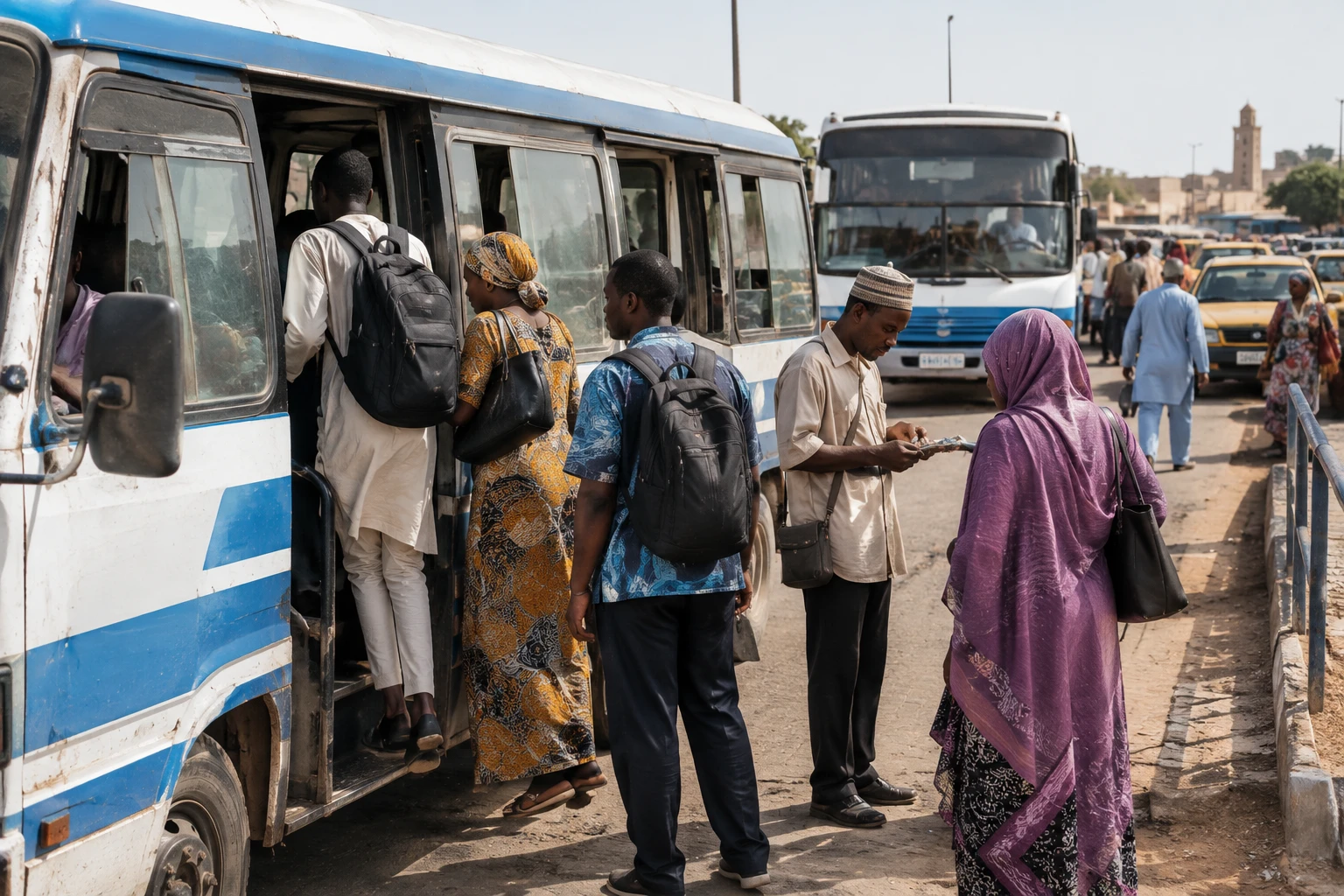
For Niger, the stakes of the new agreement with the International Monetary Fund (IMF) go beyond the amount announced. They also concern the room the government will have to fund its priorities, as oil revenues rise and reconstruction and household support needs remain high.
On 8 October 2026, IMF staff and the Nigerien authorities reached a staff-level agreement on a 38-month programme. It remains subject to approval by the institution’s executive board, which is expected to consider it in early December. Until then, the announced funds are not yet secured.
A staff-level agreement, not yet a disbursement
The proposed programme would make available 150.02 million special drawing rights, or about $203m. It falls under the Extended Credit Facility (ECF), an IMF mechanism that supports multi-year economic programmes. Approval by the board would allow an initial disbursement of about $36m.
The agreement followed the tenth and final review of the previous programme, as well as an economic consultation known as an “Article IV consultation”. This is the IMF’s regular review of a country’s economy. The Nigerien news agency also reported on 8 October that the mission had met in Niamey with Prime Minister Ali Mahaman Lamine Zeine and the Minister of Economy and Finance.
The IMF says the new programme aims to preserve economic stability, strengthen fiscal capacity and consolidate the financial sector. It is also intended to support the government’s 2025-2029 development strategy, linked to the Republic’s Refoundation Programme. The Fund says the previous programme’s targets, assessed at end-June 2026, were met and that the authorities are continuing to clear domestic and external arrears.
Growth expected, but its impact remains to be measured
The IMF forecasts growth of 7% in 2026, followed by 6.7% in 2027. Agriculture and extractive industries, including oil, are expected to support activity. Over the medium term, the institution projects average growth of 6.1%, also driven by public investment.
These figures describe growth in national output, but do not in themselves show how its benefits will be distributed. Extractive revenues can strengthen public finances and the external accounts. Their effect on living conditions will also depend on budget choices, the consistency of public spending and its reach across regions, beyond Niamey.
The budget deficit is projected at 3.4% of gross domestic product in 2026. This forecast takes into account reconstruction spending after natural disasters the previous year, as well as measures for households affected by the cost of food and fuel. According to IMF projections, inflation is expected to rise from an average of -2.5% in 2026 to 2.2% in 2027. Negative inflation means an average fall in prices, but does not imply that every product becomes cheaper.
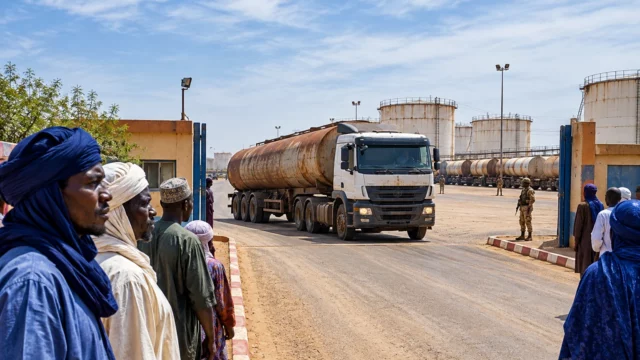
Oil prices are another double-edged factor. High prices can increase revenues for an oil-exporting country such as Niger. However, rising transport costs and the cost of some imported goods weigh on households and businesses. The IMF also notes risks linked to insecurity and climate shocks, which could disrupt activity and increase public spending.
External financing and budget choices
The programme creates a financing opportunity, but does not mean that the $203m will be paid immediately or that the sum is an unrestricted pool of funds. The initial disbursement depends on approval by the IMF board. Subsequent financing will be part of a programme monitored by the institution, in a context where the government must balance the clearance of arrears, investment, reconstruction and social support.
These trade-offs affect economic actors in different ways. Formal businesses may be affected by the clearance of public arrears and the availability of credit. Informal businesses and rural households are more exposed to the prices of essential goods and agricultural shocks. In regions hit by disasters, infrastructure reconstruction also determines access to markets, services and income.
Niger also operates in a regional environment where trade, transport and monetary arrangements matter. As a member of the West African Economic and Monetary Union (UEMOA), it shares a common currency, the CFA franc, and a central bank, the BCEAO, with seven other states. National budget choices are therefore also subject to regional convergence rules, even though the programme announced here stems first and foremost from an agreement between Niamey and the IMF.
December meeting will be decisive
The IMF executive board still has to consider the programme and the final review. This step will determine whether the staff-level agreement becomes approved financing. Until then, the central issue will also be implementation: mobilising domestic revenue, managing oil income, ensuring spending transparency and protecting households facing price shocks.
For regional partners and investors, the case is an indicator of Niger’s financial trajectory. For Nigeriens, its importance will be judged above all by its tangible effects on services, employment, infrastructure and the cost of living. Growth forecasts point to a favourable outlook, but whether that translates into widely shared benefits will depend on decisions made in Niamey and how they are implemented across the country.