Algeria
 Egypt
 Libya
 Morocco
 Sudan
 Tunisia
 Benin
 Burkina Faso
 Cabo Verde
 Côte d'Ivoire
 Ghana
 Guinea
 Guinea-Bissau
 Liberia
 Mali
 Mauritania
 Nigeria
 Senegal
 Sierra Leone
 The Gambia
 Togo
 Cameroon
 Central African Republic
 Chad
 DR Congo
 Equatorial Guinea
 Gabon
 Republic of the Congo
 São Tomé and Príncipe
 Burundi
 Comoros
 Djibouti
 Eritrea
 Ethiopia
 Kenya
 Madagascar
 Malawi
 Mauritius
 Mozambique
 Rwanda
 Seychelles
 Somalia
 South Sudan
 Tanzania
 Uganda
 Angola
 Botswana
 Eswatini
 Lesotho
 Namibia
 South Africa
 Zambia
 Zimbabwe
An industrial gamble to ease the fuel squeeze
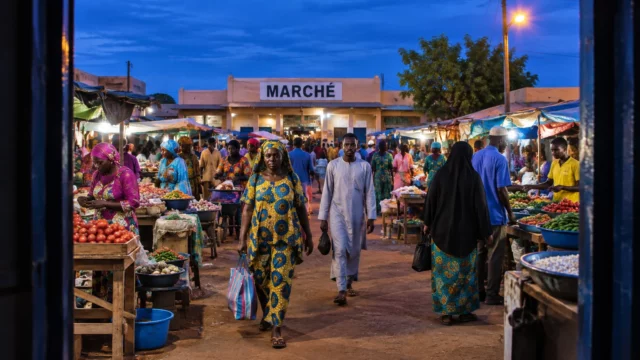
In Niger, fuel is no abstract issue. It affects Niamey’s taxis, shops’ generators, construction sites, farms and journeys between the capital and the regions. In a country where energy underpins both urban life and rural activity, every supply disruption quickly drives up costs and visibly slows the day-to-day economy.
It is in this context that Niamey has revived, with Canadian group Zimar, plans for a new refinery and petrochemical complex in Dosso, in south-western Niger. The announced structure is based on a Build, Operate and Transfer public-private partnership, with a target capacity of 100,000 barrels per day and total investment estimated at $1.9bn. The government has presented the scheme as a way to process more crude on Nigerien soil and reduce dependence on imported products.
Dosso, a logistical component of a broader strategy
Dosso was not chosen at random. The region lies on a major route between Niamey, the centre of the country and the corridors to Benin. It could therefore host a wider industrial and logistics complex, beyond the refinery alone. Nigerien authorities have, in discussions, also referred to an integrated project including related units, transport needs and supporting infrastructure.
The project is part of a long-established trajectory. Niger has produced oil since the early 2010s. Since January 2024, it has also exported crude, following the start of production from phase II of the Agadem field and the launch of overseas shipments. Oil authorities have referred to around 90,000 barrels exported per day, in addition to the 20,000 barrels refined in Zinder, while Africanews reported at the time that total production could reach 110,000 barrels per day.
At the same time, the government has changed the Dosso project. Initially presented as a modular refinery, it was redirected towards a conventional refinery. An official mission also indicated in 2024 an initial capacity of 30,000 barrels per day, expandable to 100,000. This sequence highlights an important point: Niger is no longer seeking only a quick fix, but a more substantial facility capable of meeting rising domestic demand and broader industrial ambitions.
What the new facility could change
The core problem remains dependence on external supplies. Niger currently has only one operational refinery, SORAZ, in Zinder, commissioned in January 2012 and rated at a capacity of about 20,000 barrels per day. This capacity is limited relative to the country’s needs, especially when demand rises and fuel flows from Nigeria contract.
The decline in informal arrivals from Nigeria has worsened the strain. Since fuel subsidies were abolished in Abuja, cross-border fuel trafficking has lost its economic appeal in several border areas. African and international media have shown that this disruption has weighed on Nigerien markets, where part of consumption had relied on these parallel flows. Niger is therefore caught between two developments: domestic oil resources that are now being exported, and a domestic market still vulnerable because of insufficient refining capacity.
The future Dosso refinery is intended to correct this imbalance. It could supply fuel for road transport, mechanised agriculture, construction equipment and generators, while supporting a broader industrial base through the petrochemical complex. It is also a way for the Nigerien state to retain more added value in the country, rather than exporting it as crude and then reimporting more expensive refined products. This is a familiar rationale in the oil industry, but it carries strategic weight in Niger.
Questions remain over financing and timing. The announced agreement allows three years for construction and 13 years for operations, 16 years in total. Zimar has also been said to have a few months to secure the financing and complete the detailed engineering. For a project of this scale, the real challenge is not limited to signing. It lies in the credibility of the financing, technical execution and stability of the regulatory framework over time.
Beyond Niger, a signal for West Africa
The project goes beyond Niger alone. It speaks to West Africa as a whole, where several oil-producing countries still lack sufficient capacity to process their oil locally. Niger, a member of ECOWAS and now engaged in a more complex regional reconfiguration since the transitional authorities announced their withdrawal from the bloc, is seeking here to retain control of a strategic value chain despite diplomatic tensions and logistical vulnerabilities.
The Dosso project is therefore a test. A test of economic sovereignty, because the question is whether Niger can process its crude at home. A test of governance, because a 16-year public-private partnership requires transparency and continuity. And a regional test, because a refinery of this size could eventually supply neighbouring countries too, if transport networks are in place. The project will say much about Niger’s ability to turn its oil revenues into real industry, rather than letting them dissipate through imports and shortages.