Algeria
 Egypt
 Libya
 Morocco
 Sudan
 Tunisia
 Benin
 Burkina Faso
 Cabo Verde
 Côte d'Ivoire
 Ghana
 Guinea
 Guinea-Bissau
 Liberia
 Mali
 Mauritania
 Nigeria
 Senegal
 Sierra Leone
 The Gambia
 Togo
 Cameroon
 Central African Republic
 Chad
 DR Congo
 Equatorial Guinea
 Gabon
 Republic of the Congo
 São Tomé and Príncipe
 Burundi
 Comoros
 Djibouti
 Eritrea
 Ethiopia
 Kenya
 Madagascar
 Malawi
 Mauritius
 Mozambique
 Rwanda
 Seychelles
 Somalia
 South Sudan
 Tanzania
 Uganda
 Angola
 Botswana
 Eswatini
 Lesotho
 Namibia
 South Africa
 Zambia
 Zimbabwe
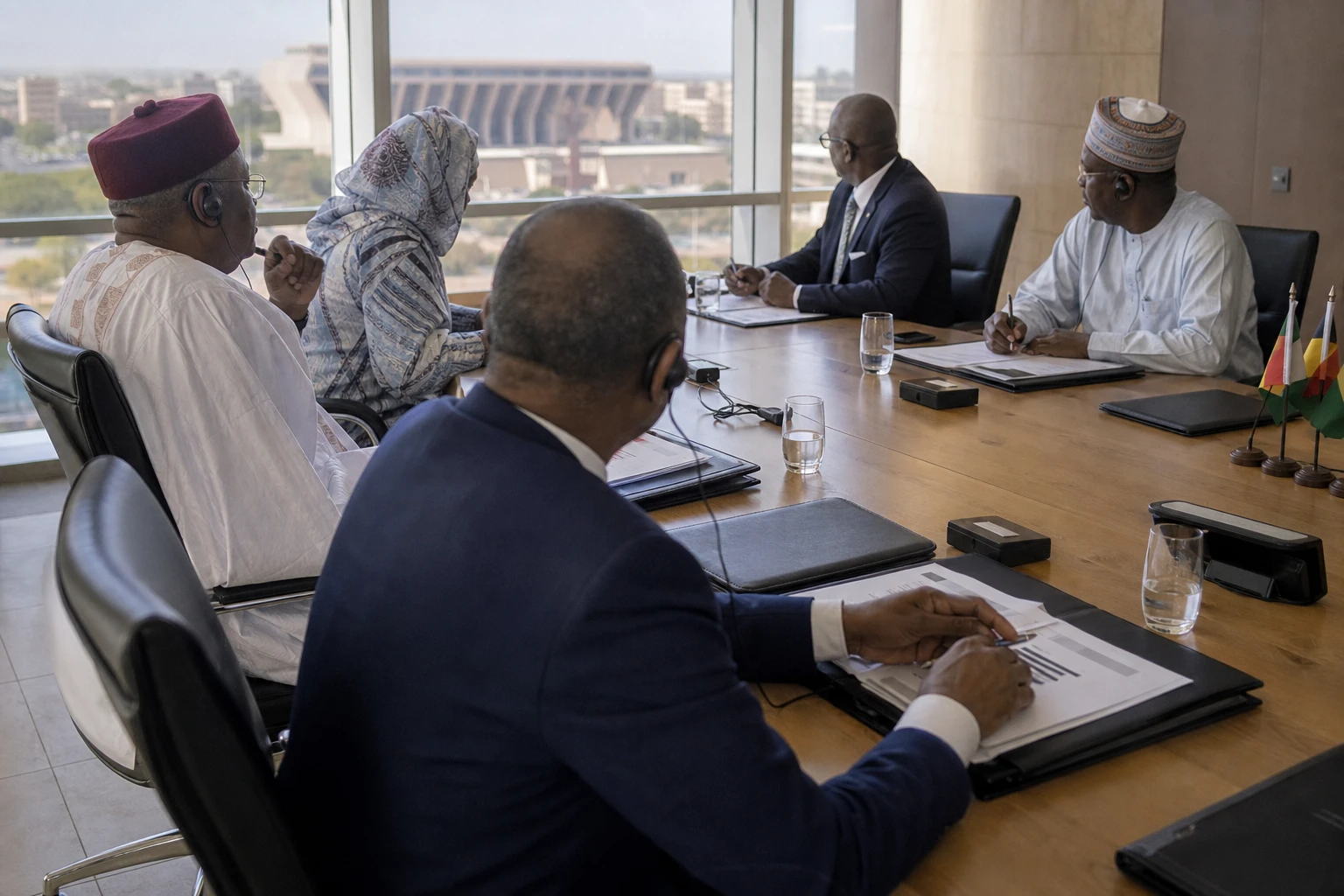
In Niamey, uranium development is no longer taking place only in the country’s northern mines. It now depends on operators’ ability to secure financing, safeguard supply routes and align their projects with Niger’s new mining trajectory.
The Dasa project, about 105 kilometres south of Arlit, is reaching a new financial milestone. Global Atomic Corporation announced on 23 September 2026 that it was launching a public offering of units to raise C$50m, or about US$35.4m. The proceeds are intended to support the project’s advancement and the company’s day-to-day requirements.
An advanced project, but still dependent on capital
The offering is being led by Red Cloud Securities, which is responsible for arranging the placement with investors. The announced price is C$0.50 per unit. The offering is expected to close on 1 October 2026, subject to regulatory approvals, including those related to the Toronto Stock Exchange, where Global Atomic is listed.
For the company, the fundraising is intended to cover its remaining contribution to Dasa’s financing. It should also give it time to weigh several options before drawing on a debt facility approved by a US development finance agency.
The board of the DFC, the US federal agency responsible for financing certain private projects abroad, approved a facility of up to US$414.2m on 16 September. The funds are not yet available, however. Their disbursement depends on the finalisation of contractual documents and the fulfilment of several conditions.
In a statement carried by the company, its president, Stephen Roman, described the offering as a first step towards financing the project’s remaining share. He also stressed that the agreement with the DFC could open up options that do not rely solely on issuing new shares.
This distinction matters. Raising funds by issuing shares provides liquidity quickly, but it can reduce existing shareholders’ relative stakes. A debt facility limits this effect, while creating repayment obligations and additional requirements for the lender.
Dasa aims to revive a sharply declining industry
The project comes as Niger’s uranium sector has lost a substantial share of its output over the past decade. According to updated data from the World Nuclear Association, Niger’s production fell from 4,116 tonnes of uranium in 2015 to 962 tonnes in 2024. It has declined almost every year since 2015, reaching 2,020 tonnes in 2022 and 1,130 tonnes in 2023.
This decline has not been caused by a single factor. The global market experienced a prolonged period of depressed prices after the Fukushima accident. Logistical difficulties, supply disruptions and tensions over mining assets have also weighed on national production.
The situation at Somaïr, the long-established operator in Arlit, illustrates these vulnerabilities. Relations between the Nigerien authorities and Orano have deteriorated sharply since the change of power on 26 July 2023. The dispute subsequently evolved into a challenge to the company’s control and the management of uranium stocks.
Against this backdrop, Dasa is not simply an extension of existing production. The project is being developed by SOMIDA, a company 80% owned by Global Atomic and 20% by the state of Niger. This ownership structure gives Niamey a direct stake in the future asset, in line with Niger’s mining framework.
Work already under way at the site
Global Atomic says underground development at Dasa has been under way since November 2022. Work has reached the mine’s fourth level. Ventilation, electricity and water-management infrastructure is also being installed.
Construction of the processing plant is progressing in parallel. According to information published by the company, earthworks for the first phase are more than 95% complete. Several items of long-lead equipment have been manufactured or delivered to the site. Accommodation for 260 people is also planned for employees and construction teams.
The timetable remains linked to the completion of financing, however. Production announcements should therefore be read as industrial targets, not as a guarantee of a start-up. The company is targeting the first uranium deliveries from 2028, subject to completion of the work, full financing and operating conditions.
The feasibility study published by Global Atomic forecasts total production of 68.1m pounds of U3O8 over an operating life of about 23 years. U3O8, often called yellowcake after processing, is the uranium concentrate used as an intermediate stage before nuclear fuel is manufactured.
A stake for Niger and the Sahelian corridor
For Niger, the stakes go beyond the amount being sought. A new mine could create direct jobs, strengthen local subcontractors and increase public revenues. It could also reduce the country’s reliance on production concentrated around a long-established operator.
The benefits will not be distributed equally across all areas, however. Skilled jobs and industrial contracts will be concentrated around the site and urban centres. People in nearby communities will look above all for infrastructure, services and clear mechanisms for sharing revenues. Transparency over payments, water and environmental risks will therefore remain crucial.
The regional context adds a logistical constraint. Niger officially left the Economic Community of West African States (ECOWAS) on 29 January 2025, alongside Burkina Faso and Mali. The break does not prevent trade, but it means operators must do more to secure their trade routes and relations with transit countries.
After some routes were closed around the 2023 coup, Global Atomic said it had used an alternative route from the port of Lomé in Togo, through Burkina Faso. The reliability of these corridors will have a direct bearing on construction costs and, later, on exports of the concentrate.
The next milestone is financial: the offering is due to close on 1 October 2026. Attention will then turn to the effective establishment of the DFC facility, the pace of work and decisions by the Nigerien state on sector governance. For Dasa and the national industry alike, the challenge will be to turn a strategic resource into sustainable production, with tangible benefits in Niger.