Algeria
 Egypt
 Libya
 Morocco
 Sudan
 Tunisia
 Benin
 Burkina Faso
 Cabo Verde
 Côte d'Ivoire
 Ghana
 Guinea
 Guinea-Bissau
 Liberia
 Mali
 Mauritania
 Nigeria
 Senegal
 Sierra Leone
 The Gambia
 Togo
 Cameroon
 Central African Republic
 Chad
 DR Congo
 Equatorial Guinea
 Gabon
 Republic of the Congo
 São Tomé and Príncipe
 Burundi
 Comoros
 Djibouti
 Eritrea
 Ethiopia
 Kenya
 Madagascar
 Malawi
 Mauritius
 Mozambique
 Rwanda
 Seychelles
 Somalia
 South Sudan
 Tanzania
 Uganda
 Angola
 Botswana
 Eswatini
 Lesotho
 Namibia
 South Africa
 Zambia
 Zimbabwe
A military affair that goes beyond the barracks
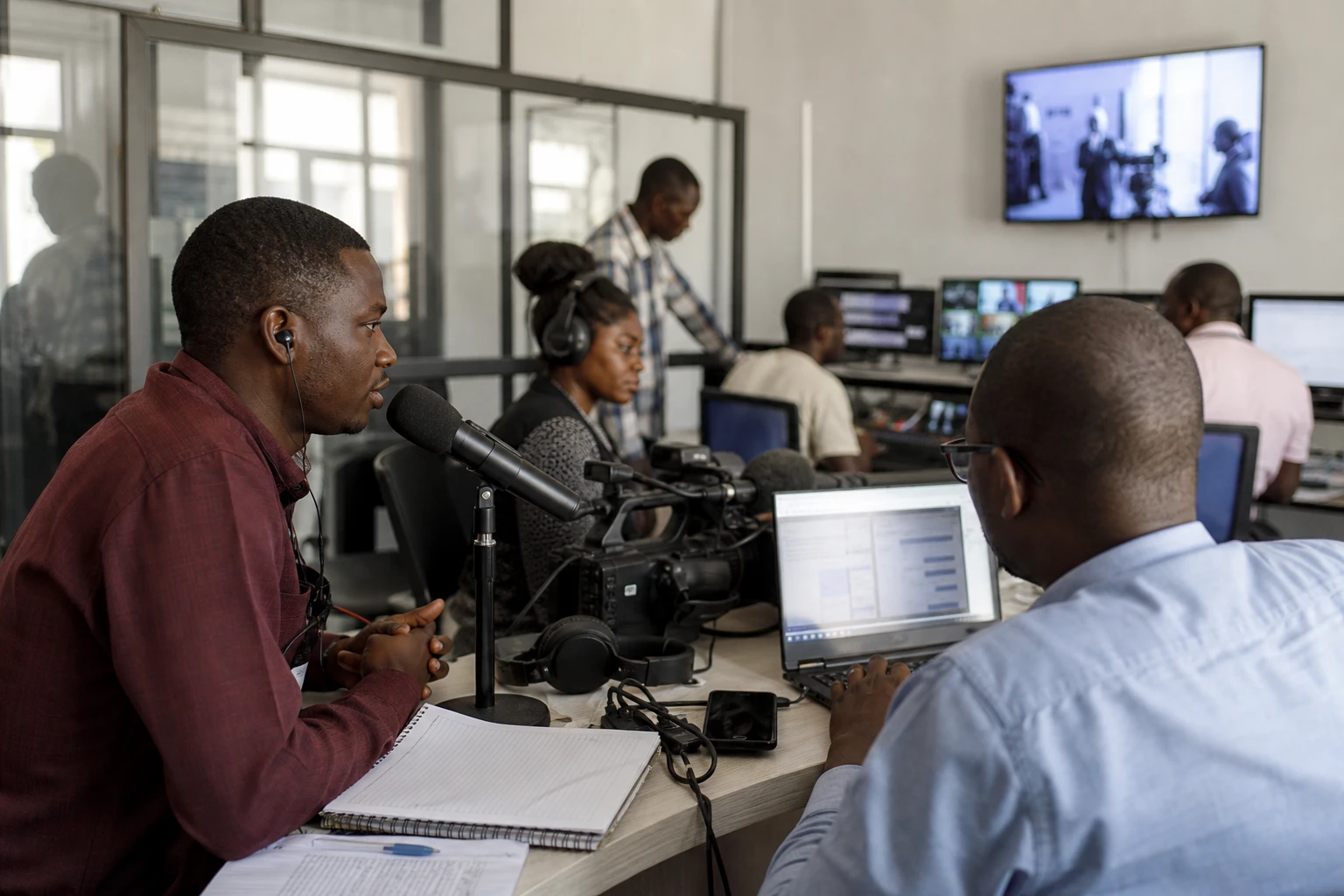
In Niamey, a mutiny is never merely a matter of internal discipline. In a country where the army is responsible for the fight against jihadists, border security and the stability of the government, the slightest crack in the chain of command immediately weighs on the state, the capital and regions at war with armed groups. That is what gives the events of 28 and 29 August 2026 particular significance in Niger.
The regional context makes the stakes even more sensitive. Niger left ECOWAS on 29 January 2025 and is now part of the AES Confederation with Mali and Burkina Faso, a bloc seeking to pool military and political resources. In this context, any upheaval within Niger’s armed forces also affects the image of a Sahelian bloc that presents itself as sovereign and united.
What the authorities have said since the events
Search operations and arrests continued on 5 and 6 September 2026, according to security sources cited in Niger. A captain was arrested about 100 kilometres from Niamey and then taken under escort to the capital. Other soldiers and people described as “accomplices” were also detained, but no detailed official tally has been published of the exact number of people involved.
On 4 September 2026, Niger’s Council of Ministers referred to an “attempt to destabilise” attributed to members of the Special Intelligence Battalion of the Special Operations Command, based at Niamey’s Base 101. The same statement said that documentation had been compiled in preparation for possible legal action, including internationally. This official communication confirms that the case is being handled at the highest level of the state.
On 3 September, the Nigerien News Agency described the recovery of weapons, ammunition, vehicles and communications equipment after operations around Base 101. The same public media outlet reported that a large quantity of equipment had been seized and said it was linked to the mutineers. Here too, the authorities have not provided a comprehensive count of casualties, arrests or possible desertions.
An army under pressure, on the home front and the security front
That is the heart of the problem. Niger continues to face jihadist threats in several parts of the country. Its armed forces remain deployed across several theatres of operation, from the west to the south-east. In this context, armed dissent within units considered sensitive does not merely weaken the hierarchy. It also fuels concern about the government’s ability to keep control of troops who are highly exposed, frequently called upon and politically central since the July 2023 coup.
Sources cited by the international press said that at least one battalion had reportedly refused to intervene against the mutineers. Other media outlets referred to dozens of soldiers being arrested, sometimes described as “killed or arrested”, depending on the wording and angle of coverage, showing how confused the initial reports were. In a case of this nature, caution remains essential: figures should be treated as estimates until confirmed in a named official or judicial statement.
Base 101 is no ordinary site. It is located close to Diori Hamani International Airport and strategic positions in the capital. When a troop movement takes place there, the issue is not only military. It becomes logistical, political and symbolic. In Niamey, the state had to show that it still controlled its key infrastructure, without allowing the idea of a lasting rift in its ranks to take hold.
What the events reveal about Niger and the Sahel
The Nigerien government’s response follows a clear logic: retake the site, make arrests, display the seized equipment, then present the official account of an attempted destabilisation. This approach serves several purposes. First, it reassures the regime’s supporters at home. It then reminds combat units that discipline remains the rule. Finally, it seeks to close off any political interpretation of the mutiny by framing it as a matter of state security.
But the episode also says something else: Niger’s military government continues to face internal tensions just as it has strengthened its alliances with Mali and Burkina Faso within the AES. The confederation, presented as a tool for sovereignty and coordination, relies heavily on cohesion among security institutions. Any crisis in one of its members therefore indirectly undermines the narrative of a military reorganisation of the Sahel based on solidarity between transitional governments.
The case also has a diplomatic dimension. The Nigerien state has already cited outside influence in its communications, while some neighbouring countries have publicly denied any involvement. At the same time, Niamey has continued to emphasise its alternative security partnerships, particularly with Russia and, according to its authorities, with other regional partners. This tension between declared sovereignty and operational dependencies remains one of the main drivers of the situation in Niger.
For the population, the stakes are even more concrete: continuity of services, security on roads, border control and the perception of a state capable of keeping its army in check while continuing the fight against armed groups. For soldiers deployed in the field, the mutiny opens a period of heightened suspicion, with tighter checks and probably stricter discipline. For the authorities, it creates a difficult equation: impose sanctions without giving the impression that the army is divided.
What happens next will depend above all on two things: the actual scale of the arrests, which remains partly unclear at this stage, and the government’s ability to contain the crisis without it spreading to other units. In Niger, as across the rest of the Sahel, stability is no longer determined only at the ballot box or in diplomatic circles. It is also determined by the cohesion of the armed forces, on the front line of a war that has not ended.