Algeria
 Egypt
 Libya
 Morocco
 Sudan
 Tunisia
 Benin
 Burkina Faso
 Cabo Verde
 Ghana
 Guinea
 Guinea-Bissau
 Liberia
 Mali
 Mauritania
 Niger
 Nigeria
 Senegal
 Sierra Leone
 The Gambia
 Togo
 Cameroon
 Central African Republic
 Chad
 DR Congo
 Equatorial Guinea
 Gabon
 Republic of the Congo
 São Tomé and Príncipe
 Burundi
 Comoros
 Djibouti
 Eritrea
 Ethiopia
 Kenya
 Madagascar
 Malawi
 Mauritius
 Mozambique
 Rwanda
 Seychelles
 Somalia
 South Sudan
 Tanzania
 Uganda
 Angola
 Botswana
 Eswatini
 Lesotho
 Namibia
 South Africa
 Zambia
 Zimbabwe
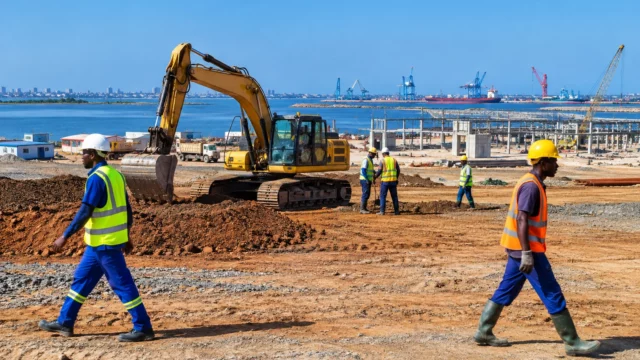
In Abidjan, the availability of an excavator, a generator or a spare part can have a direct impact on a construction project’s schedule. In a market driven by roadworks, energy, mining and urbanisation, Neemba is therefore seeking to sell more than equipment: continuity of service.
An Ivorian market under pressure to perform
The Abidjan Infrastructure Fair, held from 17 to 19 September 2026 at the Abidjan Exhibition Centre, put these issues at the heart of discussions. The 2026 edition emphasised digital transformation, the circular economy and the need to build faster while controlling costs and maintaining structures. The Ivorian government also called for stronger regional value chains.
For construction companies, the challenge is no longer limited to buying a machine. It must be delivered on time, kept in working order, operated by trained staff and financed, while unexpected stoppages are minimised. These constraints affect large groups as well as SMEs and operators active in quarries, semi-industrial mines and public works.
In this context, Régis Apetey, managing director of Neemba Côte d’Ivoire, describes the company as an operational partner for projects. The company distributes Caterpillar equipment, among other products, but its offering also includes maintenance, telemetry, training and financing solutions.
Connected machinery becomes a management tool
Digitalisation is playing an increasingly important role in this strategy. With VisionLink, a solution linked to connected equipment, operators can monitor a machine’s use and performance, as well as certain warning signs of a breakdown.
This approach supports predictive maintenance. In other words, action no longer depends solely on a breakdown having already occurred. Data makes it possible to anticipate which part needs ordering, schedule maintenance and reduce downtime.
Neemba also says it is digitising several internal processes. Machine orders, parts management, some technical analyses and financial exchanges can all be tracked digitally. For customers, the practical benefit is greater visibility over the condition of their fleets and response times.
This shift is in step with the needs of Ivorian construction sites. In Abidjan and in the country’s economic hubs, a late delivery or prolonged breakdown can disrupt several companies at once. The consequences are therefore different for a major project with several machines and an SME that depends on a single one.
Yopougon: regional stock to cut delivery times
Logistics is the other pillar of the operation. Neemba’s regional platform in Yopougon can hold up to 500 machines and 1,000 generators. The company describes this stock as a resource for serving Côte d’Ivoire and several West African markets.
Data published by Neemba put its estimated value at 20 billion CFA francs. The company also says that supply times can be as short as seven days in Côte d’Ivoire and around 25 days elsewhere in West Africa, compared with several weeks for delivery from Europe.
A supply-chain specialist outlet had already reported in 2024 on the ambition to make the facility a hub for the mining, construction and energy sectors. The platform is intended to serve Burkina Faso, Mali, Benin and Togo in particular, with delivery times said to be shorter than for shipments from outside the continent.
Stock availability also influences purchasing decisions. Seeing a machine available locally reduces uncertainty for a customer. They can inspect the equipment, discuss its configuration and arrange its deployment more quickly. For a company bidding for a contract or starting a project, this time saving can affect its profitability.
Maintenance and skills at the heart of the model
Equipment availability nevertheless depends on the ability to repair it. Neemba relies on teams based in Abidjan, San Pedro and Bouaké to bring technicians closer to areas of activity. This organisation is intended to help the company respond more quickly to customer needs, particularly when construction sites are far from the economic capital.
Training is therefore an industrial priority. Inaugurated in Abidjan in April 2026, the Neemba Academy is intended to structure training pathways for technicians and operators. The centre offers, among other things, certification programmes inspired by Caterpillar standards, combining theory, practice, mentoring and assessment.
According to figures cited by the company, more than 1,200 professionals have already been trained and around 850 are currently working. These figures come from Neemba’s own communications. They nonetheless reflect a priority widely shared across the mining, energy and industrial sectors: developing technical skills locally rather than relying on outside teams over the long term.
Training pathways can begin with refresher courses and continue over several years. The stated aim is to train technicians able to understand how several types of machines work. Neemba also says it wants to widen young women’s access to technical professions through partnerships with schools and universities.
Financing, a necessary step for SMEs
The cost of equipment remains a barrier for many operators. Construction and industrial companies often have to finance a machine before receiving revenue from a project. SMEs may find access to bank credit more difficult, particularly when they have limited collateral.
Neemba is therefore developing agreements with banks and with COFIMBA, a financing organisation aimed in particular at businesses that have difficulty accessing traditional channels. These arrangements can bring together the supplier, the financial institution and the customer to tailor repayments to the operating cycle.
This approach also applies to semi-industrial mining operators. In mechanised gold mining and related activities, needs encompass equipment and energy, as well as the ability to repay the investment. Financing thus becomes part of the project, alongside the machine and after-sales service.
An Ivorian platform with a West African reach
Neemba’s positioning reflects a broader shift in the regional market. Côte d’Ivoire plays an important logistical role in West Africa thanks to Abidjan, its port and its road links with landlocked countries. The Yopougon platform seeks to turn this geographical advantage into an industrial service.
For Ivorian companies, the challenge will be to see whether this promise of speed translates into fewer stoppages, better-controlled costs and easier access to equipment over the long term. For neighbouring countries, the questions will concern the reliability of transport corridors and the ability to provide parts, maintenance and financing beyond the initial delivery.
The next measure of success will therefore be less the number of machines on display than their actual availability on construction sites. In a West Africa investing in corridors, mines and energy infrastructure, competitiveness will also be determined in workshops, training centres and supply chains.