Algeria
 Egypt
 Libya
 Morocco
 Sudan
 Tunisia
 Benin
 Burkina Faso
 Cabo Verde
 Côte d'Ivoire
 Ghana
 Guinea
 Guinea-Bissau
 Liberia
 Mali
 Mauritania
 Niger
 Nigeria
 Senegal
 Sierra Leone
 The Gambia
 Togo
 Cameroon
 Central African Republic
 Chad
 DR Congo
 Equatorial Guinea
 Gabon
 Republic of the Congo
 São Tomé and Príncipe
 Burundi
 Comoros
 Djibouti
 Eritrea
 Ethiopia
 Madagascar
 Malawi
 Mauritius
 Mozambique
 Rwanda
 Seychelles
 Somalia
 South Sudan
 Tanzania
 Uganda
 Angola
 Botswana
 Eswatini
 Lesotho
 Namibia
 South Africa
 Zambia
 Zimbabwe
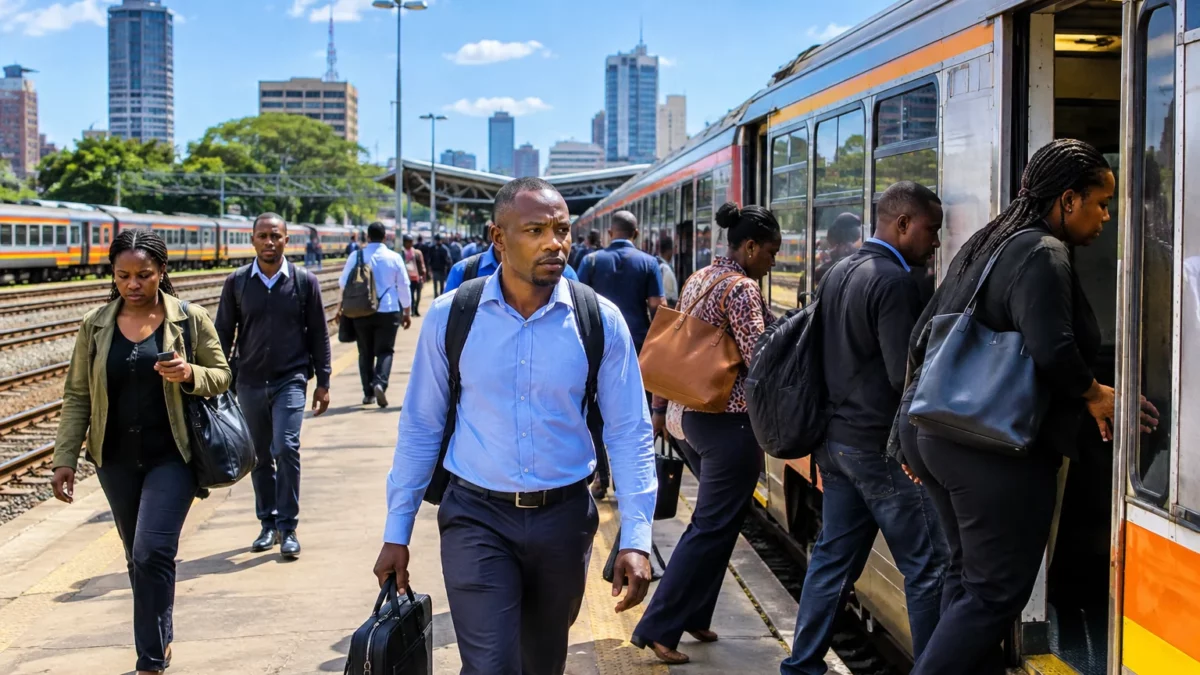
In Nairobi, the success of a rail link will not be measured solely by the number of supporters it takes to the stadium. To serve residents all year round, the link to Talanta will also need to cut detours, run to clear timetables and remain affordable once connections are added.
An urban project accelerated by the sporting calendar
The Kenyan capital is preparing to host major sporting events. Talanta Stadium, also known as Raila Odinga International Stadium, is due to be inaugurated on 5 January 2027 with a match between Bayern Munich and Ajax. Kenya will then co-host the 2027 Africa Cup of Nations with Uganda and Tanzania. The Confederation of African Football has confirmed these dates and the stadium’s use for the competition.
Against this backdrop, the Kenyan government is targeting 15 December 2026 for completion of the line linking Nairobi Central Station to Kibera and the stadium. The 11.5-kilometre route will use an existing rail corridor that is being refurbished. The Ministry of Roads and Transport says the journey between the city centre and Talanta could take about 15 minutes, at a stated maximum speed of 60 kilometres per hour.
The work includes rehabilitating the track, including the ballast, sleepers and rails, as well as installing safety equipment. The project also includes a station at Talanta and facilities for connections. State-owned Kenya Railways presents the link as a service for daily travel, not merely a way to transport crowds on match days. Kenya’s Transport Ministry details progress on the work.
Capacity announced, but operating details still unknown
Principal Secretary for Transport Mohamed Daghar reiterated the 15 December delivery target during a site visit reported on 24 November. The authorities have announced capacity of up to 1,500 passengers every ten minutes in each direction. This is a stated capacity, not an observed ridership figure. On its own, it does not specify how many trains will actually run or what weekday timetables will be offered.
The schedule is tight. The line must be ready less than a month before the inaugural match, then operate in a city where travel depends on road networks and public transport services with varying schedules and fares. The stadium is the first visible deadline. The 2027 Africa Cup of Nations, hosted across East Africa, will then require the movement of supporters between several cities and three countries.
Urban rail is not new to Nairobi, however. Kenya Railways already operates several commuter rail lines and a bus service connected to Central Station, including routes to the central business district, Upper Hill and Westlands. The operator presents these connections as a way to link the train with passengers’ final destinations. For travellers, service quality therefore also depends on waiting times between vehicles and the distance they must walk, not just the time spent on the train.
Fares and connections will determine whether people use it
Data from the Kenya National Bureau of Statistics (KNBS) offer a snapshot of existing rail demand, but do not make it possible to forecast demand for Talanta. Its bulletin for September 2026 records 310,151 journeys on the metre-gauge network, compared with 271,931 in August. This increase concerns the network as a whole. It does not measure traffic on the new line or the number of people who might switch from road to rail.
For households, the calculation will be door to door. A low-cost rail ticket can lose its advantage if getting to the station, making a bus connection or walking a long distance adds to the cost and journey time. Residents who work near the city centre, vendors and workers in the informal economy, and people travelling to neighbourhoods along the corridor do not all have the same schedules or destinations. A service concentrated on peak hours or sporting events would not adequately meet these varied needs.
The fare for the new link and its timetable outside event periods had not been specified in the available announcements. These details will be crucial, particularly for workers who use several forms of transport during the day. Kenya Railways already operates feeder buses from Central Station. Coordinating them with trains could make journeys easier, provided waiting times and total costs remain reasonable. Kenya Railways describes its train network and connecting bus services.
A test for Nairobi mobility and regional organisation
The line is part of a broader project to expand commuter rail in Nairobi. The government presents it as the first of nine proposed links. In the longer term, the challenge will be to connect more neighbourhoods and make rail complementary to the buses and minibuses that account for a large share of urban travel. Track refurbishment is a concrete step; the service offer, maintenance and reliability will determine whether the investment becomes part of people’s routines.
The KNBS’s September report also serves as a reminder that rail networks are not interchangeable: journeys on the metre-gauge line increased that month, while ridership on the standard-gauge railway fell. These figures describe different services and do not support a general conclusion about passenger preferences. They nevertheless underline the importance of distinguishing the performance of each network rather than adding together capacity announcements.
At regional level, the service will be watched as preparations continue for the 2027 Africa Cup of Nations, which Kenya, Uganda and Tanzania will host together. For Nairobi, it could serve as a test of how sports infrastructure can be integrated with everyday transport. The next useful indicator will therefore not be only whether the track opens before 5 January 2027, but whether timetables, fares and connections are published so that people can see if trains will also run for ordinary journeys. CAF confirms the inaugural match and the co-hosting of the 2027 Africa Cup of Nations.