
 Algeria
 Egypt
 Libya
 Sudan
 Tunisia
 Benin
 Burkina Faso
 Cabo Verde
 Côte d'Ivoire
 Ghana
 Guinea
 Guinea-Bissau
 Liberia
 Mali
 Mauritania
 Niger
 Nigeria
 Senegal
 Sierra Leone
 The Gambia
 Togo
 Cameroon
 Central African Republic
 Chad
 DR Congo
 Equatorial Guinea
 Gabon
 Republic of the Congo
 São Tomé and Príncipe
 Burundi
 Comoros
 Djibouti
 Eritrea
 Ethiopia
 Kenya
 Madagascar
 Malawi
 Mauritius
 Mozambique
 Rwanda
 Seychelles
 Somalia
 South Sudan
 Tanzania
 Uganda
 Angola
 Botswana
 Eswatini
 Lesotho
 Namibia
 South Africa
 Zambia
 Zimbabwe
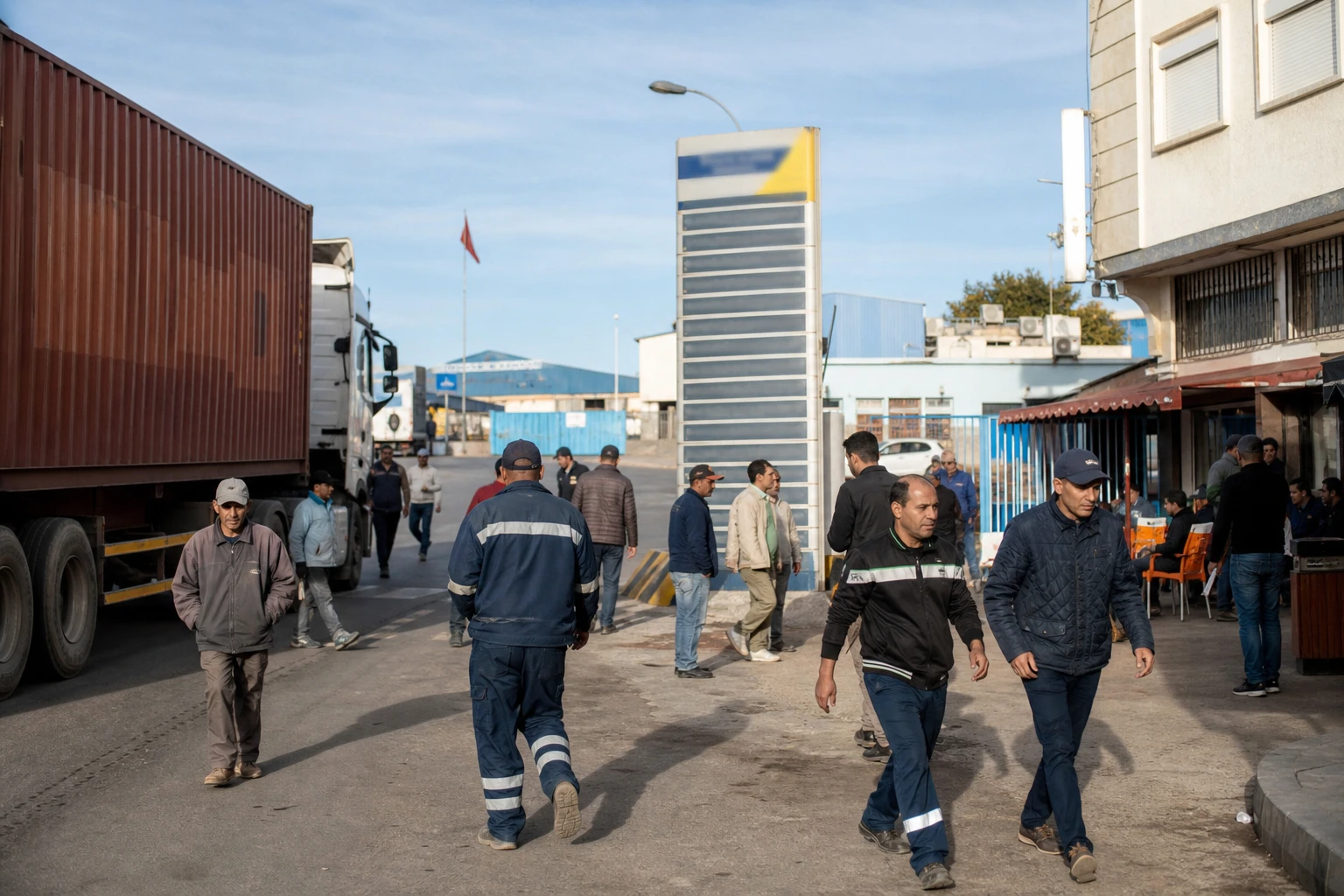
A port designed to ease pressure on the Mediterranean coast
On Morocco’s eastern coast, a port project is advancing without unnecessary fanfare, but with a clear purpose: to prepare a facility capable of absorbing volumes far greater than those of local traffic. At Nador West Med, the challenge is not simply to line up cranes. It is to connect the Oriental, Rabat and Mediterranean shipping routes to a more competitive logistics chain, in a country already relying on major infrastructure to strengthen its place in African and Euro-Mediterranean trade.
The project is part of Morocco’s port strategy to 2030, which aims to support growth in foreign trade and modernise transport infrastructure. The National Ports Agency’s reference document sets a long-term course for increasing capacity, while the African Development Bank describes the Nador West Med complex as one of the Kingdom’s flagship projects in the Oriental region.
This upgrading is also taking place in a broader regional context. In North Africa, competition between port platforms is determined by quay depth, handling rates and the quality of land connections. Morocco is seeking to consolidate a logistics corridor that does not depend solely on Tanger Med, but is supported by several complementary hubs.
Equipment in place ahead of commercial opening
Nador West Med’s eastern container terminal has received a new batch of two Ship-to-Shore (STS) quay cranes, designed to transfer containers between ships and the quay. With this delivery, the terminal now has five STS cranes installed, following the receipt of an initial batch of three machines at the end of June 2026. Commercial operations are expected to begin in the fourth quarter of 2026.
Meanwhile, the commissioning of electric rubber-tyred gantry cranes, or eRTGs, is also progressing. These yard machines move containers in stacking areas and between reception, delivery and internal transport vehicle zones. The equipment plan ultimately provides for eight STS cranes, 24 yard cranes and four mobile cranes, equipping a terminal designed for large-scale transhipment.
The African Development Bank says this configuration is intended to increase the terminal’s annual handling capacity from 700,000 to more than 3 million TEU, or twenty-foot equivalent units, the standard unit for maritime containers. This is a considerable leap and reflects the site’s strategic direction: to become a regional redistribution point, not merely a port serving the domestic market.
On 25 June 2026, official Moroccan communications on the port confirmed that operational launch was approaching in the fourth quarter of the year and cited an initial annual capacity of five million containers and 35 million tonnes of liquid and solid bulk cargo. They also mentioned 20 billion dirhams in private investment already confirmed for the port and industrial complex.
What Nador West Med means for Morocco and the region
For Morocco, the challenge is twofold. First, the aim is to ease pressure on existing infrastructure by creating a new gateway for international flows. Second, the project is intended to boost the economy of the Oriental region, which has long faced slower development than the country’s central Atlantic corridor. The AfDB notes that the project is part of a programme to develop this north-eastern Moroccan region.
For logistics operators, the benefits are even more tangible: an efficient port attracts shipping lines, cargo-handling providers and storage activities, and eventually industrial zones capable of processing some of the flows rather than simply letting them transit. This is precisely the logic of an industrial-port platform promoted by Moroccan institutions and the AfDB.
For local communities, the impact will depend on the port’s connections to its hinterland. Without free-flowing roads, efficient logistics services and links to employment centres, a major port can remain a high-performing but poorly connected island. This is why recent studies place as much emphasis on land access as on the quays themselves. The future Guercif-Nador corridor, for example, is intended to link the port complex more firmly to the national motorway network.
The project also has a continental competitiveness dimension. As African ports seek to capture more transhipment and limit additional logistics costs, Nador West Med’s expansion is part of a broader contest over value chains. Morocco is seeking to position itself as a gateway between Europe, the western Mediterranean and flows from Africa.
A test for Morocco’s port strategy to 2030
Nador West Med will not be judged solely by the number of cranes installed. Its real test will begin with operations: call rates, handling times, reliable access and the ability to attract regular shipping lines. Morocco is relying on this type of infrastructure to support its logistics positioning, while also accelerating other sectoral strategies, from aviation to business finance.
In the coming months, the central question will therefore be less about construction than about bringing the site into operation. If the equipment, access routes and operational governance are in place, Nador West Med can complement the Kingdom’s port network and strengthen its role in Mediterranean trade. In Morocco and across Africa, this is where the project’s real value lies: turning infrastructure into a lasting driver of movement, investment and jobs.



