
 Algeria
 Egypt
 Libya
 Sudan
 Tunisia
 Benin
 Burkina Faso
 Cabo Verde
 Côte d'Ivoire
 Ghana
 Guinea
 Guinea-Bissau
 Liberia
 Mali
 Mauritania
 Niger
 Nigeria
 Senegal
 Sierra Leone
 The Gambia
 Togo
 Cameroon
 Central African Republic
 Chad
 DR Congo
 Equatorial Guinea
 Gabon
 Republic of the Congo
 São Tomé and Príncipe
 Burundi
 Comoros
 Djibouti
 Eritrea
 Ethiopia
 Kenya
 Madagascar
 Malawi
 Mauritius
 Mozambique
 Rwanda
 Seychelles
 Somalia
 South Sudan
 Tanzania
 Uganda
 Angola
 Botswana
 Eswatini
 Lesotho
 Namibia
 South Africa
 Zambia
 Zimbabwe
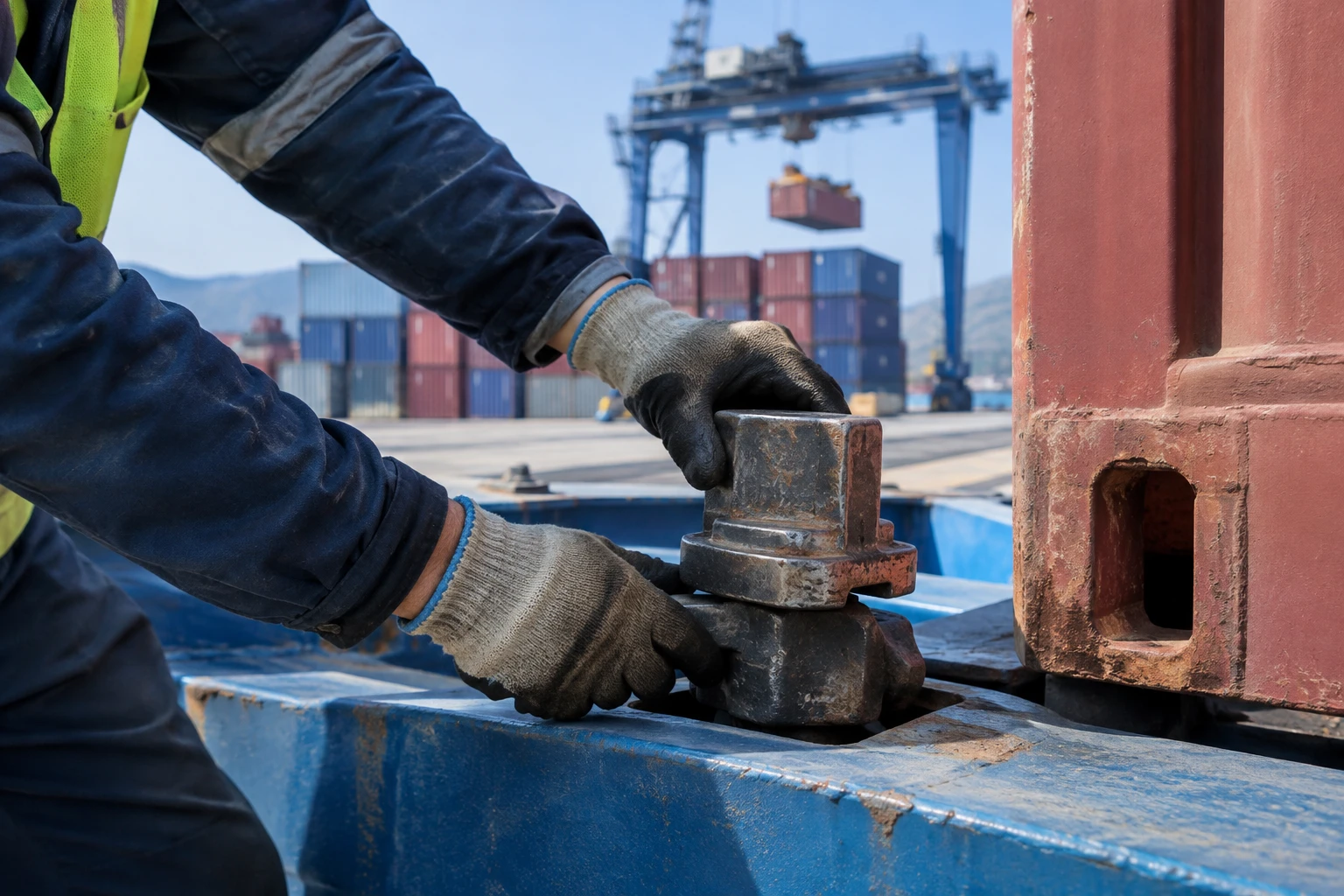
A port can open its quays before all its promises are fulfilled. At Nador West Med, on Morocco’s Mediterranean coast, the first container terminal began operations on 31 October 2026. The complex itself still has to scale up in stages: its gas terminal and several facilities are not yet operational.
A phased opening, not a completed port
Located in Betoya Bay, west of Nador, the new port is designed as an industrial-port complex. It combines container terminals, facilities for bulk goods and a future energy hub. The launch on 31 October applies to the first container terminal, not the entire complex.
The East Terminal, operated by a joint venture between Marsa Maroc and Terminal Investment Limited, a subsidiary of shipping group MSC, is targeting capacity of 3.5 million TEU by 2030. TEU, or twenty-foot equivalent unit, is the standard measure used to quantify container traffic. The West Terminal, involving Marsa Maroc and CMA CGM, is expected to add a further 1.8 million TEU from 2027. The announced total capacity is therefore about 5.3 million TEU a year once both terminals are operational.
The timetable matters as much as the stated capacity. The liquefied natural gas (LNG) terminal, described as Morocco’s first of its kind, is scheduled for 2027. The project also includes terminals for hydrocarbons and bulk goods. In other words, the inauguration marks a first step, not the immediate arrival of all the promised functions.
Tanger Med’s success calls for new capacity
Nador West Med is part of a port strategy already shaped by Tanger Med, near the Strait of Gibraltar. The port in the north of the country handled more than 11.1 million TEU in 2025, up 8.4% year on year. This figure confirms its importance as a transshipment hub and gateway for Moroccan trade. It is not, however, enough to show that the port is “saturated”: the number of containers handled and available capacity are not interchangeable.
The two sites do not need to replace one another. Their complementarity will depend on shipping routes, contracts signed with shipping lines, and connections to industrial zones and the transport network. Tanger Med has established operations and well-developed international links. Nador West Med can accommodate new flows and strengthen Morocco’s port presence on its eastern seaboard.
The global maritime context makes this diversification useful, but the port’s opening should not be attributed to a particular crisis without corroborating evidence. Available information does not establish that the Strait of Hormuz is blocked or that ships are being diverted en masse towards Gibraltar. The verifiable argument is broader: maritime supply chains are changing, and operators are seeking infrastructure capable of accommodating large vessels and connecting several markets.
The stakes for the Oriental region extend beyond the quays
The port is in the Oriental region, with the ambition of attracting logistics and industrial activities and creating jobs. The complex is intended to contribute to the region’s economic development, after it was long less integrated into major port corridors than north-western Morocco. But local benefits will not follow automatically from the opening of the terminals: they will also depend on training, businesses setting up in the region, and the ability of local workers and suppliers to access new markets.
Land access will be crucial. A competitive port needs roads and, in time, efficient rail links to move goods beyond its gates. The announced timetable includes a rail link in 2028 and a motorway to the complex in 2029. This gap means that logistics operations could scale up gradually, even though the first maritime operations have begun.
The energy component merits the same attention. An LNG terminal can diversify import infrastructure and support the country’s energy needs. But it does not produce gas: its impact will depend on supplies, contracts, regasification equipment and connections to the network. Its scheduled launch in 2027 is therefore a milestone to watch, not capacity that is already available.
Moroccan ambition, with regional balances to watch
For Morocco, Nador West Med broadens the strategy that has made Tanger Med a major gateway between Europe, Africa and global shipping routes. The World Bank estimates that about 95% of Morocco’s foreign trade passes through its ports, underlining the importance of this infrastructure for both imports and exports. This reliance also makes the quality of connections and the resilience of logistics chains decisive.
Across North Africa, the project strengthens Morocco’s position in the western Mediterranean, where Moroccan, Spanish and Algerian ports are part of competing shipping and transshipment networks. Its continental significance, however, will depend less on announcements than on results: the volumes actually handled, regular services, jobs created and economic ties with the Oriental region.
The next test will therefore be operational. Observers will need to track the arrival of the West Terminal in 2027, the actual commissioning of the energy hub, and then progress on land connections. Nador West Med has begun operating; its place in Morocco’s port system, however, remains to be built.



