Algeria
 Egypt
 Libya
 Morocco
 Sudan
 Tunisia
 Benin
 Burkina Faso
 Cabo Verde
 Ghana
 Guinea
 Guinea-Bissau
 Liberia
 Mali
 Mauritania
 Niger
 Nigeria
 Senegal
 Sierra Leone
 The Gambia
 Togo
 Cameroon
 Central African Republic
 Chad
 DR Congo
 Equatorial Guinea
 Gabon
 Republic of the Congo
 São Tomé and Príncipe
 Burundi
 Comoros
 Djibouti
 Eritrea
 Ethiopia
 Kenya
 Madagascar
 Malawi
 Mauritius
 Mozambique
 Rwanda
 Seychelles
 Somalia
 South Sudan
 Tanzania
 Uganda
 Angola
 Botswana
 Eswatini
 Lesotho
 Namibia
 South Africa
 Zambia
 Zimbabwe
Connecting the north means more than putting up masts
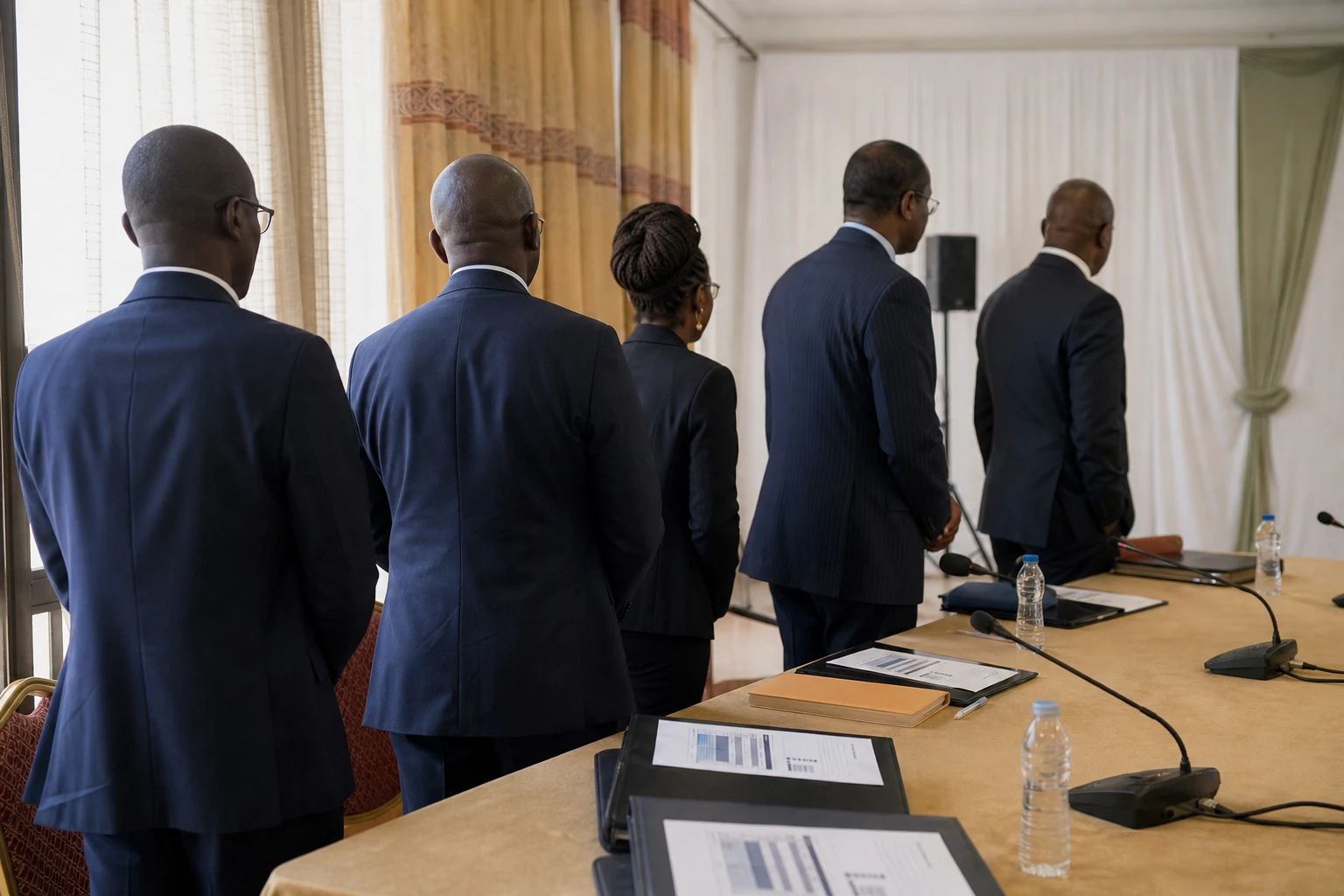
In northern Côte d’Ivoire, connectivity is not a luxury. It can often make the difference between a pupil accessing an online lesson, a trader taking payment by mobile money and a health centre transmitting useful information in time. It is also, in very practical terms, what will prevent rural areas from being left on the margins of the digital economy taking shape from Abidjan to the border regions. MTN Côte d’Ivoire says it has begun a new phase of deployment in several northern localities and has raised its coverage to 94.61%. This expansion is part of a broader trend, as the Ivorian state is also promoting rural connectivity through the National Rural Connectivity Programme, which aims to reduce areas without coverage and improve access to high-speed internet outside major urban centres.
A national issue in a region where borders matter
Côte d’Ivoire no longer treats mobile coverage as a purely technical issue. For several years, the authorities have regarded it as a driver of development, security and financial inclusion. The ministry responsible for digital affairs has already launched the National Rural Connectivity Programme to extend networks to rural areas, while ARTCI regularly publishes coverage and market statistics to track progress in the sector. As at 31 December 2024, the regulator still reported notable gaps between coverage of the territory and coverage of the population, showing that effective access remains central, particularly away from the main routes.
The issue, however, extends beyond the national context. Northern Côte d’Ivoire is a corridor for movement with Mali, Burkina Faso and, more broadly, the ECOWAS area, the Economic Community of West African States. In a region shaped by trade, family mobility and security tensions, a more stable network facilitates communication, money transfers, early warning and administrative services. The Ivorian government also presents cross-border connectivity as a tool for opening up isolated areas and for national security.
What MTN says it has rolled out
The announcement centres on a network expansion in several localities in the regions of Ouangolodougou, M’Bengué, Korhogo, Boundiali, Kong, Kouto, Sinématiali and Tengréla, as well as Dikodougou, Ferkessédougou, Dianra, Kani, Kaniasso, Madinani and Niakaramadougou. The operator says more than 30 new localities now have improved access to mobile telephony and the internet. It presents this latest step as a response to demand for connectivity in rural areas, where needs are dispersed and deployment costs are higher than in cities.
The group also says it is pursuing a continuous investment strategy. In its 2023 ESG report, MTN Côte d’Ivoire said it had achieved rural 2G/3G coverage of 87.8% after deploying more than 300 sites, highlighting solutions adapted to hard-to-reach localities, including solar-powered equipment and satellite antennas. The company had already cited Wahin and Assakra as examples of areas that had previously been underserved, showing that the gradual expansion of the network is not new, but is accelerating.
MTN is not operating in a regulatory vacuum. In Côte d’Ivoire, the telecommunications sector is overseen by ARTCI, which publishes market and coverage reports, and the Ministry of Digital Transition and Digitalisation, which leads public policy in the sector. This alignment between private operators, the regulator and the state is essential, because rural coverage requires major investment as well as permits, infrastructure sharing and, in some cases, universal service mechanisms.
What it means in practice for villages, public services and local economies
On the ground, the issue is not simply “having a signal”. Better coverage changes life for schools, health centres, town halls, small businesses and households. In a better-connected locality, a teacher can download educational content. A health worker can contact a specialist service. A producer can compare prices, reach a buyer or receive a mobile payment. A rural market also becomes easier to navigate for supply chains, particularly when connectivity makes it possible to use mobile money services.
The benefits are not the same for everyone. For large companies and public administrations, connectivity makes operations more efficient. For rural households, it can primarily reduce the cost of accessing information and services. For women traders, who often depend on market sales and fast transfers, the mobile network becomes a tool for managing cash flow and achieving greater independence. MTN’s ESG report also cites digital literacy initiatives carried out in several rural regions, as well as a network of nearly 99,900 mobile money agents in 2023, showing that physical connectivity and financial inclusion are advancing together.
This trend must also be viewed through the lens of territorial inequality. Côte d’Ivoire has made significant progress on digitalisation, but the gaps between Abidjan, other cities and rural areas remain evident. In 2024 and again in 2025, the ministry itself stressed the need to reduce “white areas” and improve coverage in border localities. The national programme envisages connecting several hundred localities in time. In other words, the debate is no longer only about theoretical coverage. It is about service quality, signal continuity and whether residents can actually make use of the network.
What this announcement says about the moment in Côte d’Ivoire
This development reflects a broader trend in West Africa. Telecoms operators are no longer selling only voice calls or data. They are becoming players in regional development, digital finance and, increasingly, practical sovereignty. In Côte d’Ivoire, this shift is unfolding in an environment where ECOWAS is still seeking to ease economic integration, while each state also wants to improve coverage in its border areas and better protect its infrastructure. Rural connectivity is therefore becoming an industrial, social and strategic issue all at once.
For Ivorians, particularly residents of the northern regions, the question is now simple: will the new sites announced bring a lasting improvement in service quality, or merely coverage on paper? That is where the credibility of the investment will be tested. The next benchmark will be the network’s ability to perform over time, handle more usage and genuinely serve schools, healthcare, commerce and local government. In a country where digital transformation has become a public priority, this is the measure of the real impact of every new mast.