Algeria
 Egypt
 Libya
 Morocco
 Sudan
 Tunisia
 Benin
 Burkina Faso
 Cabo Verde
 Côte d'Ivoire
 Ghana
 Guinea
 Guinea-Bissau
 Liberia
 Mali
 Mauritania
 Niger
 Nigeria
 Senegal
 Sierra Leone
 The Gambia
 Togo
 Cameroon
 Central African Republic
 Chad
 DR Congo
 Equatorial Guinea
 Gabon
 Republic of the Congo
 São Tomé and Príncipe
 Burundi
 Comoros
 Djibouti
 Eritrea
 Ethiopia
 Kenya
 Madagascar
 Malawi
 Mauritius
 Rwanda
 Seychelles
 Somalia
 South Sudan
 Tanzania
 Uganda
 Angola
 Botswana
 Eswatini
 Lesotho
 Namibia
 South Africa
 Zambia
 Zimbabwe
A network map that goes beyond coverage
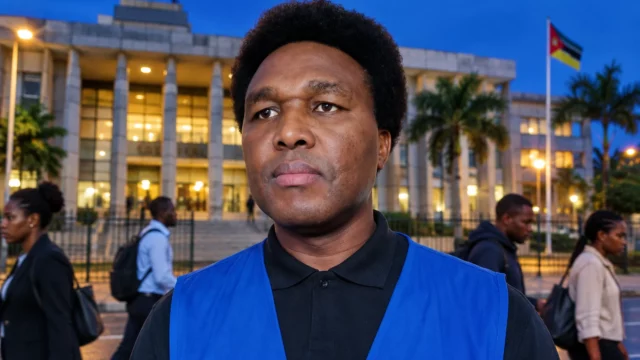
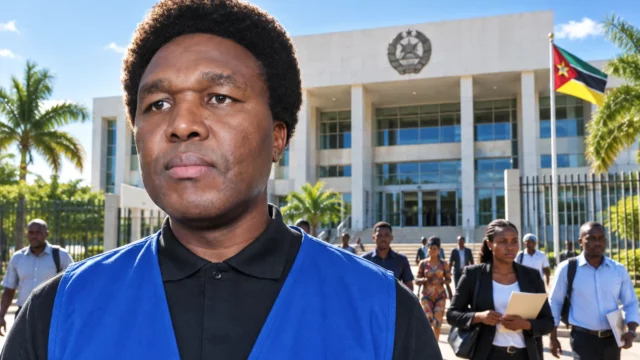
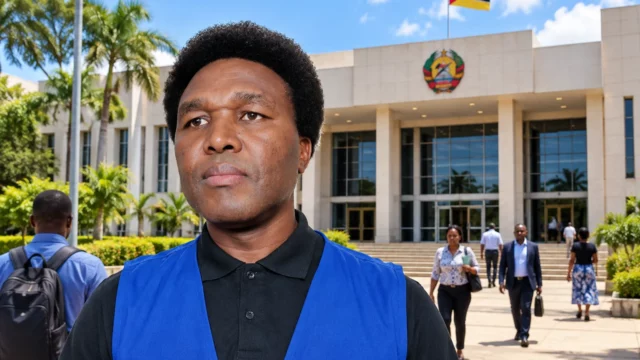
In Mozambique, the question is no longer just who owns a phone. It is who can truly connect, learn, sell, work and access public services from their neighbourhood, village or school. In a country where mobile internet is still far from universal, every new mast, connected classroom and public access point carries far more weight than a technical promise. Each is another building block in a digital economy that does not leave rural areas on the margins.
The target announced by the Mozambican authorities is clear: extend telecommunications services to at least 300 communities in the coming years. The Ministry of Communications and Digital Transformation frames this ambition as a continuation of the national digital inclusion programme, with rural areas and schools as stated priorities. The government says it has already connected 149 communities to the internet and 418 schools, while its roadmap envisages connecting as many as 4,000 schools and setting up about 10,000 new 4G and 5G access points.
Mozambique’s context: a vast country, a persistent divide
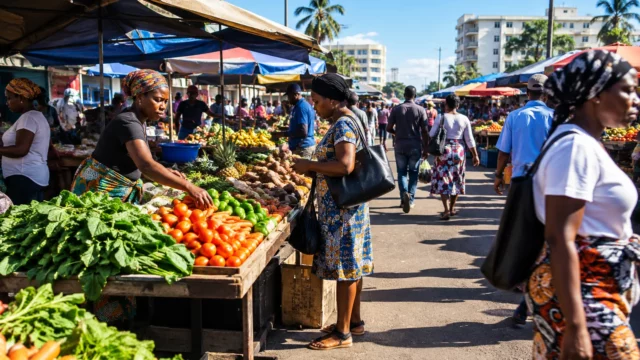
Mozambique faces a familiar structural constraint: its population is dispersed across an immense territory, and a large share lives outside urban centres. The World Bank estimates that 61% of Mozambicans lived in rural areas in 2024. Meanwhile, data from the International Telecommunication Union indicate that only 20.5% of the population used the internet that year. In other words, the country does not simply have a bandwidth problem; it faces a problem of meaningful access, first geographical, then economic and social.
The national regulator, INCM, has already put several building blocks in place. In April 2026, it launched the pilot phase of national roaming, a system that allows a customer to switch to another operator’s network when their own signal is unavailable. The regulations state that the aim is to address areas with inadequate coverage, particularly rural ones. In parallel, the Universal Access Service Fund finances rural connectivity projects and infrastructure in schools. These tools point to a broader strategy: pooling infrastructure where the market alone is not moving fast enough.
What the 17 August announcement changes
The 17 August announcement did not come out of nowhere. It builds on the official launch of the “Internet Para Todos” project, unveiled on 28 March 2025 in Nacala-Porto. The programme aims to expand coverage by 2030, with targets for mobile density, network expansion and the entry of new players, including low-Earth-orbit satellite operators and telecoms infrastructure companies. The government also wants to speed up fibre-optic deployment and improve service quality in areas where networks exist but remain fragile.
The figures nevertheless show that coverage is not enough. In 2024, the ITU estimated that 79.9% of the population owned a mobile phone, but internet penetration remained at 20.5%. That gap says a great deal: owning a device does not mean having a regular, affordable and useful connection. The World Bank also shows that the share of the population living in rural areas and low levels of financial inclusion reinforce a cycle of constraints. Access still depends on the price of devices, the cost of data, electricity and digital skills.
Practical stakes for households, schools and operators
For households, the issue is cost. According to the GSMA Mobile Connectivity Index, Mozambique scored just 30.1 out of 100 in 2024 for the affordability of mobile phones, and 18.3 for the poorest 40%. This remains too low for coverage to translate into widespread use. Without suitable devices, affordable data and digital literacy, a new mast will not change daily life as much as promised.
For schools, however, the impact could be more immediate. The government says it has already connected 418 institutions and is preparing a large-scale expansion. In a country where rural schools often lack resources, the internet can support teacher training, access to educational content and administrative procedures. But here too, the impact depends on reliable electricity, equipment maintenance and staff training. A connection installed without support risks being underused.
For operators, meanwhile, the state is pushing a model based on sharing and network densification. National roaming, rural stations funded by the Universal Access Service Fund, 4G and 5G access points, and the planned entry of new providers point to a market where profitability is no longer confined to provincial capitals. This is an important signal for Maputo, but also for operators active in the provinces of Cabo Delgado, Nampula, Zambézia, Tete, Sofala and Inhambane, where demand exists but is costly to serve.
Regional significance within SADC
Mozambique is not acting in isolation. Its approach reflects a wider trend across SADC, the Southern African Development Community, where connectivity has become a driver of productivity, education and economic sovereignty. The country is seeking to narrow the gap between Maputo, mid-sized cities and the most remote districts. This is a regional concern, as logistics chains, mobile financial services and cross-border trade are also going digital.
The continental stakes are similar: digital inclusion is no longer a luxury, but a condition for access to the AfCFTA, the African Continental Free Trade Area. Without reliable networks, digital skills and affordable tariffs, small businesses, schools and local administrations remain distant from the African integration taking shape. Mozambique’s next test will therefore be a practical one: the promise of connecting 300 communities must translate into more pupils online, accessible services and economic activity better linked to the rest of the country.