Algeria
 Egypt
 Libya
 Morocco
 Sudan
 Tunisia
 Benin
 Burkina Faso
 Cabo Verde
 Côte d'Ivoire
 Ghana
 Guinea
 Guinea-Bissau
 Liberia
 Mali
 Mauritania
 Niger
 Nigeria
 Senegal
 Sierra Leone
 The Gambia
 Togo
 Cameroon
 Central African Republic
 Chad
 DR Congo
 Equatorial Guinea
 Gabon
 Republic of the Congo
 São Tomé and Príncipe
 Burundi
 Comoros
 Djibouti
 Eritrea
 Ethiopia
 Kenya
 Madagascar
 Malawi
 Mauritius
 Rwanda
 Seychelles
 Somalia
 South Sudan
 Tanzania
 Uganda
 Angola
 Botswana
 Eswatini
 Lesotho
 Namibia
 South Africa
 Zambia
 Zimbabwe
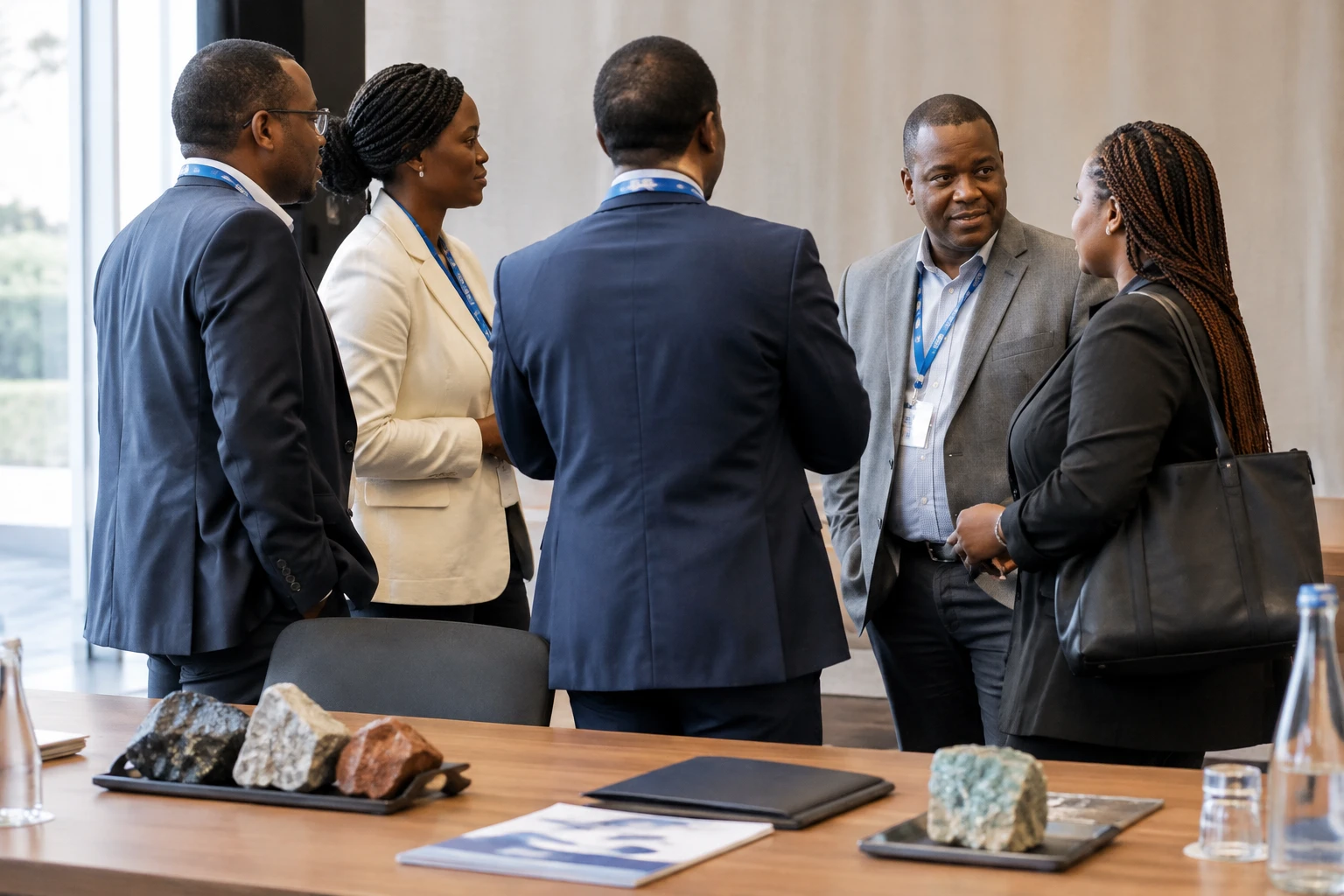
A $4.2 billion commitment could herald a new phase for Mozambique’s industry. But between a memorandum of understanding and an operational plant lies a decisive journey: financing, infrastructure, skills and local benefits.
Projects announced in Nacala, implementation still to be verified
Investors and Mozambican authorities meeting in Nacala-Porto, in Nampula province, signed memorandums of understanding to develop mineral processing in the country. The announcement was made during the Annual Conference on Mineral Beneficiation and Development, held from 19 to 24 October 2026.
The amount put forward is $4.2 billion. The projects would cover several resources: graphite, copper, gemstones, silica sand, quartz, titanium and zircon. They are presented as proposed investments, not as funding already disbursed or facilities already built.
Reports differ on the number of agreements. Mozambican media outlet IkWeli refers to eleven memorandums, while Evidências reports twelve companies signing. The $4.2 billion figure, however, is cited by both media outlets and the authorities. In the absence of public details to reconcile these counts, the exact number of agreements remains to be clarified.
President Daniel Chapo has called for the commitments to be monitored and assessed before the next edition of the conference. The Mozambican presidency presents this deadline as a way to verify progress on the projects. The distinction matters: a memorandum expresses an intention to cooperate, but does not in itself guarantee that an investment will be made.
A new direction for the mining framework
This strategy is part of a broader reform. In June 2026, Mozambique adopted a new mining framework providing for a minimum 15% state stake in the mineral resources value chain. The legislation also regulates exports of raw or semi-processed minerals, with provision for exceptional authorisations.
The aim is to retain more value in the country: process some resources before export, develop industrial activities and reduce certain imports. The government links this ambition to job creation and higher revenues. These are, however, objectives whose impact will depend on the projects being delivered and their ability to employ and source locally.
Mineral processing requires equipment, reliable electricity, water, transport and a skilled workforce. Costs and timelines differ for each resource. A graphite or copper processing plant does not have the same requirements as a facility dedicated to silica sand or titanium. Announcements will therefore need to be tracked project by project, with information on timelines, financing and production capacity.
Benefits will also be determined beyond mining sites
For Mozambican workers and businesses, the issue is not limited to the number of jobs announced. It also concerns their duration and skill requirements, and the role of domestic suppliers in contracts. Industrial jobs could be concentrated near processing plants, while extraction areas, sometimes far from major centres, will be looking for more direct benefits.
Small businesses and informal activities will not automatically benefit from new investments. They could be excluded if tender processes, technical standards or access to credit are difficult for them. Conversely, training, local procurement and transparent ties with communities can extend the benefits beyond investors and the central administration in Maputo.
Industrial policy will also have to address environmental and land issues. Mineral processing can use large amounts of energy and water, and generate waste that needs to be managed. Project assessments will therefore need to make permits, local consultations and monitoring measures visible, alongside the amounts invested.
A shared issue across Southern Africa
Mozambique is a member of the Southern African Development Community, SADC, which brings countries in the region together for economic cooperation. Its regional industrialisation strategy identifies mineral beneficiation as one route to development. More integrated production chains could enable neighbouring countries to share skills, equipment and markets, rather than treating each project in isolation.
The issue also feeds into continental debates on economic sovereignty: how can producer countries exert greater influence in global mineral supply chains without discouraging investment or shifting costs onto local communities? The answer will depend less on announcements than on the ability to build infrastructure, enforce rules and publish verifiable results.
The next milestone announced by Daniel Chapo is a review of the projects before the next annual conference. At that point, it will be necessary to distinguish between agreements still under negotiation, financing secured and construction work under way. For Mozambique, this is the stage at which the promise of industrialisation can be measured in concrete terms.