Algeria
 Egypt
 Libya
 Morocco
 Sudan
 Tunisia
 Benin
 Burkina Faso
 Cabo Verde
 Côte d'Ivoire
 Ghana
 Guinea
 Guinea-Bissau
 Liberia
 Mali
 Mauritania
 Nigeria
 Senegal
 Sierra Leone
 The Gambia
 Togo
 Cameroon
 Central African Republic
 Chad
 DR Congo
 Equatorial Guinea
 Gabon
 Republic of the Congo
 São Tomé and Príncipe
 Burundi
 Comoros
 Djibouti
 Eritrea
 Ethiopia
 Kenya
 Madagascar
 Malawi
 Mauritius
 Mozambique
 Rwanda
 Seychelles
 Somalia
 South Sudan
 Tanzania
 Uganda
 Angola
 Botswana
 Eswatini
 Lesotho
 Namibia
 South Africa
 Zambia
 Zimbabwe
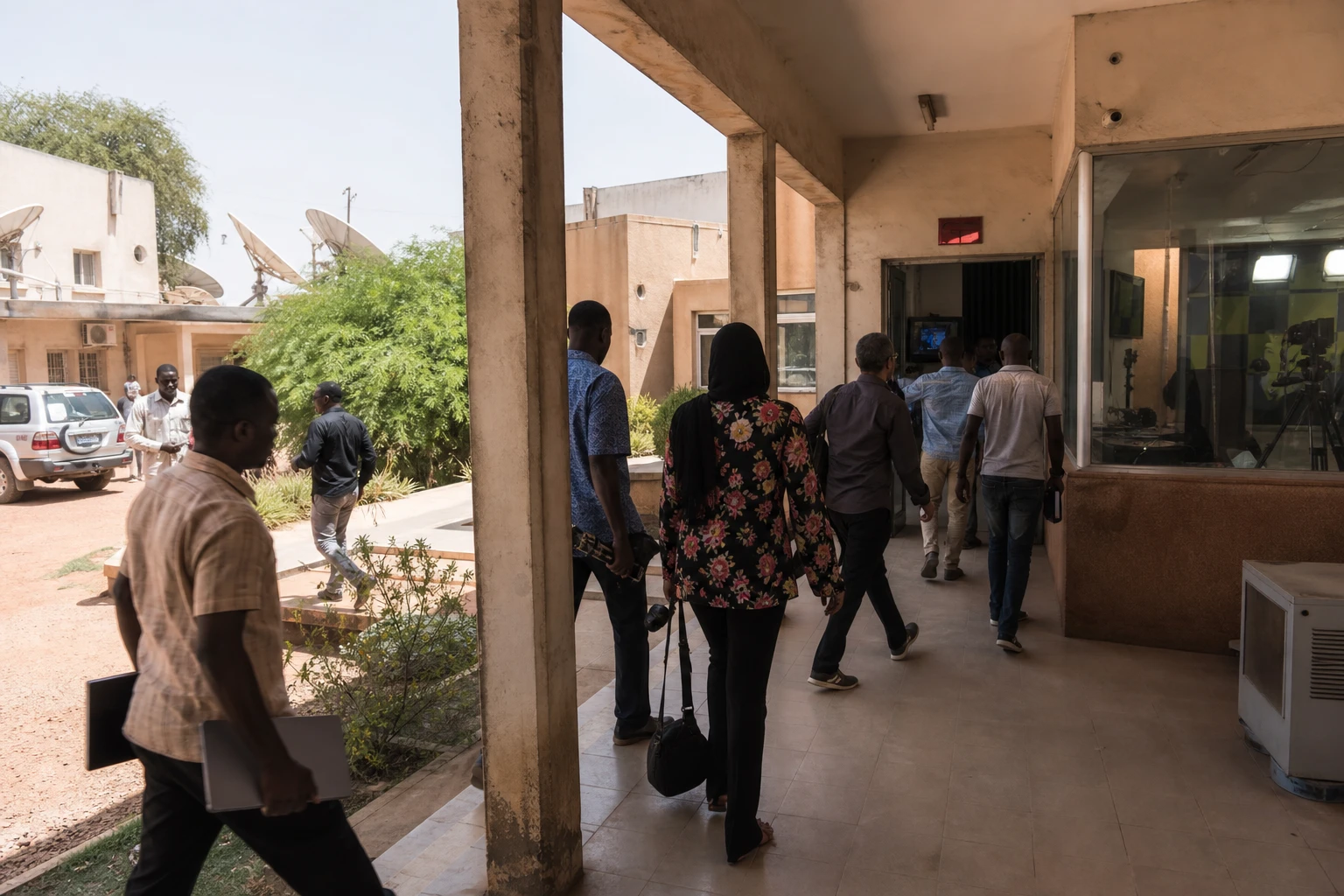
In Niamey, a disappearance has left a family without answers and a newsroom without its head. Since 31 August 2026, Moussa Kaka, a prominent figure in Nigerien journalism, has remained missing after leaving the offices of Radio Télévision Saraounia to go home.
A disappearance amid rising tensions
The journalist left his office on Monday 31 August at about 7pm. He never reached his home. Since then, his family, colleagues and lawyer say they have had no contact with him.
These details have been documented separately by Reporters Without Borders, Human Rights Watch and the Observatory for the Protection of Human Rights Defenders. None of these organisations, however, presents the role of a public authority in the disappearance as established.
Official silence has now become one of the main points of tension. As of 1 October 2026, the Nigerien authorities have not publicly announced the opening of an investigation or given any information about the journalist’s whereabouts.
RSF refers to a possible enforced disappearance and calls on the authorities to search for Moussa Kaka. The OMCT takes a more cautious approach: no public evidence yet establishes a link between his professional activities and his disappearance, but the seriousness of the situation demands a swift investigation.
Allegations that remain to be verified
The Nigerien G25 collective says, through its spokesperson Tahirou Garka, that Moussa Kaka may be held by the Directorate General for Documentation and External Security (DGDSE). According to the collective, this claim is based on its own investigations and corroboration.
At this stage, this lead has not been confirmed by an official statement, a court ruling or publicly available evidence. It must therefore continue to be presented as an allegation, not as an established fact.
Concern has nevertheless been heightened by the journalist’s recent record. In October 2025, Moussa Kaka was arrested along with several colleagues after an invitation to a press conference on the Fund for Solidarity for the Safeguarding of the Homeland was circulated on social media. The journalists were prosecuted for “complicity in disseminating a document likely to disturb public order”, according to information published by RSF and confirmed by Human Rights Watch.
The prosecutions were part of a series of legal proceedings targeting Nigerien journalists. One of them, Ibro Chaibou, was released on 28 August 2026, three days before Moussa Kaka disappeared. The journalist was present when he was released from detention, according to RSF.
A professional with a central role in Nigerien media
Moussa Kaka is more than a former correspondent for an international media outlet. He heads Radio Télévision Saraounia, a media group based in Niger. Founded in 1999 as a radio station, the company expanded with the launch of a television channel in 2011.
The group employs about 70 people, with operations in Niamey and several other localities, including Tahoua, Maradi and Madaoua. Its presence gives the case a significance beyond the fate of a media personality: it also affects the staff, families and audiences who rely on local media.
Moussa Kaka also worked for several decades as a journalist and correspondent in Niger. He reported on political crises, social debates and developments in his country for Nigerien listeners and audiences across the region.
His career is a reminder of the particular role played by local media. In Niamey and across the regions, they circulate information that larger networks cannot always gather. Their weakening therefore reduces citizens’ ability to understand public decisions and make their concerns heard.
Press freedom already under pressure
The disappearance comes after several years of a deteriorating media environment in Niger. The military authorities who came to power in July 2023 have suspended or restricted several foreign media outlets. They regularly cite national security, social cohesion or the protection of forces engaged in the fight against armed groups.
These security concerns are real. Niger faces violence in several border areas and its defence forces are under considerable pressure. They do not, however, remove journalists’ right to work, or families’ right to know what has happened to a loved one.
In its 2026 ranking, RSF places Niger 120th in the world, down 37 places. The organisation links this decline to the shrinking of civic space and pressure on the media. The ranking is not evidence in the Moussa Kaka case, but it sheds light on the context in which the disappearance took place.
The issue concerns more than journalists. When the media work under threat, residents of urban neighbourhoods, rural populations and informal-economy workers have less information to follow prices, public services, security or administrative decisions.
A case reaching beyond Niger’s borders
Solidarity is already spreading to several African countries. Organisations defending journalists and human rights are calling for the family to be informed and for an independent investigation to establish what happened between Moussa Kaka’s departure from the office and his journey home.
The case is also part of a regional realignment. Niger, Mali and Burkina Faso officially left the Economic Community of West African States (ECOWAS) on 29 January 2025 and are now co-ordinating their positions more closely within the Alliance of Sahel States. This break does not erase Niger’s national obligations on fundamental rights. It does, however, make regional mechanisms for dialogue and pressure more complex.
The next step will therefore be national first: locate Moussa Kaka, inform his family and establish the facts. The authorities will need to clarify whether proceedings are under way, which institution is conducting them and what safeguards are being provided to the family and to journalists called to testify.
Without an official response, every hypothesis will continue to circulate. In a country where public expression is already tightly controlled, the lack of information fuels fear and undermines trust. Moussa Kaka’s fate has thus become a concrete test of journalist protection and of Nigeriens’ right to independent information.