Algeria
 Egypt
 Libya
 Morocco
 Sudan
 Tunisia
 Benin
 Burkina Faso
 Cabo Verde
 Côte d'Ivoire
 Ghana
 Guinea
 Guinea-Bissau
 Liberia
 Mali
 Mauritania
 Nigeria
 Senegal
 Sierra Leone
 The Gambia
 Togo
 Cameroon
 Central African Republic
 Chad
 DR Congo
 Equatorial Guinea
 Gabon
 Republic of the Congo
 São Tomé and Príncipe
 Burundi
 Comoros
 Djibouti
 Eritrea
 Ethiopia
 Kenya
 Madagascar
 Malawi
 Mauritius
 Mozambique
 Rwanda
 Seychelles
 Somalia
 South Sudan
 Tanzania
 Uganda
 Angola
 Botswana
 Eswatini
 Lesotho
 Namibia
 South Africa
 Zambia
 Zimbabwe
A disappearance that says much about the mood in Niamey
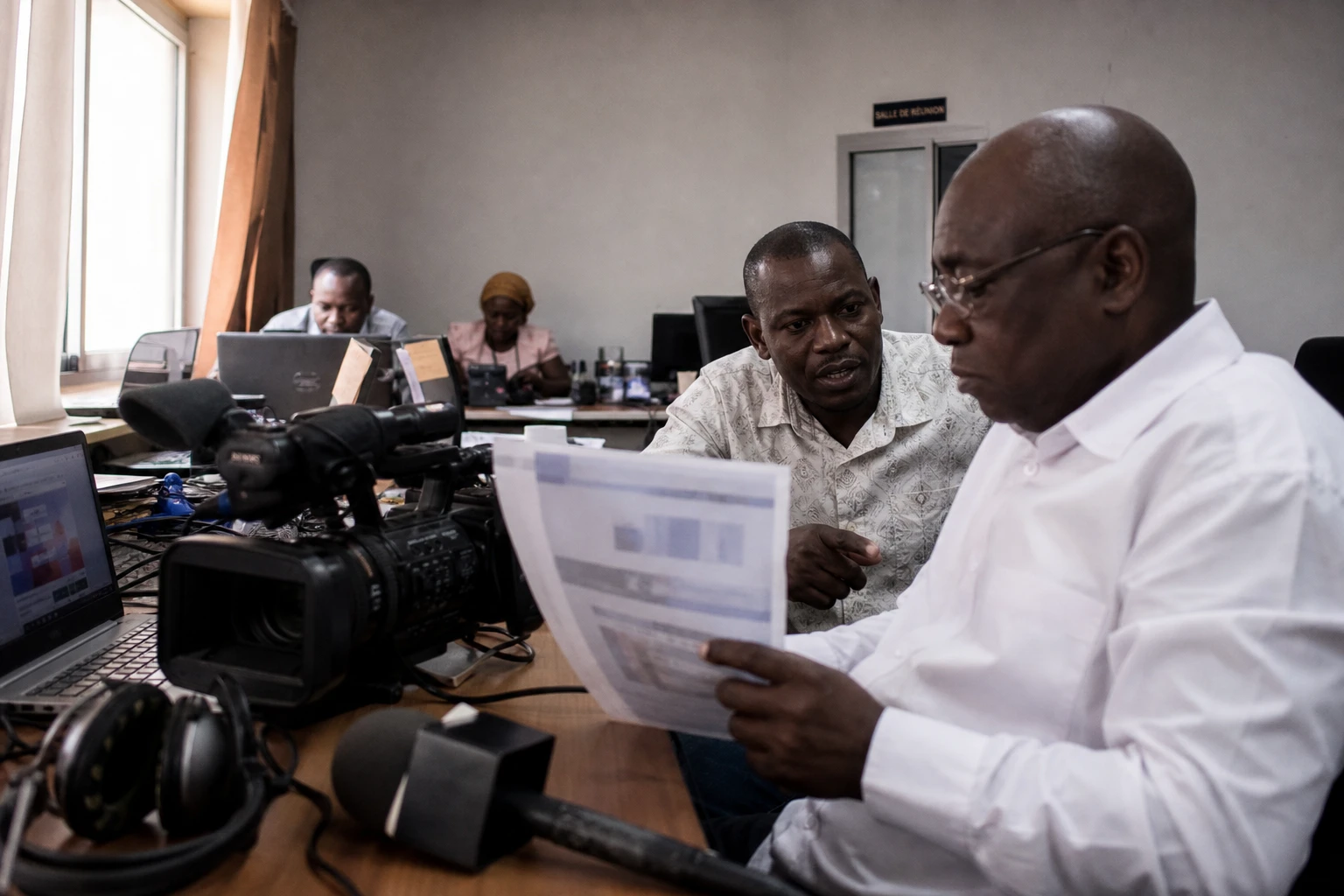
In Niamey, a journalist’s disappearance is never treated as just another news story. In a country shaken by a military coup, followed by a series of security and political tensions, every silence carries more weight than usual.
The case of Moussa Kaka illustrates this clearly. A well-known figure in Niger’s media landscape and director of the Saraounia Radio and Television group, he has not been heard from since the evening of 31 August, according to information corroborated by press freedom organisations and media outlets on the ground. He left his office in Niamey at around 7pm to go home, but never arrived.
The uncertainty is all the more worrying because it comes at a time when Nigerien journalists are working under pressure. Since the military takeover in July 2023, public space has narrowed. Media outlets, newsrooms and critical voices operate in an environment marked by mistrust, occasional bans and enforced caution.
Niger after the upheaval of 2023
Niger underwent a major upheaval on 26 July 2023, when soldiers overthrew President Mohamed Bazoum in Niamey. In the weeks that followed, ECOWAS, the Economic Community of West African States, imposed sanctions and raised the prospect of military intervention, while the African Union suspended the country from its bodies until constitutional order was effectively restored.
This context matters in understanding Moussa Kaka’s disappearance. Since the coup, the transitional authorities have faced a succession of crises: a diplomatic standoff with ECOWAS, tensions with several foreign partners, growing friction at home and mounting warning signs over civil liberties.
In this setting, the media are not mere observers. They become a political barometer. When a well-known journalist disappears, concern extends beyond his personal case. It also touches on newsrooms’ ability to work, investigate and move freely in the capital and the regions.
What is known about Moussa Kaka’s case
The available information points to a few straightforward facts. Moussa Kaka was last seen on the evening of 31 August in Niamey. Since then, his family and colleagues have been unable to reach him. Press freedom organisations have contacted the relevant authorities and called for an investigation to be opened without delay.
The same organisations stress that Moussa Kaka is not an anonymous voice. A veteran journalist, he covered Nigerien current affairs for years and often worked on sensitive subjects. His disappearance therefore strikes at the heart of a profession already weakened by political tensions and restrictions on the flow of information.
However, caution is needed over the exact circumstances. At this stage, no publicly available information makes it possible to say whether this was a kidnapping, an incident on the way, a detention or another situation. The only firm point is that he has not been heard from and that several press freedom groups have raised the alarm.
A test for Niger’s authorities
The case goes beyond the protection of a single journalist. It tests the ability of Niger’s authorities to respond swiftly to a missing-person alert and guarantee the safety of media professionals. In West Africa, a state’s credibility is also measured by how it handles emergencies involving fundamental freedoms.
For the public, the stakes are direct. When a journalist disappears, information may also stop circulating, investigations may be cut short and self-censorship may take hold. In a country already awash with crisis narratives, this further limits access to pluralistic information.
For newsrooms, the impact is immediate. An unexplained disappearance sends a message of vulnerability. It forces journalists to reconsider their movements, their reporting practices and sometimes the subjects they cover. It creates an environment in which personal safety becomes a condition of editorial work.
At the regional level, the case is a reminder of a broader reality: coups and military transitions are often accompanied by a shrinking of civic space. Niger, like Mali and Burkina Faso, is now viewed through this Sahelian lens, in which security, sovereignty and civil liberties rarely advance at the same pace.
A case to follow beyond Niger
What happens next will depend first and foremost on the response of the authorities in Niamey. A swift investigation, clear information and coordination with media organisations will be crucial. If not, doubt will take deeper root, with lasting effects on trust between institutions and the media.
This disappearance also speaks to the entire continent. It is a reminder that during periods of political transition, press freedom can never be taken for granted. It is protected in practice, through credible investigations, security guarantees and visible political will.
In Niger, this case will therefore be a touchstone. Not only for one man’s safety, but also for the real state of information in the Nigerien capital and, more broadly, for the space a military transition is willing—or unwilling—to leave for the press.