
 Algeria
 Egypt
 Libya
 Sudan
 Tunisia
 Benin
 Burkina Faso
 Cabo Verde
 Côte d'Ivoire
 Ghana
 Guinea
 Guinea-Bissau
 Liberia
 Mali
 Mauritania
 Niger
 Nigeria
 Senegal
 Sierra Leone
 The Gambia
 Togo
 Cameroon
 Central African Republic
 Chad
 DR Congo
 Equatorial Guinea
 Gabon
 Republic of the Congo
 São Tomé and Príncipe
 Burundi
 Comoros
 Djibouti
 Eritrea
 Ethiopia
 Kenya
 Madagascar
 Malawi
 Mauritius
 Mozambique
 Rwanda
 Seychelles
 Somalia
 South Sudan
 Tanzania
 Uganda
 Angola
 Botswana
 Eswatini
 Lesotho
 Namibia
 South Africa
 Zambia
 Zimbabwe
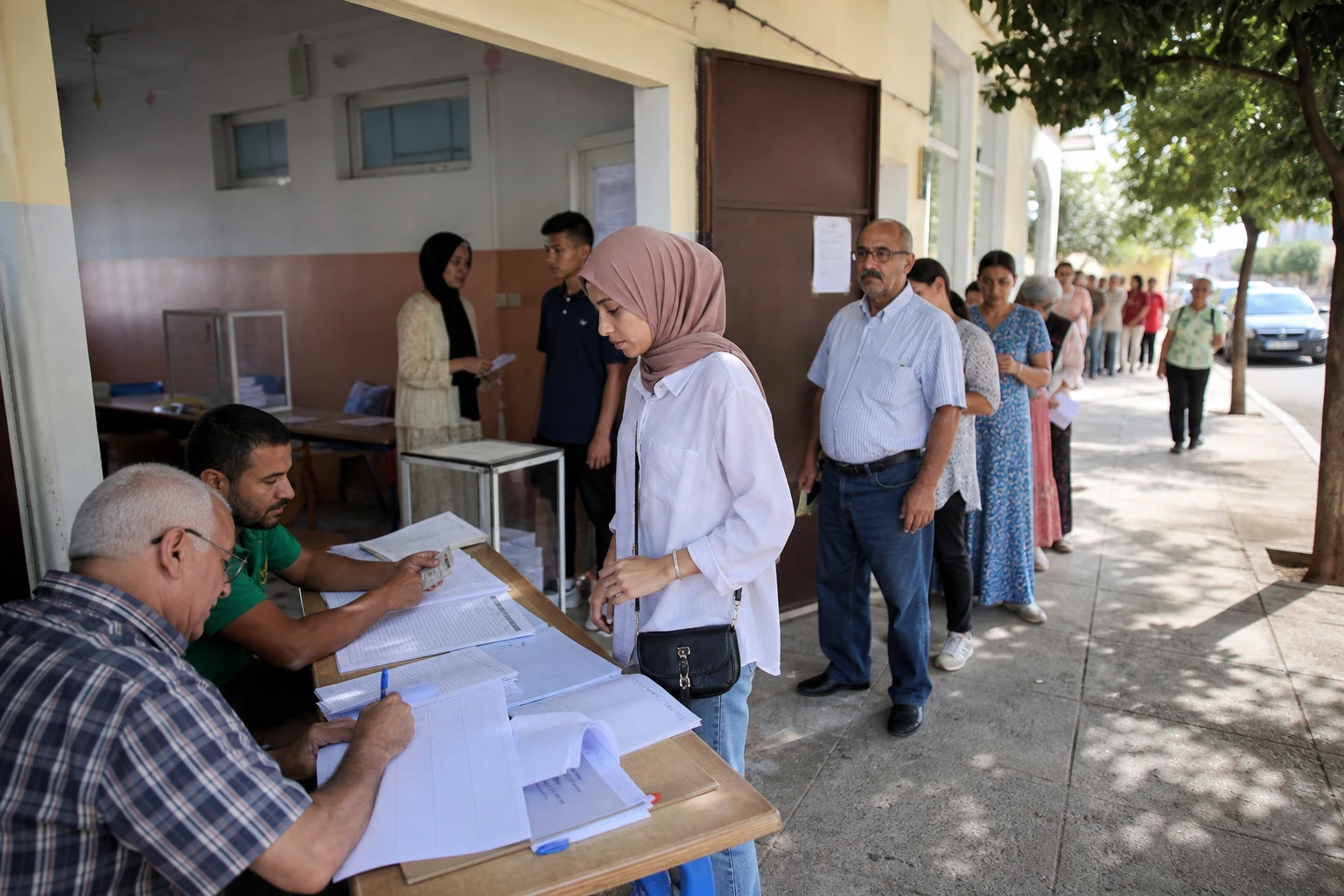
In Morocco, the legislative election on Wednesday 23 September 2026 is not being fought only at polling stations. It is also being fought in the fragile relationship between a large, connected and demanding generation and parties struggling to turn promises into visible results.
The country is renewing all 395 seats in the House of Representatives. More than 15.8 million voters are registered on the electoral roll. Yet Moroccans aged 18 to 24 account for only 4% of the electorate, despite making up a far larger share of the population. This gap sums up one of the election’s main challenges: making young people lasting political actors rather than a mere campaign theme.
A national election under social pressure
The election follows a year of mobilisations by young Moroccans. From September 2025, the GenZ 212 movement advanced demands related to public healthcare, education, corruption and jobs in several cities. These gatherings were a reminder that major national projects are not always enough to win people over when essential services remain difficult to access.
The mobilisations particularly highlighted a sense of distance between the priorities expressed by institutions and everyday concerns. In working-class neighbourhoods and medium-sized cities alike, the quality of healthcare, the cost of living, access to a good school and the chance of finding a job weigh more heavily than general announcements about growth.
Youth unemployment remains a major point of tension. Data published in 2025 showed a particularly high rate among 15- to 24-year-olds. The phenomenon affects different areas in different ways: graduates in major cities face competition in a limited formal labour market, while young people in less advantaged regions rely more on the informal economy, mobility or emigration.
In this context, the attempted mass crossing into Ceuta in July 2025 also revealed social frustration. It cannot be reduced to a migration issue. For some young people, it expressed the feeling that opportunities are more accessible elsewhere than in their own surroundings.
Figures also measure distance from the ballot box
Official election figures show uneven participation across generations. Voters aged 25 to 34 account for 15% of those registered, while 18- to 24-year-olds make up just 4%. This low presence may be explained by several factors: registration on the electoral roll, distrust of parties, the feeling that voting does not change everyday life enough, and the limited turnover among political figures.
The question, then, is not simply how many young people will vote. It is also about the conditions that would allow them to see themselves in the electoral offer. A generation can follow political debates on social media while rejecting traditional forms of participation. It can demonstrate, challenge public officials or organise a digital campaign without joining a party.
This shift is forcing political organisations to rethink their methods. General speeches about modernisation are no longer enough. Voters are demanding verifiable commitments on jobs, healthcare, education, housing and transparency in public administration.
According to data provided by the Moroccan authorities, 28 parties, an alliance formed for this election and two independent candidate lists are contesting the 395 seats. The range of candidates gives voters a genuine choice. However, it can also make the election harder to read and reinforce a sense of fragmentation among those expecting straightforward answers to concrete problems.
The challenge facing parties after the mobilisations
The campaign puts parties in a contradictory position. They are seeking to mobilise young people who often see them as distant from their concerns, yet they remain the main instruments of parliamentary representation. The next government will therefore have to meet a dual demand: preserve the continuity of public policies while correcting their most unequal effects.
Morocco is pursuing major investments in infrastructure, transport and sports facilities, notably in preparation for the 2030 World Cup, which it is hosting with Spain and Portugal. These projects can support economic activity, improve mobility and create jobs. However, public acceptance will depend on their ability to deliver visible benefits for residents, including outside Rabat, Casablanca and the major economic centres.
The same question applies to healthcare and education reforms. The debate is not solely about budgets. It also concerns the distribution of doctors, the quality of rural facilities, waiting times for care, teachers’ working conditions and disparities between regions. Results will be judged locally, in health centres, schools and public administrations.
Trust will also depend on elected officials’ ability to be held to account. Young voters want to know who makes decisions, with what resources and according to what timetable. They expect fewer slogans and more public indicators on the commitments made.
A significance beyond Morocco’s election
The Moroccan case reflects a trend seen in several African countries: young people make up the demographic majority but often remain a minority in institutions and party structures. This creates a gap between the social weight of young people and their political representation.
In the Maghreb and across the continent, recent mobilisations show that participation is not disappearing. It is changing form. Citizens may turn away from the ballot box while remaining highly active in public life, on social media or in local movements. For institutions, the risk is therefore not only abstention. It is the lasting entrenchment of a political representation seen as alien to social expectations.
In the short term, attention will focus on turnout on 23 September, the distribution of seats and the ability of the majority emerging from the ballot box to form a coherent government. In the longer term, the real test lies elsewhere: will the new institutions be able to turn the demands of 2025 into measurable public policies?
For Morocco, the answer will determine the strength of the bond between young citizens and politics. It will also show whether major national projects can advance alongside concrete improvements in public services and economic prospects.



