
 Algeria
 Egypt
 Libya
 Sudan
 Tunisia
 Benin
 Burkina Faso
 Cabo Verde
 Côte d'Ivoire
 Ghana
 Guinea
 Guinea-Bissau
 Liberia
 Mali
 Mauritania
 Niger
 Nigeria
 Senegal
 Sierra Leone
 The Gambia
 Togo
 Cameroon
 Central African Republic
 Chad
 DR Congo
 Equatorial Guinea
 Gabon
 Republic of the Congo
 São Tomé and Príncipe
 Burundi
 Comoros
 Djibouti
 Eritrea
 Ethiopia
 Kenya
 Madagascar
 Malawi
 Mauritius
 Mozambique
 Rwanda
 Seychelles
 Somalia
 South Sudan
 Tanzania
 Uganda
 Angola
 Botswana
 Eswatini
 Lesotho
 Namibia
 South Africa
 Zambia
 Zimbabwe
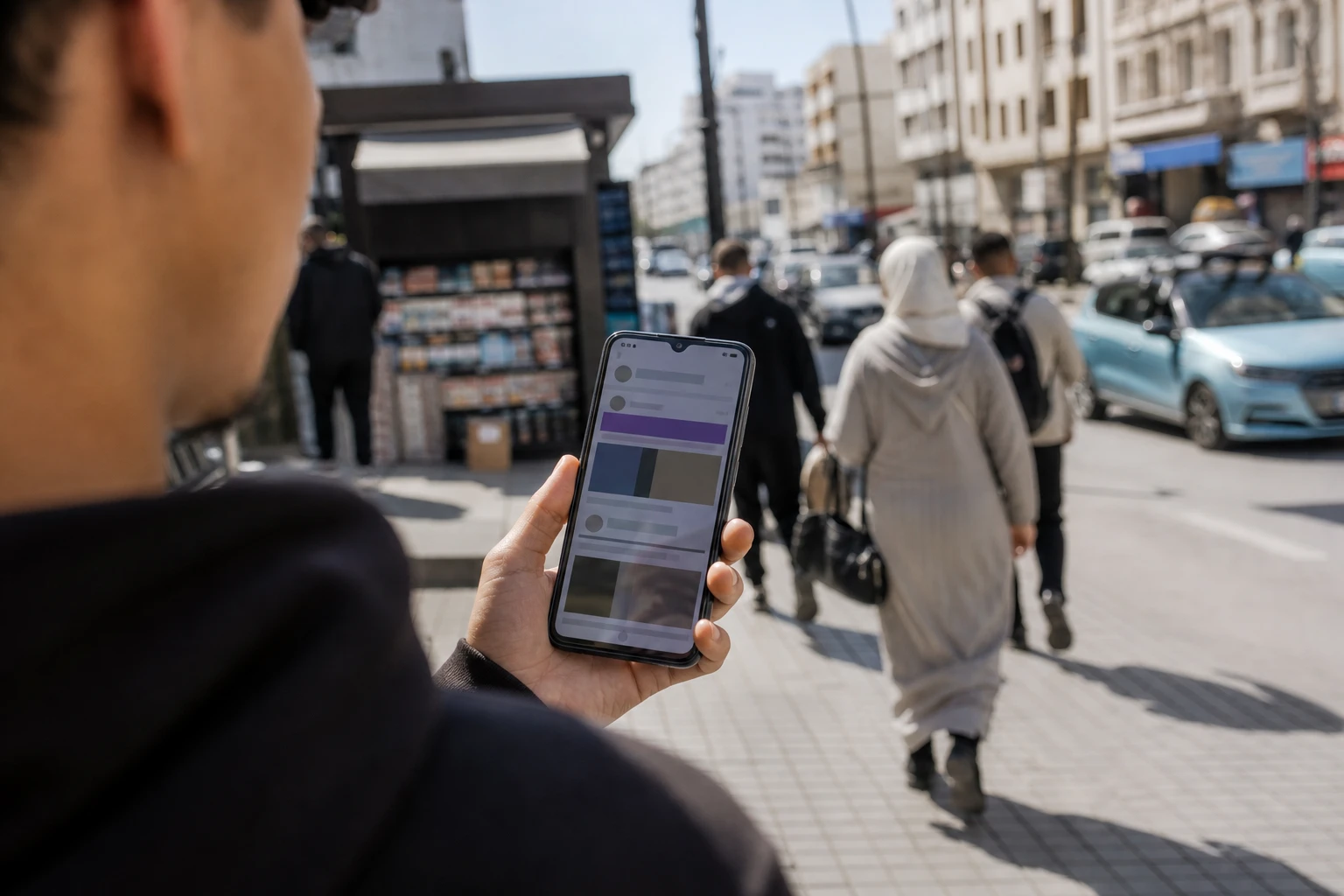
In Morocco, the 23 September 2026 legislative election is also being played out beyond the polling stations. A few kilometres from the border with Ceuta, calls for a new mass arrival have highlighted a political reality: some young people no longer see themselves reflected in the responses offered by institutions.
An ageing electorate
Official election figures capture the paradox. Twenty-eight parties, an alliance formed for the election and two lists of independent candidates are competing for 395 seats in the House of Representatives. A total of 7,288 candidacies have been registered, or more than 18 candidates per seat.
Yet Moroccans aged 18 to 24 account for just 4% of registered voters. The Moroccan authorities have recorded more than 15.8 million registered voters for this election. Those aged 60 and over make up a far larger share, estimated at 29%.
The 4% figure does not represent an abstention rate. It measures the share of 18- to 24-year-olds on the electoral roll. In Morocco, registration is not automatic. Young people who reach the legal voting age must take steps to be added to the electoral register.
The figure therefore does not mean that 96% of young people refuse to vote. It does, however, reveal a substantial registration gap. It also shows that parties and institutions are struggling to turn the legal voting age into genuine political participation.
The contrast is all the more striking because 15- to 30-year-olds make up more than a third of Morocco’s population, according to demographic data cited by the High Commission for Planning. A sizeable generation thus has little weight in the actual composition of the electorate.
Discontent extends beyond the election campaign
In accounts of exchanges during the campaign, the same concerns recur: finding a job, accessing useful training, receiving proper healthcare and being able to afford housing. They affect major cities, but also rural municipalities where public services remain harder to reach.
The labour market is at the heart of much of the frustration. In the first quarter of 2026, the High Commission for Planning put the national unemployment rate at 10.8%. Among 15- to 24-year-olds, the activity rate was no higher than 23.4%. This figure measures the proportion of young people who are working or looking for work. It also points to some in this age group withdrawing from the labour market.
Yet Morocco’s growth is underpinned by visible transformation. The country is investing in infrastructure, industry, transport and facilities linked to the 2030 World Cup. These projects are boosting the kingdom’s economic appeal and supporting its integration into African and international trade.
But their effects are not the same for everyone. A major construction project can create activity without providing a stable job for graduates in a small town. A new industrial zone can boost a region without resolving difficulties accessing healthcare in remote areas. For some young people, the question is no longer simply one of development. It is about the tangible place that development has reserved for them.
This tension has already fuelled youth protests. The GenZ 212 movement, which emerged in autumn 2025, put forward demands relating to education, healthcare, wages and social rights. The movement does not represent all Moroccan youth. It has, however, brought into view expectations that cut across the usual divides between parties.
Ceuta, a border turned social barometer
The Ceuta border has given this discontent an international dimension. On 30 and 31 July 2026, a mass influx of people from Morocco triggered a major crisis in the Spanish enclave. Thousands of people tried to cross the border or reach the territory by sea. The Spanish authorities subsequently organised returns and strengthened security measures.
Since then, new messages have been circulating on social media. Some call on people to head for Ceuta on 23 September, election day. Their origins and actual ability to mobilise people remain uncertain. Nevertheless, the existence of these calls has prompted Spain and Morocco to strengthen their coordination around the border.
Madrid says that irregular entry into Ceuta does not automatically grant access to mainland Spain or the Schengen area. The Spanish authorities have also said that, at this stage, there is no solid evidence to attribute the July influx to an operation planned by Rabat.
This caution is warranted. Social media can amplify a rumour, mix social demands with disinformation campaigns and create the impression of a movement far more organised than it really is.
Even so, dismissing these journeys as digital manipulation would be inadequate. No online message alone pushes someone to risk drowning or arrest. These calls find a receptive social climate: that of young people seeking a way out, an experience or the possibility of a future in Europe, just a few kilometres from where they live.
A test for Morocco’s institutions
Morocco has a parliament, a regular election calendar and competition between political parties. The large number of candidates points to an active political arena. But a high number of candidates does not guarantee citizen participation, especially when young people remain largely absent from the electoral rolls.
The challenge falls first to the parties. They must convince a generation that often judges election promises by very tangible results: a first job, a functioning school, an accessible hospital or affordable housing. Campaigns focused solely on national announcements risk missing this everyday reality.
The challenge also concerns the electoral administration. The voluntary registration process creates an additional barrier for young people who move frequently, students, precarious workers and those living far from their home municipality. Simplifying procedures and providing local information could narrow this gap, although neither would by itself guarantee higher participation.
Finally, the issue extends beyond the 23 September election. It concerns the relationship between Morocco and its young people, as well as Moroccan-Spanish cooperation around Ceuta. It raises a regional question about the social effects of uneven development and how states respond to the aspirations of a young population seeking mobility.
The election result will offer an initial indication of voter mobilisation. It will not be enough to measure political trust. To do that, it will be necessary to monitor future registrations, social movements and the next parliament’s ability to deliver visible responses in urban neighbourhoods and rural regions alike.



