
 Algeria
 Egypt
 Libya
 Sudan
 Tunisia
 Benin
 Burkina Faso
 Cabo Verde
 Côte d'Ivoire
 Ghana
 Guinea
 Guinea-Bissau
 Liberia
 Mali
 Mauritania
 Niger
 Nigeria
 Senegal
 Sierra Leone
 The Gambia
 Togo
 Cameroon
 Central African Republic
 Chad
 DR Congo
 Equatorial Guinea
 Gabon
 Republic of the Congo
 São Tomé and Príncipe
 Burundi
 Comoros
 Djibouti
 Eritrea
 Ethiopia
 Kenya
 Madagascar
 Malawi
 Mauritius
 Mozambique
 Rwanda
 Seychelles
 Somalia
 South Sudan
 Tanzania
 Uganda
 Angola
 Botswana
 Eswatini
 Lesotho
 Namibia
 South Africa
 Zambia
 Zimbabwe
When public hospitals become a political test
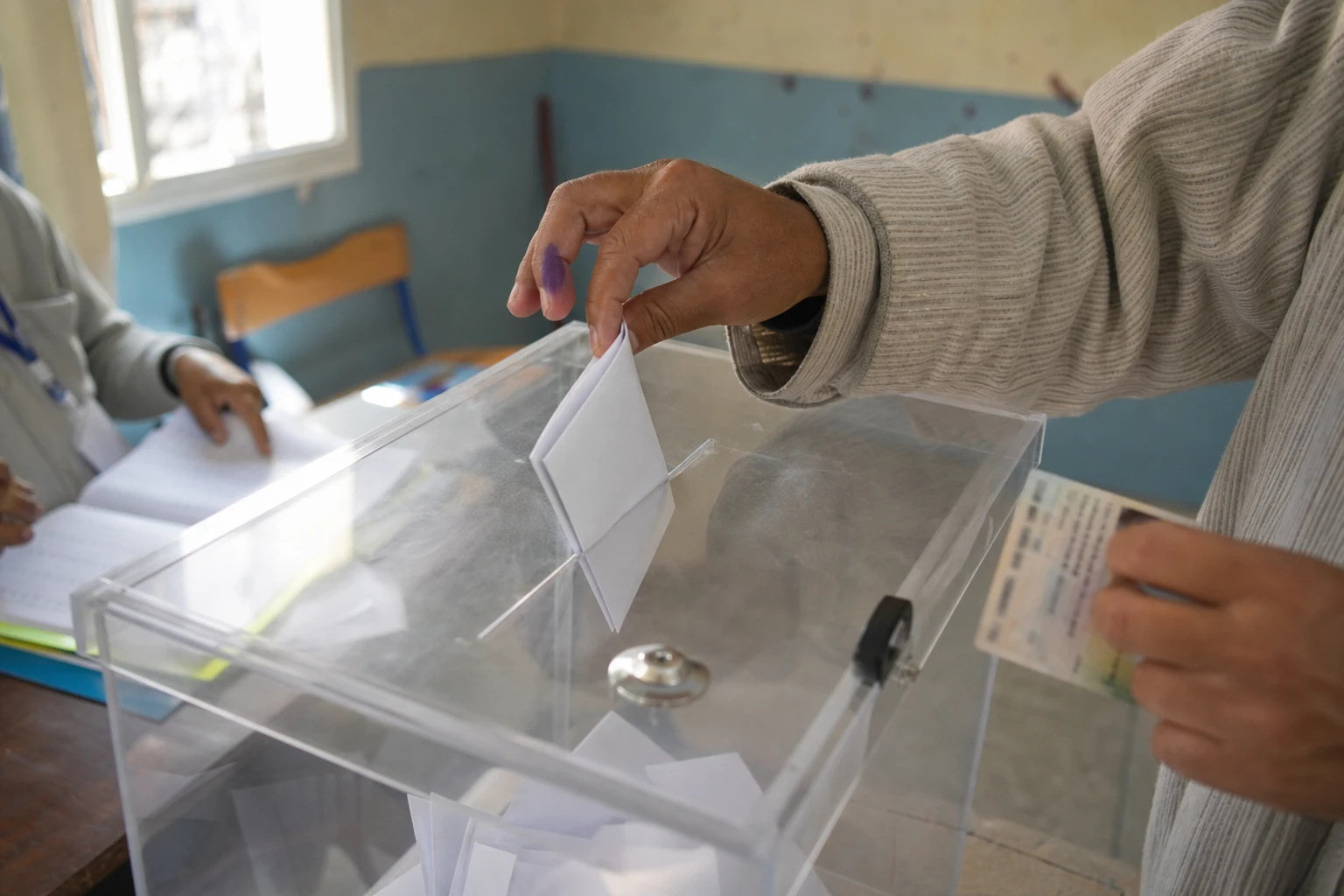
In Morocco, the campaign for the 23 September 2026 legislative election is not being fought only on economic promises. It is also being fought in hospital corridors, where families quickly see the difference between a right on paper and care that is genuinely accessible. In Rabat as in Casablanca, public healthcare has become a voting issue, but above all a part of everyday life.
The country is not without reforms. Morocco’s health ministry says that in 2024 the number of doctors per 10,000 inhabitants rose to 8.7, from 6.7 in 2017. Over the same period, the number of private clinics increased from 356 in 2017 to 453 in 2024, with capacity exceeding 24,845 beds. In other words, provision exists, but it is distributed very unevenly across sectors, cities and regions.
Agadir, the shock that cracked the official narrative
The crisis took on a specific face in Agadir, in the Souss-Massa region, where the deaths of eight women after caesarean sections at Hassan II Hospital sparked an outpouring of anger far beyond the city. Moroccan sources later confirmed that the episode had prompted emergency measures, including the dismissal of hospital officials and a 200 million dirham rehabilitation plan for the facility. The episode put healthcare at the centre of public debate, and then on the streets.
The shock revealed more than material shortages. It highlighted a question of health governance: how can continuity of care be guaranteed when emergency departments are overwhelmed, families have to pay upfront, and public hospitals remain the only possible point of access for many? In Agadir, the authorities also announced that Mohammed VI University Hospital would open in 2025, with 867 beds, and that Hassan II Regional Hospital would be rebuilt, with 450 beds. The work is therefore under way, but it comes after a crisis that has already taken hold in people’s minds.
A visible social divide between public and private care
In major hospitals, cost remains decisive. Compulsory health insurance, gradually extended in recent years, has not dispelled fears of prohibitively high bills, especially among low-income households and those still outside the system. This is where the divide becomes political. When some people turn to private healthcare, it is not always by choice. Often it is out of a sense of urgency, a belief that services are better organised, or simply a wish to avoid waiting and uncertainty.
This trend is benefiting the rapidly growing private sector. Data from the ministry and the market authority show that private clinics have multiplied, while public hospitals remain under pressure. The result is a two-tier system: urban centres attract investment and equipment, while rural and outlying areas often have more precarious access to specialists, emergency care and surgery. Morocco is modernising its system, but modernisation is not yet closing regional gaps quickly enough.
The parties have understood this. As the election approaches, several have made healthcare a priority, promising to strengthen staffing, invest in infrastructure and improve the organisation of care pathways. The problem, as so often, is turning slogans into budgets. Few programmes clearly spell out the resources, timelines or priority areas. For Moroccan voters, the question is therefore not only who promises more, but who will make care measurable, accessible and continuous.
A Moroccan issue, but also a Maghreb-wide one
The issue goes beyond national borders. Across the Maghreb, public healthcare has become a barometer of governments’ credibility. It touches on the same set of concerns: funding, regional equity, trust in public services and the role of the private sector. In Morocco, the 2026 election calendar gives the issue particular weight. On 23 September, all 395 seats in the House of Representatives will be contested, along with part of the next government’s ability to turn health reform into visible results.
The continental significance is also clear: Morocco wants to be seen as a country of investment, infrastructure and regional ambition. But the actual state of its public hospitals is being watched far beyond its borders, because it says something essential about how a state redistributes its resources. If public healthcare becomes a lasting electoral benchmark in Rabat, Casablanca or Agadir, the relationship between development, social justice and institutional trust will be reshaped.



