
 Algeria
 Egypt
 Libya
 Sudan
 Tunisia
 Benin
 Burkina Faso
 Cabo Verde
 Côte d'Ivoire
 Ghana
 Guinea
 Guinea-Bissau
 Liberia
 Mali
 Mauritania
 Niger
 Nigeria
 Senegal
 Sierra Leone
 The Gambia
 Togo
 Cameroon
 Central African Republic
 Chad
 DR Congo
 Equatorial Guinea
 Gabon
 Republic of the Congo
 São Tomé and Príncipe
 Burundi
 Comoros
 Djibouti
 Eritrea
 Ethiopia
 Kenya
 Madagascar
 Malawi
 Mauritius
 Mozambique
 Rwanda
 Seychelles
 Somalia
 South Sudan
 Tanzania
 Uganda
 Angola
 Botswana
 Eswatini
 Lesotho
 Namibia
 South Africa
 Zambia
 Zimbabwe
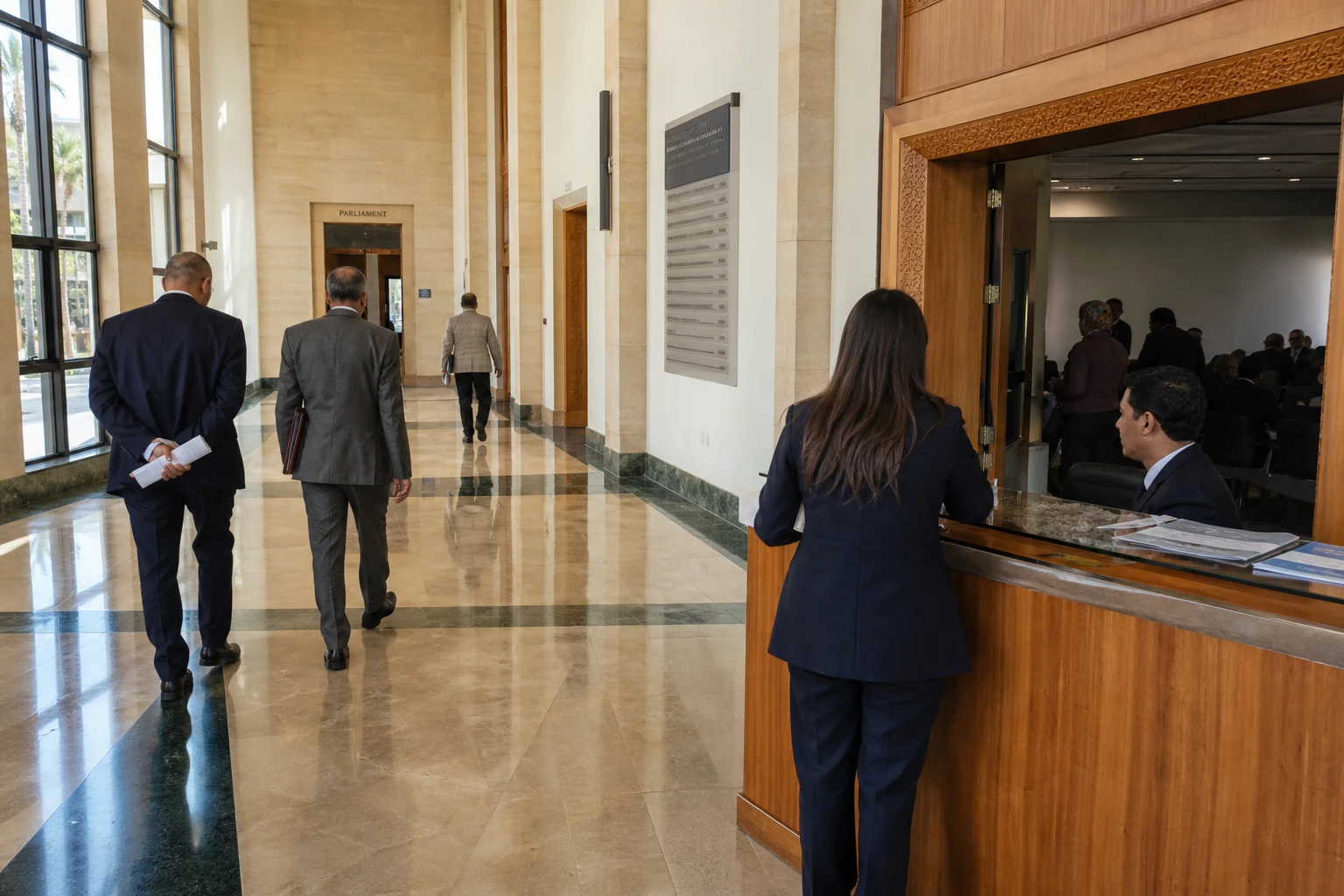
Morocco’s 23 September 2026 election produced a clear winner, but also a political signal that is difficult to ignore: the Party of Authenticity and Modernity (PAM) came first, while fewer than four in ten registered voters went to the polls. The next government will therefore have to build a parliamentary majority and win back public trust.
A fragmented Parliament after the 23 September vote
According to provisional results announced on Thursday 24 September by Morocco’s interior minister, Abdelouafi Laftit, the PAM won 97 of the 395 seats in the House of Representatives. The National Rally of Independents (RNI) came second with 66 seats. The Istiqlal Party completed the top three with 65 elected members.
The Justice and Development Party (PJD) won 54 seats. This is a significant recovery after its collapse in the 2021 parliamentary election, when it secured only 13 seats. Other parties represented include the Popular Movement, with 29 seats; the Socialist Union of Popular Forces, with 26; and the Party of Progress and Socialism, with 19.
These figures remain provisional. They nevertheless offer an initial picture of the future House and confirm that no party has an outright majority. With 97 seats, the PAM is a long way short of the 198 needed to control the lower house alone. A coalition will therefore be essential.
The detailed results were published by the National Broadcasting and Television Company of Morocco and corroborated by Moroccan media such as Le7tv.
Turnout, the election’s main message
Turnout was 38.08% nationwide, with nearly six million people voting. This was markedly lower than the 50.86% recorded in 2021 and the 42.27% in 2016. The decline is the election’s second major development.
Turnout does not mean the same thing everywhere. In major cities, abstention may reflect distance from political parties and institutions. In rural areas, it may also reflect the distance to polling stations, transport constraints or the priority given to everyday economic activity.
The low national figure does not therefore mean that every area sent the same message. Rather, it highlights an uneven relationship between voters, political organisations and parliamentary representation. Parties will need to analyse these disparities closely ahead of the next local and national elections.
The fall in turnout comes amid social concerns over jobs, the cost of living and access to public services. Morocco is seeing strong investment momentum, particularly in infrastructure and facilities linked to the 2030 World Cup. However, the benefits of this trajectory are felt unevenly across regions and social groups.
The PAM must turn its lead into a majority
The PAM is part of the outgoing governing coalition, alongside the RNI and Istiqlal. The first political possibility is therefore that this alliance will be renewed, in a form yet to be determined. Together, the three parties hold 228 seats according to the provisional results, giving them a parliamentary base above the absolute majority threshold.
This arithmetic does not, however, settle the question of leadership. The prime minister is appointed by King Mohammed VI from the party that comes first. The PAM must therefore put forward a figure able to negotiate with its partners, maintain the coalition’s cohesion and advance the next government’s economic priorities.
The party will also have to clarify its commitments. During the campaign, it highlighted growth, employment and protecting purchasing power. These goals will face tangible constraints: youth unemployment, regional disparities, pressure on public finances and the effects of drought on agriculture.
The RNI, which came first in 2021, has fallen sharply in the new configuration. The result will force the party of outgoing prime minister Aziz Akhannouch to negotiate its place in the next governing majority. Istiqlal, meanwhile, retains a central position with 65 seats.
The PJD’s return shifts the balance of power
The PJD’s recovery is the other notable development. The party, which led the government for a decade before 2021, remains far from its former influence. It has, however, regained a greater capacity to act as a parliamentary opposition.
This return is not enough to make the PJD a governing force. It nevertheless gives the party a platform to raise issues including the fight against corruption, public accountability and purchasing power. Its effectiveness will depend on its ability to renew its message and mobilise beyond its traditional electorate.
The new House will therefore have a more visible opposition than after the 2021 election. It will, however, remain split among several parties. This fragmentation may make it easier to scrutinise the government, but it could also limit opposition parties’ ability to present a common alternative.
An election watched across the Maghreb and Africa
Morocco does not have a fully operational Maghreb regional economic organisation comparable to ECOWAS in West Africa or CEMAC in Central Africa. Its political and economic trajectory is nevertheless part of North Africa and the institutions of the African Union.
The next governing majority will have to carry forward major national projects while responding to expectations expressed across the country. Preparations for the 2030 World Cup, which Morocco is hosting with Spain and Portugal, are raising the kingdom’s international profile. They are also increasing expectations for results in transport, employment, training and public services.
The next step will be forming a government. The PAM must first name the person it will propose to the king, then negotiate the allocation of portfolios with the RNI and Istiqlal. Beyond the balance between parties, the real test will be whether the coalition can turn an election victory into concrete responses for Moroccan women and men.



