
 Algeria
 Egypt
 Libya
 Sudan
 Tunisia
 Benin
 Burkina Faso
 Cabo Verde
 Côte d'Ivoire
 Ghana
 Guinea
 Guinea-Bissau
 Liberia
 Mali
 Mauritania
 Niger
 Nigeria
 Senegal
 Sierra Leone
 The Gambia
 Togo
 Cameroon
 Central African Republic
 Chad
 DR Congo
 Equatorial Guinea
 Gabon
 Republic of the Congo
 São Tomé and Príncipe
 Burundi
 Comoros
 Djibouti
 Eritrea
 Ethiopia
 Kenya
 Madagascar
 Malawi
 Mauritius
 Mozambique
 Rwanda
 Seychelles
 Somalia
 South Sudan
 Tanzania
 Uganda
 Angola
 Botswana
 Eswatini
 Lesotho
 Namibia
 South Africa
 Zambia
 Zimbabwe
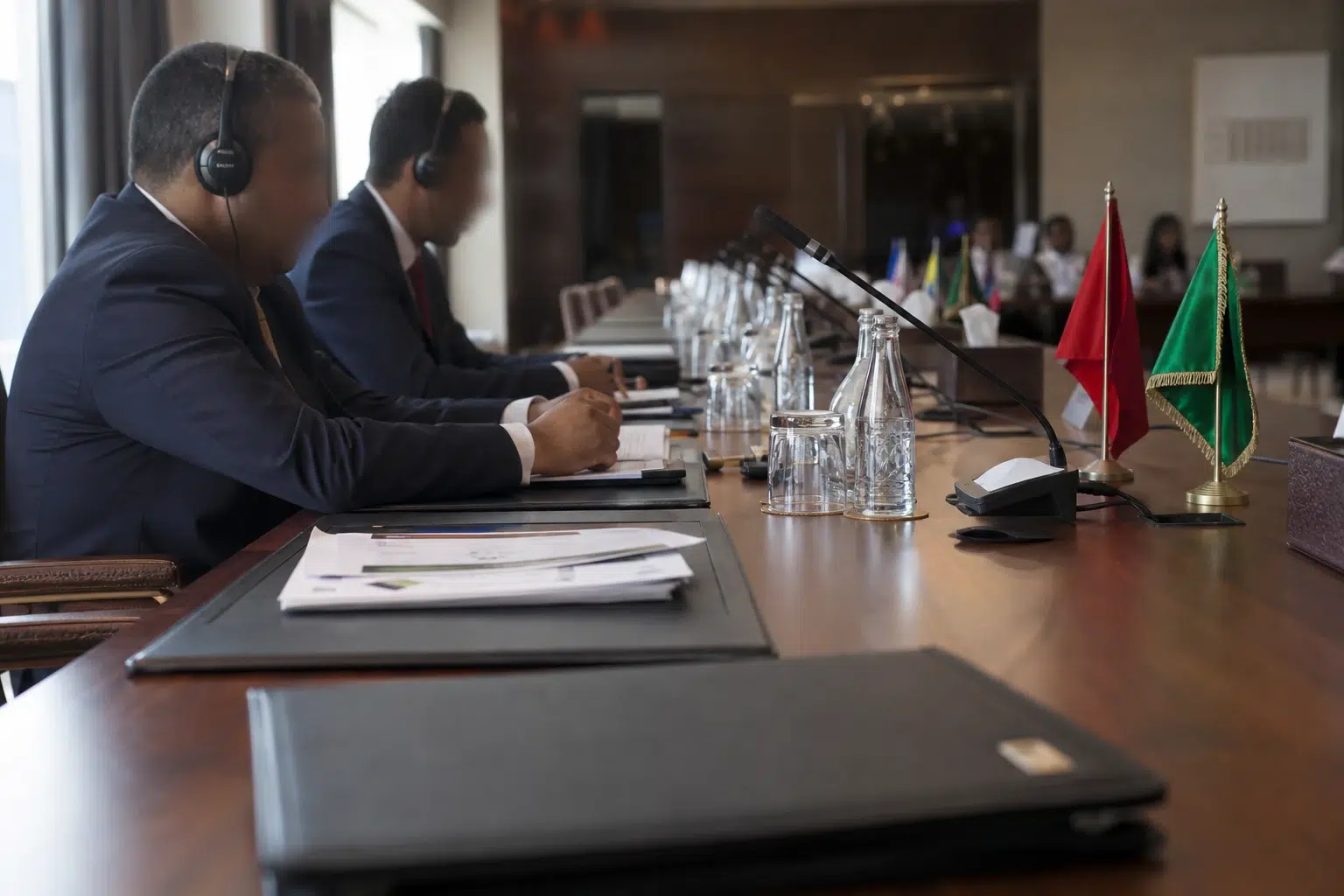
When foreign policy becomes a domestic fault line
In Morocco, words touching on the unity of the country never remain confined to partisan debate for long. They quickly spill over into a broader question: who draws the line between political criticism, a warning over sovereignty and verbal escalation? On the issue of normalisation with Israel, that line has become even more sensitive since relations resumed in 2020, followed by the announcement on 16 September 2026 that they would be upgraded to embassy level.
Morocco re-established liaison offices with Israel under the December 2020 agreement, then deepened this diplomatic channel over the years. This trajectory is also set against the Saharan context, following US recognition of Moroccan sovereignty over the Sahara in 2020, a point Rabat consistently links to its international strategy.
What Nabila Mounib said, and what it says about the political moment
On 15 September, Nabila Mounib, a leading figure in the Unified Socialist Party and a Moroccan parliamentarian, gave a highly combative interview to a Moroccan media platform opposing normalisation. She accused the “Zionists” of pursuing a plan to divide Morocco into several entities and linked this warning to her longstanding opposition to rapprochement with Israel. The following day, the interview fuelled controversy amid an already charged atmosphere of election campaigning and debate over Ceuta and Melilla.
In the same interview, she also criticised any proposal that would, in her view, make it easier for Israelis who had served in the army to obtain Moroccan nationality. She presented this position as an extension of her campaign against normalisation, which she considers incompatible with the Palestinian cause and national sovereignty. The remarks spread all the faster because they were excerpted, discussed and challenged in Morocco’s digital sphere from the following day.
A serious accusation, but one not publicly substantiated
On the substance, the claim of a plan to “dismember” Morocco is supported, among the information made public, by neither a map nor a document nor an official statement attributable to Israel. As things stand, it is therefore a political accusation, not an established fact. In this respect, the relevant legal framework remains the United Nations Charter, which prohibits the threat or use of force against the territorial integrity and political independence of states.
This distinction matters. In a country such as Morocco, where the question of territorial integrity is closely bound up with Western Sahara, Ceuta and Melilla, any public statement referring to the risk of fragmentation immediately takes on a strategic dimension. It is not just a matter of partisan rivalry. It also touches on the country’s political memory, its diplomatic red lines and how the public views its alliances.
The problem here is not just the forcefulness of the language. It is the lack of verifiable evidence to support such a scenario. In this kind of episode, there are two risks: normalising a very serious accusation, or dismissing as mere hyperbole a political concern that does exist among part of the Moroccan left and broader sections of society.
Normalisation, the Sahara and public opinion: a triangle that continues to weigh
Normalisation with Israel is not a peripheral issue in Morocco. It touches on diplomacy, security, the economy and the question of the Sahara. Since 2020, Rabat has built a partnership presented as pragmatic, with announced benefits in aviation, trade, technology and consular affairs. The move to embassy level, confirmed in September 2026 by several international and Moroccan sources, extends this policy of consolidation.
But this policy remains contested on the domestic political stage. Opposition to normalisation comes in waves, sometimes in the name of solidarity with the Palestinians, sometimes as part of a broader sovereigntist outlook. Nabila Mounib belongs to this tradition. Today she is taking its rhetoric very far, combining geopolitical criticism, moral denunciation and warnings about national unity.
For the Moroccan authorities, the challenge is different. It is to maintain an open diplomatic line without allowing the idea to take hold that the country is vulnerable to external divisions. For the opposition, the issue also serves to draw clear distinctions ahead of electoral contests. For the public, finally, the question is often more concrete than doctrinal: jobs, public services and the cost of living, but also the country’s international image and the stability of its strategic choices.
What this episode signals for Rabat and the region
Above all, this episode shows that Morocco-Israel relations are entering a phase of institutional consolidation, but not political reconciliation. Embassies, economic agreements and technical cooperation can move forward. Public debate will remain contentious as long as part of the political spectrum sees normalisation as a test of national loyalty.
At the regional level, Morocco illustrates a broader reality across the Maghreb and the Arab world: diplomatic realignments are not read solely through the actions of foreign ministries. They are also measured in parliaments, on television panels, in street demonstrations and in debates over symbolic borders. What is at stake in Rabat therefore goes beyond the bilateral relationship with Israel. It is also about how Morocco intends to defend its territorial integrity, its freedom of decision and its place in a region undergoing change.



