
 Algeria
 Egypt
 Libya
 Sudan
 Tunisia
 Benin
 Burkina Faso
 Cabo Verde
 Côte d'Ivoire
 Ghana
 Guinea
 Guinea-Bissau
 Liberia
 Mali
 Mauritania
 Niger
 Nigeria
 Senegal
 Sierra Leone
 The Gambia
 Togo
 Cameroon
 Central African Republic
 Chad
 DR Congo
 Equatorial Guinea
 Gabon
 Republic of the Congo
 São Tomé and Príncipe
 Burundi
 Comoros
 Djibouti
 Eritrea
 Ethiopia
 Kenya
 Madagascar
 Malawi
 Mauritius
 Mozambique
 Rwanda
 Seychelles
 Somalia
 South Sudan
 Tanzania
 Uganda
 Angola
 Botswana
 Eswatini
 Lesotho
 Namibia
 South Africa
 Zambia
 Zimbabwe
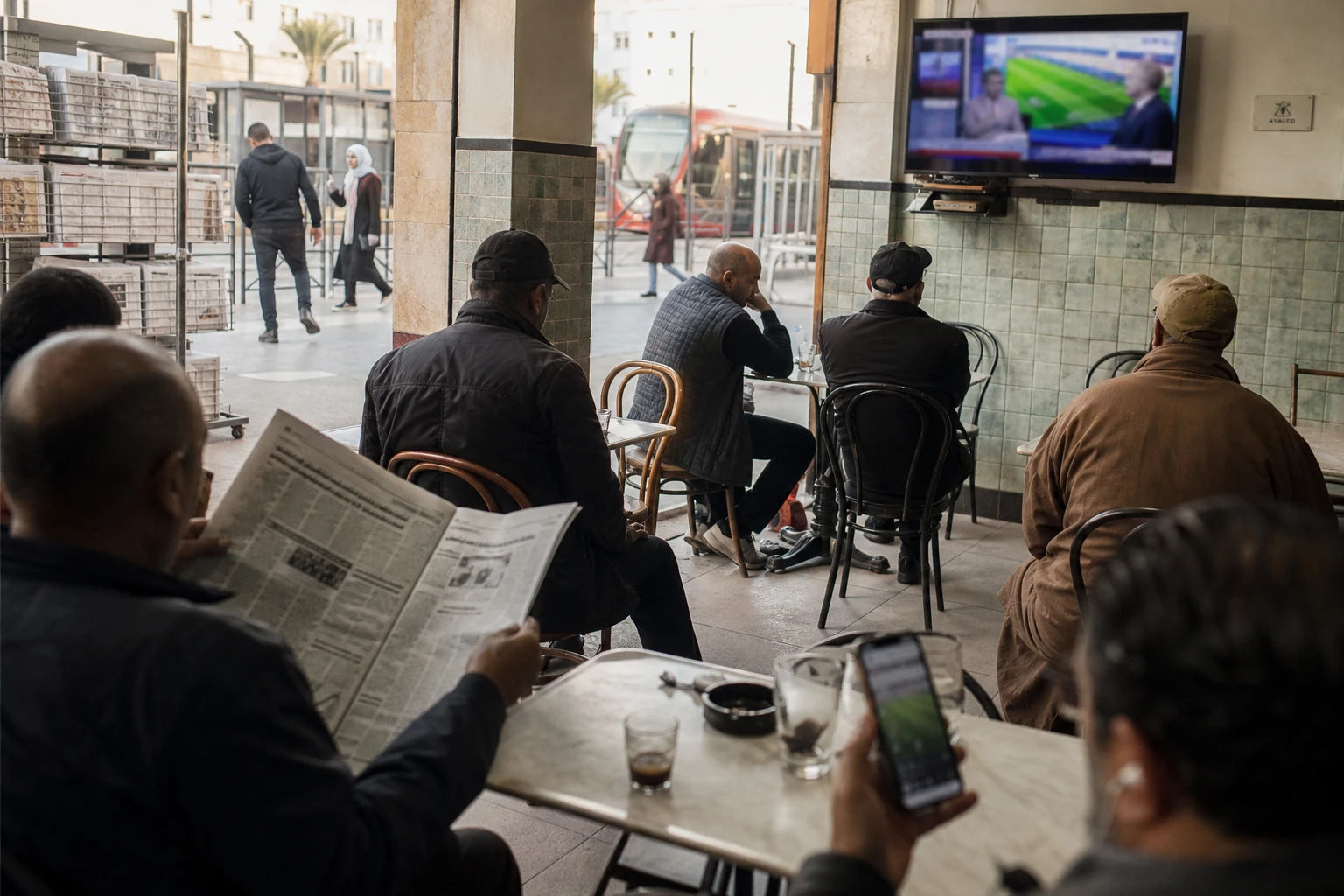
Between Rabat, Madrid and football governance, the same test of credibility
In football, major finals are never played only on the pitch. They are also contested in offices, over schedules and in the way rules are applied. That is precisely what has fuelled, within a few months, two sensitive cases involving Morocco: the 2025 Africa Cup of Nations final against Senegal, followed by the still-open battle over the stadium that will host the 2030 World Cup final.
The first episode involved the Confederation of African Football, based at the heart of the continent but subject to increasingly close scrutiny of its legal and logistical standards. The second falls to FIFA, which has already named Morocco, Portugal and Spain as hosts of the 2030 World Cup, alongside three centenary matches in South America. In short, the issue is no longer who will host the tournament, but the final choice of venue for the final, the last symbolic piece of the arrangement.
In both cases, the issue goes beyond simple sporting rivalry. It touches on confidence in institutional adjudication, equal treatment of teams and the political weight a co-host country can acquire as it looks ahead to global events. For Morocco, this period extends a football strategy pursued for several years: to raise its game on the pitch, but also in the organisation of competitions.
The Morocco-Senegal final left a legal and political mark
On 16 January 2026, the Senegalese Football Federation issued a statement outlining several concerns ahead of the Morocco 2025 Africa Cup of Nations final. It cited, in particular, the lack of security arrangements deemed satisfactory when its delegation arrived in Rabat, a disagreement over the proposed training venue and reservations about tickets allocated to supporters and delegation guests.
CAF responded the following day, saying all teams had benefited from the same conditions, that Senegal’s preferred hotel had been approved, that an alternative training pitch had been found and that the ticket allocation to the FSF complied with regulations. The governing body also noted that the final would be watched in 180 territories.
The match itself was followed by disciplinary incidents. On 28 January 2026, CAF’s disciplinary committee sanctioned the Senegalese Football Federation, the Royal Moroccan Football Federation and several players and officials over events during the final. The body imposed suspensions on members of both teams, as well as financial penalties, and dismissed the protest filed by the FRMF over allegations that Senegal had breached regulations.
Later, on 17 March 2026, CAF confirmed that Senegal had been declared to have forfeited the final, with the score officially recorded as a 3-0 win for Morocco. The case was then taken to the Court of Arbitration for Sport, showing that in African football, a final can continue to have consequences long after the final whistle.
Debate over the 2030 World Cup final reignites another battle
The second case is of a different nature, but it raises the same question: who decides, and under what conditions? In 2023, FIFA confirmed that Spain, Morocco and Portugal would host the 2030 World Cup, in an unprecedented format spanning three continents. In 2024, the FIFA Congress ratified this arrangement. At this stage, the final is scheduled for 21 July 2030, but its host stadium has not yet been decided.
The Spanish federation says the process remains open. Its director of international relations said in March 2026 that technical visits to candidate cities were under way and that no date had yet been set for the process to close. Madrid, Barcelona and the major stadium planned near Casablanca therefore remain, for now, part of an institutional competition rather than a settled decision.
This clarification matters because it contradicts the idea that a choice has already been stitched up behind the scenes. On 6 August 2026, the AP reported that FIFA had denied a British newspaper report claiming Gianni Infantino had promised the final to Morocco in exchange for political support. A FIFA spokesperson called the claim “false and misleading” and said a decision would be made “in due course”.
In Spain, the issue is also seen through a political lens. Madrid’s interest lies in international visibility, sporting prestige and the country’s role in organising an event shared with Morocco and Portugal. For Morocco, the prospect of hosting the final is part of a broader trajectory: renovated infrastructure, new stadiums and a determination to make the Kingdom a leading platform for world football.
What these two episodes say about African football and its alliances
Taken together, these cases show that African football is no longer limited to sporting performance. It is becoming a space for institutional negotiation, the development of standards and power struggles with the major global governing bodies. CAF, like FIFA, must now deal with co-hosting states, national federations in the spotlight and public opinion attentive to transparency.
For supporters, the consequences are tangible. At a continental final, poor coordination can breed resentment, sanctions and legal disputes. At a World Cup, the choice of stadium for the final affects the symbolic hierarchy among co-hosts, the economic returns and how a country is viewed by its neighbours and the rest of the continent.
For Morocco, the challenge is twofold: to turn its rise in football into an organisational asset without allowing the idea to take hold that political proximity matters more than sporting or technical criteria. For Senegal, the Africa Cup of Nations episode was a reminder that an African federation can challenge decisions, document its case and appeal to the relevant bodies when it believes the process is unfair. In an increasingly connected African football landscape, the ability to challenge matters as much as the ability to win.
The next steps will be decided first through procedures. FIFA is continuing its technical visits, and the final stadium is expected to be designated later in the preparations. As for the dispute arising from the 2025 Africa Cup of Nations, it continues to unfold before the CAS. In both cases, African football is recalling a simple truth: the credibility of a final is built long before the match, and sometimes long after it.



