Algeria
 Egypt
 Libya
 Sudan
 Tunisia
 Benin
 Burkina Faso
 Cabo Verde
 Côte d'Ivoire
 Ghana
 Guinea
 Guinea-Bissau
 Liberia
 Mali
 Mauritania
 Niger
 Nigeria
 Senegal
 Sierra Leone
 The Gambia
 Togo
 Cameroon
 Central African Republic
 Chad
 DR Congo
 Equatorial Guinea
 Gabon
 Republic of the Congo
 São Tomé and Príncipe
 Burundi
 Comoros
 Djibouti
 Eritrea
 Ethiopia
 Kenya
 Madagascar
 Malawi
 Mauritius
 Mozambique
 Rwanda
 Seychelles
 Somalia
 South Sudan
 Tanzania
 Uganda
 Angola
 Botswana
 Eswatini
 Lesotho
 Namibia
 South Africa
 Zambia
 Zimbabwe
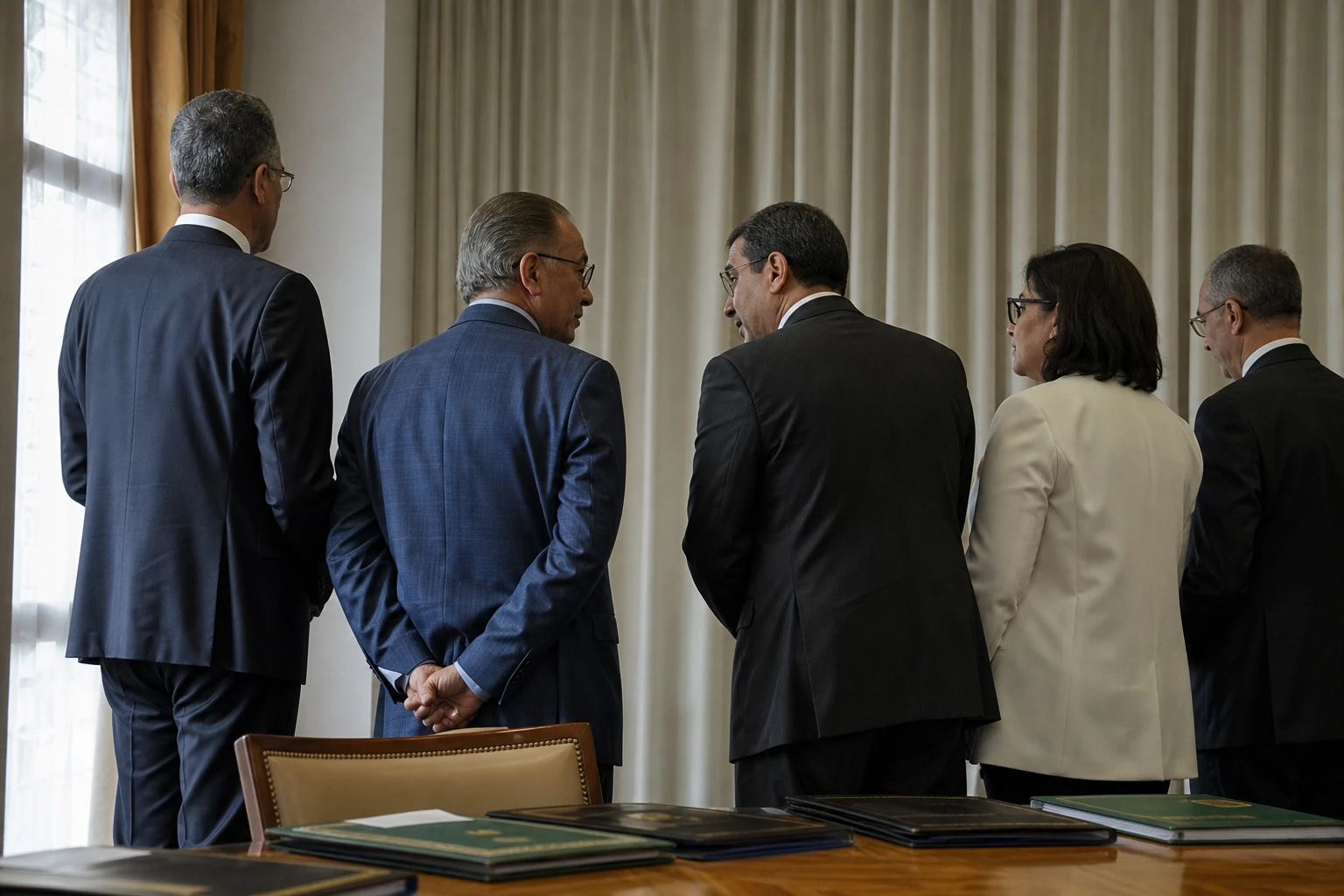
In Rabat, the appointment of Fatima Ezzahra El Mansouri opens a new political chapter. For the first time, Morocco has entrusted the leadership of the government to a woman, in a system where the king retains a central role and the formation of a parliamentary majority remains decisive.
A political first, but no institutional break
King Mohammed VI appointed Fatima Ezzahra El Mansouri head of government on Tuesday 29 September 2026, at the Royal Palace in Rabat. The official statement says she is to form the new government, in accordance with Article 47 of the Moroccan Constitution.
This provision stipulates that the sovereign chooses the head of government from the party that comes first in the legislative elections. The official statement from the Royal Household therefore presents the appointment as the application of the constitutional mechanism, following the victory of the Authenticity and Modernity Party, the PAM.
The legislative election was held on 23 September. The PAM came first with 97 of the 395 seats, according to results reported by several media outlets. However, this first-place finish does not give it an absolute majority. Fatima Ezzahra El Mansouri will therefore have to negotiate a coalition with other parties represented in the House of Representatives.
The account by the African Press Agency confirms the timetable, the PAM’s role and the task entrusted to the new head of government. Moroccan media, including TelQuel, also reported her reception at the Royal Palace and her appointment six days after the election.
A career built between Marrakech and government
Fatima Ezzahra El Mansouri does not take the helm of the executive without national experience. A trained lawyer, she led Marrakech’s city council. She also held the portfolio for National Land Use Planning, Urban Planning, Housing and City Policy in the outgoing government.
She is also coordinator of the PAM’s collective leadership. Founded in 2008, the party is at the centre of Moroccan politics. Its foothold is based in particular on local elected officials, administrative figures and a significant presence in major cities.
Her career thus combines three dimensions: municipal experience, ministerial management and party leadership. This trajectory explains why her appointment rests not solely on the symbolism of becoming the first woman to lead the government.
The appointment also comes at a time when the Moroccan authorities are preparing major infrastructure projects. The country must continue investments linked to the 2030 football World Cup, which it will host with Spain and Portugal. It will also have to meet social expectations over the cost of living, jobs and wages.
A coalition to build in a fragmented parliament
The next step will be political before it is symbolic. Fatima Ezzahra El Mansouri must assemble a parliamentary majority capable of supporting her programme. Morocco’s electoral system makes it difficult for a single party to dominate. The government will therefore have to rely on compromises between several parties.
Negotiations will first involve parties that could join the government. They will then address the allocation of portfolios, economic priorities and the timetable for reforms. The new head of government will also have to maintain unity within her own party, which is organised around a collective leadership.
The PAM has announced that it intends to open consultations with all political parties. This leaves the composition of the future majority undecided. Some parties may prefer to join the opposition, while others will seek to influence the government programme.
For Moroccans, the stakes will be felt above all in daily life. Urban households will keep an eye on prices and access to jobs. In rural areas, expectations focus more on water, roads, health services and social protection. Workers in the informal economy will remain particularly exposed to the effects of inflation and administrative reforms.
Local authorities will also follow the issue closely. Fatima Ezzahra El Mansouri’s experience in Marrakech could strengthen the link between national policies and the needs of cities. However, she will have to manage competing interests among metropolises, medium-sized cities and rural areas.
The symbolism of women’s representation
The appointment marks an important milestone in Morocco’s political history. It places a woman at the head of the executive, after several years of progress in women’s representation in institutions and local authorities.
This advance does not, on its own, resolve the disparities between women and men. A woman’s presence at the top of the state guarantees neither better representation within parties nor equal access to economic responsibilities. The significance of the change will therefore also depend on the place given to women in the next government, in public administrations and in state-owned companies.
The Tunisian precedent had already shown that a woman could lead a government in North Africa. Fatima Ezzahra El Mansouri’s appointment now gives Morocco its own political reference point, rooted in its institutional history and monarchical system.
Regional and African significance
The change will be watched beyond Morocco’s borders. Morocco is a member of the Arab Maghreb Union, which also brings together Algeria, Tunisia, Libya and Mauritania. This regional organisation, established by the Treaty of Marrakech on 17 February 1989, remains poorly integrated politically and economically, but continues to provide a frame of reference for the Maghreb.
The new team will also have to situate its work within Morocco’s African policy. Rabat has strengthened its ties with West Africa, Central Africa and several continental organisations. Moroccan investment, banking exchanges and infrastructure projects give every change of government a regional dimension.
The immediate priority, however, will be domestic. The composition of the coalition, the general policy statement and the first economic decisions will need to be watched. Fatima Ezzahra El Mansouri’s success will be measured less by the historic significance of her appointment than by her ability to turn this first into effective governing power.