
 Algeria
 Egypt
 Libya
 Sudan
 Tunisia
 Benin
 Burkina Faso
 Cabo Verde
 Côte d'Ivoire
 Ghana
 Guinea
 Guinea-Bissau
 Liberia
 Mali
 Mauritania
 Niger
 Nigeria
 Senegal
 Sierra Leone
 The Gambia
 Togo
 Cameroon
 Central African Republic
 Chad
 DR Congo
 Equatorial Guinea
 Gabon
 Republic of the Congo
 São Tomé and Príncipe
 Burundi
 Comoros
 Djibouti
 Eritrea
 Ethiopia
 Kenya
 Madagascar
 Malawi
 Mauritius
 Mozambique
 Rwanda
 Seychelles
 Somalia
 South Sudan
 Tanzania
 Uganda
 Angola
 Botswana
 Eswatini
 Lesotho
 Namibia
 South Africa
 Zambia
 Zimbabwe
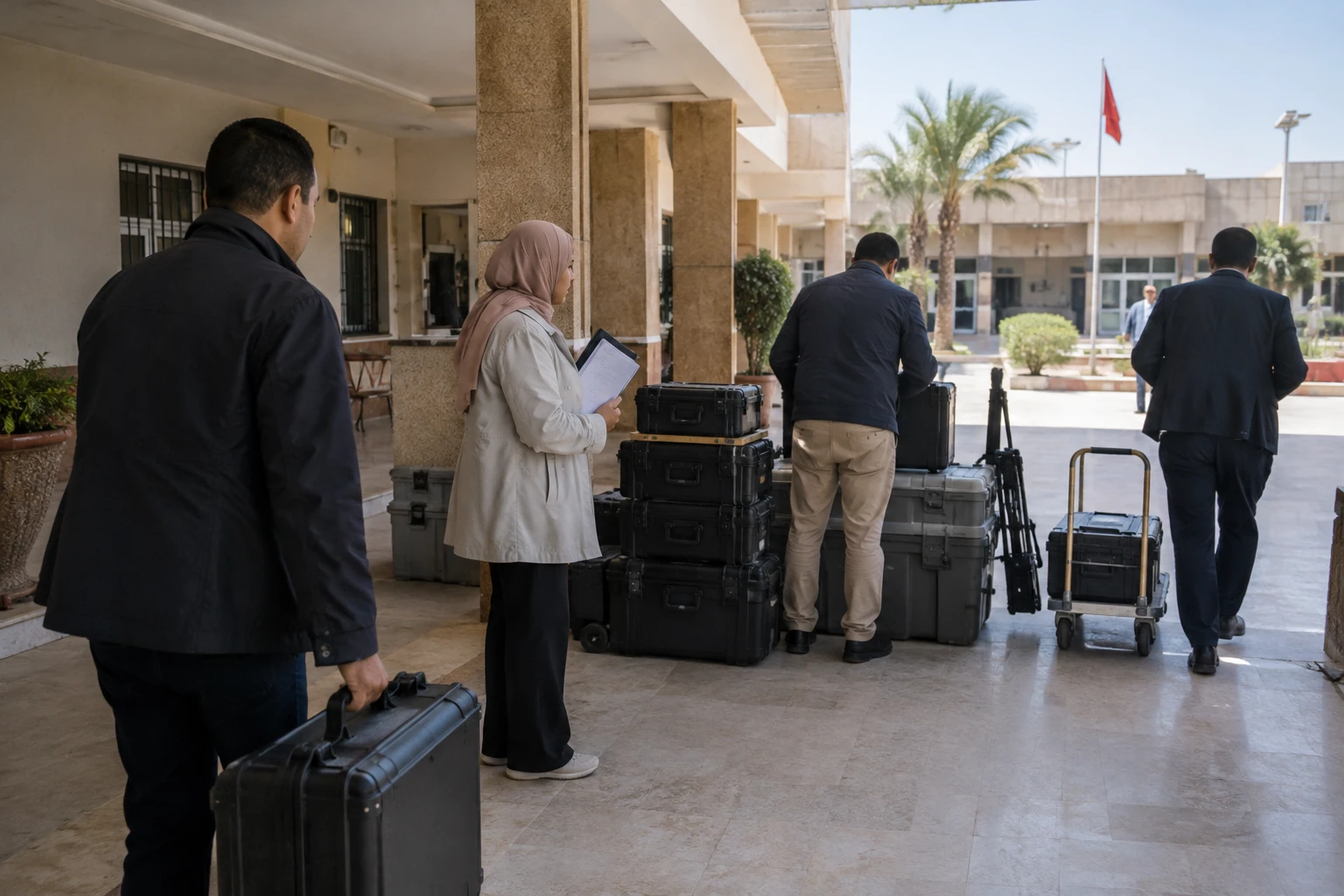
Western Sahara is entering a new phase of uncertainty: since 1er November 2026, MINURSO has had no mandate to continue its operations. The withdrawal settles neither the territory’s status nor the disagreement between Morocco and the Polisario Front. It does, however, remove a UN presence established in 1991 and tasked, among other things, with monitoring the ceasefire.
An old dispute at the heart of regional relations
A former Spanish colony, Western Sahara is claimed by Morocco and by the Polisario Front, a movement that advocates the territory’s independence. Mauritania, also a party to the dispute after Spain’s withdrawal, abandoned its claims in 1979. Algeria supports the Polisario and hosts Sahrawi refugees near Tindouf. This rivalry has long weighed on relations between Rabat and Algiers.
In 1991, after years of conflict, a ceasefire negotiated under the auspices of the United Nations paved the way for the creation of MINURSO. Its mission was to monitor the truce and prepare a referendum allowing Sahrawis to choose between independence and integration with Morocco. The vote never took place, notably because of ongoing disagreements over the identification of eligible voters.
Morocco now advocates an autonomy plan presented in 2007, providing for local management of the territory’s affairs under Moroccan sovereignty. The Polisario and Algeria continue to call for a referendum that includes independence as an option. The African Union counts both Morocco and the Sahrawi Arab Democratic Republic among its member states, an institutional reflection of opposing positions. The continent therefore has no single view of the issue.
Two competing drafts, no mandate renewed
The current sequence follows the renewal adopted in October 2025. Resolution 2797 extended MINURSO’s mandate until 31 October 2026 and called for a strategic review of its future. The Security Council was therefore due to take a fresh decision before that deadline.
On 30 October 2026, the Council failed to adopt two competing texts. Russia vetoed the US draft. Washington’s text proposed, among other things, extending the mission while redirecting it towards Morocco’s autonomy proposal. Moscow then submitted a draft to renew the mandate without changing its framework. It failed to secure the necessary votes, and the United States voted against it.
In the absence of a resolution, the mandate expired on 31 October. The United Nations announced the start of a liquidation phase the following day: a reduced team is to oversee the transfer or disposal of equipment. This operational end does not mean that the UN is abandoning all mediation. Its secretary-general and personal envoy can continue to support political efforts, but the mission no longer carries out its tasks on the ground. Details of the votes and transition are set out in the United Nations information on the end of MINURSO’s mandate.
A claimed diplomatic victory, but no change in status
Morocco’s royal palace welcomed the mandate’s non-renewal. In Rabat, the outcome is presented as an opportunity to advance the autonomy plan and challenge a framework deemed incapable of unlocking the process. For the Polisario, by contrast, the mission’s disappearance removes a framework associated with the referendum and ceasefire monitoring. Algeria has also criticised the US draft.
These political reactions do not, in themselves, change the territory’s international status. Western Sahara remains on the UN list of Non-Self-Governing Territories. The 2025 resolution took Morocco’s autonomy proposal as a basis for negotiations, while also referring to the Sahrawis’ right to self-determination. MINURSO’s end therefore amounts neither to a negotiated settlement nor to universal recognition of Moroccan sovereignty.
The consequences for residents may vary according to where they live and their circumstances. In areas administered by Morocco, the authorities highlight investment and development projects. For displaced Sahrawis living in the Tindouf camps, the issue remains a political outcome and the possibility of eventual return. On the ground, the mission’s presence also made it possible to monitor the military situation on either side of the sand berm. Its withdrawal reduces that capacity for observation, without being enough to predict a resumption of fighting.
The security risk and the role of the African Union
The 1991 ceasefire had already weakened in November 2020, when the Polisario declared that it was resuming hostilities. Since then, incidents and the parties’ conflicting accounts have made the situation difficult to verify. MINURSO did not resolve the conflict, but its observers helped monitor security. Without them, mediators may have access to less independent information, and accusations between the camps may become harder to assess.
The dispute extends beyond the territory’s borders. The diplomatic break between Morocco and Algeria in 2021 further reduced opportunities for dialogue between two major North African neighbours. The crisis also weighs on prospects for regional integration in the Maghreb. At continental level, the coexistence of Morocco and the Sahrawi Arab Democratic Republic within the African Union confronts the organisation with conflicting positions that it cannot ignore.
The next steps will depend on UN initiatives, the parties’ responses and the ability of the Security Council powers to find common ground again. It will also be important to see whether the African Union can help maintain regional dialogue. For now, the mission’s withdrawal marks the end of an on-the-ground mechanism, not the end of the conflict or of the question of self-determination.



