
 Algeria
 Egypt
 Libya
 Morocco
 Sudan
 Tunisia
 Benin
 Burkina Faso
 Cabo Verde
 Côte d'Ivoire
 Ghana
 Guinea
 Guinea-Bissau
 Liberia
 Mali
 Mauritania
 Niger
 Nigeria
 Senegal
 Sierra Leone
 The Gambia
 Togo
 Cameroon
 Central African Republic
 Chad
 Equatorial Guinea
 Gabon
 Republic of the Congo
 São Tomé and Príncipe
 Burundi
 Comoros
 Djibouti
 Eritrea
 Ethiopia
 Kenya
 Madagascar
 Malawi
 Mauritius
 Mozambique
 Rwanda
 Seychelles
 Somalia
 South Sudan
 Tanzania
 Uganda
 Angola
 Botswana
 Eswatini
 Lesotho
 Namibia
 South Africa
 Zambia
 Zimbabwe
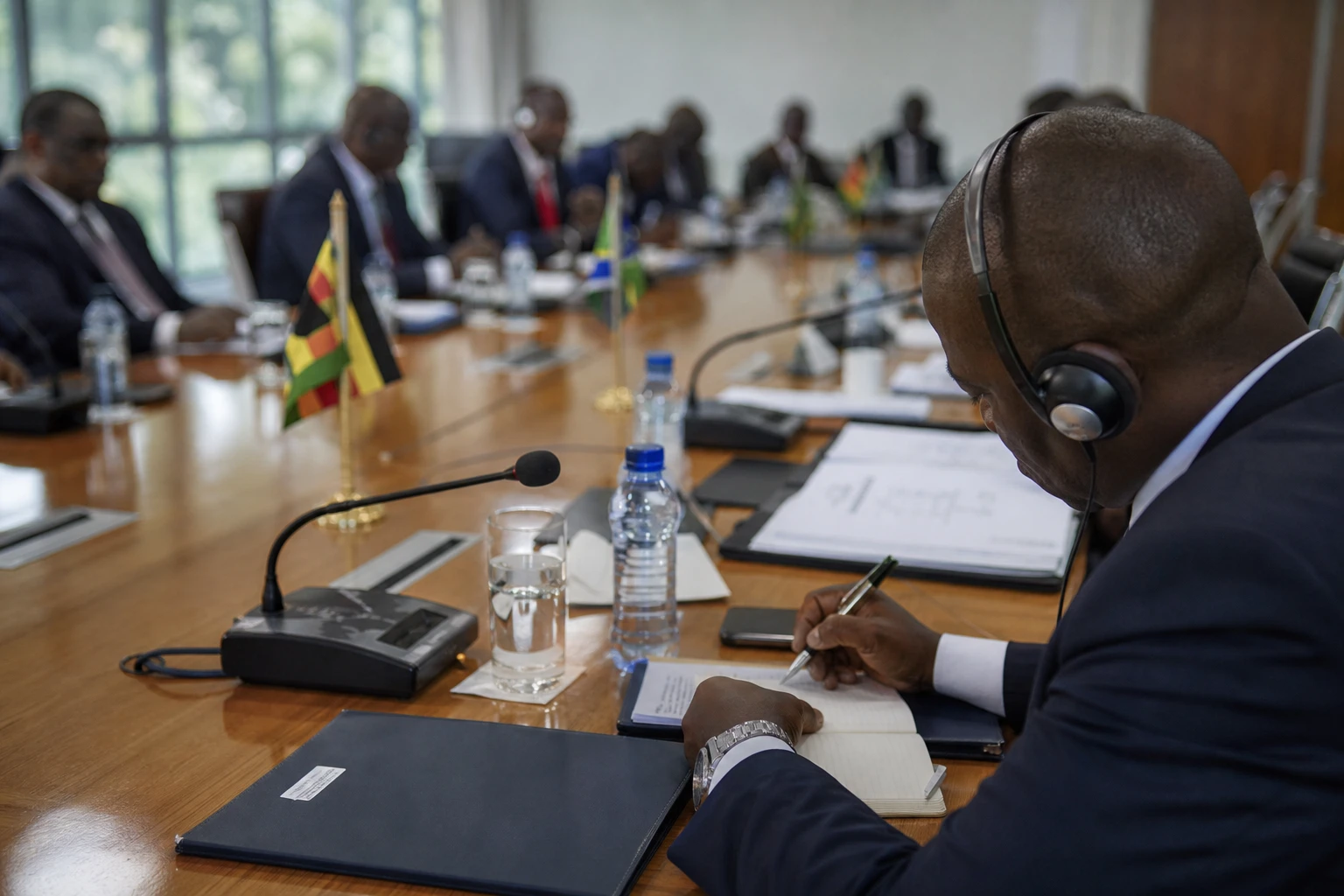
In Minembwe, peace is no longer measured in statements
In the highlands of South Kivu, the question is no longer simply whether a ceasefire exists on paper. It is more straightforward, and more difficult: can the teams tasked with verifying it travel, observe and return with solid facts? In Minembwe, the answer is beginning to take shape on the ground, amid an area where clashes remain possible and every military movement immediately changes the political reading of the conflict.
This local test is part of a broader framework. Since the Doha process, supported by Qatar, DR Congo and the AFC/M23 have agreed to establish a joint ceasefire monitoring and verification mechanism, with technical and logistical support from MONUSCO. The mechanism was designed with an explicitly regional dimension, through the International Conference on the Great Lakes Region, while the African Union, Qatar and the United States are serving as observers.
A mechanism finally ready, but still fragile
On 24 August 2026, the first ceasefire verification mission was announced for Minembwe, in South Kivu, following a reconnaissance mission on 20 August with logistical support from MONUSCO. According to Radio Okapi, the mechanism now comprises three FARDC officers, three AFC/M23 officers, three MONUSCO experts and two representatives from each ICGLR member state. Its stated aim is clear: to monitor implementation of the truce, investigate reported violations and report on them.
This step did not happen overnight. It was prepared through several stages: terms of reference signed in Doha on 2 February 2026, an operationalisation memorandum signed in April, and the arrival in Goma in July of the three officers appointed by Kinshasa to complete the mechanism. In June, MONUSCO also strengthened the mechanism’s material resources in Goma by setting up new offices there, a sign that logistics matter as much as diplomacy when the task is to monitor a shifting frontline.
The move may seem technical. It is nevertheless political. In DR Congo, ceasefire mechanisms often fail at the same point: access to the ground. In Minembwe, the MONUSCO helicopter used for transport is no minor detail. It shows that independent verification still depends on a chain of security arrangements, authorisations and coordination between actors who distrust one another. In eastern DR Congo, peace first runs up against the geography of armed control.
Fighting continues, as do accusations
The deployment comes as hostilities have not ceased. On the same day, the AFC/M23 accused the FARDC of bombing Nyaruhinga, near Minembwe. Kinshasa, for its part, continues to accuse the AFC/M23 and Rwandan forces of serious abuses in areas under their control. Independent verification remains difficult, particularly in the mountainous areas of South Kivu and in several parts of North Kivu where fighting continues.
UN data show the scale of the problem. In its 2026 report, the United Nations Joint Human Rights Office documented 216 violations attributed to the AFC/M23 in June 2026 alone, while also noting violations attributed to the FARDC and the Wazalendo. At this stage, these figures shed light on an essential point: the conflict cannot be reduced to a line between two camps, but is instead a web of violations, reprisals and grey areas in which civilians pay the heaviest price.
The verification mechanism must therefore serve a purpose more ambitious than simply recording events. It can document and attribute violations, and, above all, establish a shared basis of facts. This is vital in a conflict where contradictory statements sometimes generate more noise than truth. For people in Minembwe, Kalehe, Masisi and the corridors between Goma and Bukavu, the stakes are immediate: whether a humanitarian corridor, a school, a market or a transport route can remain open without once again tipping into emergency.
What Minembwe says about DR Congo and the Great Lakes
The issue extends far beyond the town of Minembwe. It says something about how to emerge from a crisis in Central Africa: armed conflict cannot be durably stabilised without a regional framework, credible mediation and a field mechanism capable of crossing frontlines. That is precisely why the Congolese issue involves Doha, MONUSCO, the ICGLR, the African Union and, in the background, the region’s diplomatic balance of power in the Great Lakes.
But the Minembwe step also highlights a limitation. As long as the protocols still to be negotiated remain unfinished, and the parties continue to accuse each other of violations, the ceasefire will remain vulnerable. The coming weeks will show whether field verification becomes a regular de-escalation tool or another episode in a diplomatic process still hostage to the reality of weapons. In eastern DR Congo, that is often where everything is decided: between the written agreement and its ability to withstand the first alert from the front.



