Algeria
 Egypt
 Libya
 Morocco
 Sudan
 Tunisia
 Benin
 Burkina Faso
 Cabo Verde
 Côte d'Ivoire
 Ghana
 Guinea
 Guinea-Bissau
 Liberia
 Mauritania
 Niger
 Nigeria
 Senegal
 Sierra Leone
 The Gambia
 Togo
 Cameroon
 Central African Republic
 Chad
 DR Congo
 Equatorial Guinea
 Gabon
 Republic of the Congo
 São Tomé and Príncipe
 Burundi
 Comoros
 Djibouti
 Eritrea
 Ethiopia
 Kenya
 Madagascar
 Malawi
 Mauritius
 Mozambique
 Rwanda
 Seychelles
 Somalia
 South Sudan
 Tanzania
 Uganda
 Angola
 Botswana
 Eswatini
 Lesotho
 Namibia
 South Africa
 Zambia
 Zimbabwe
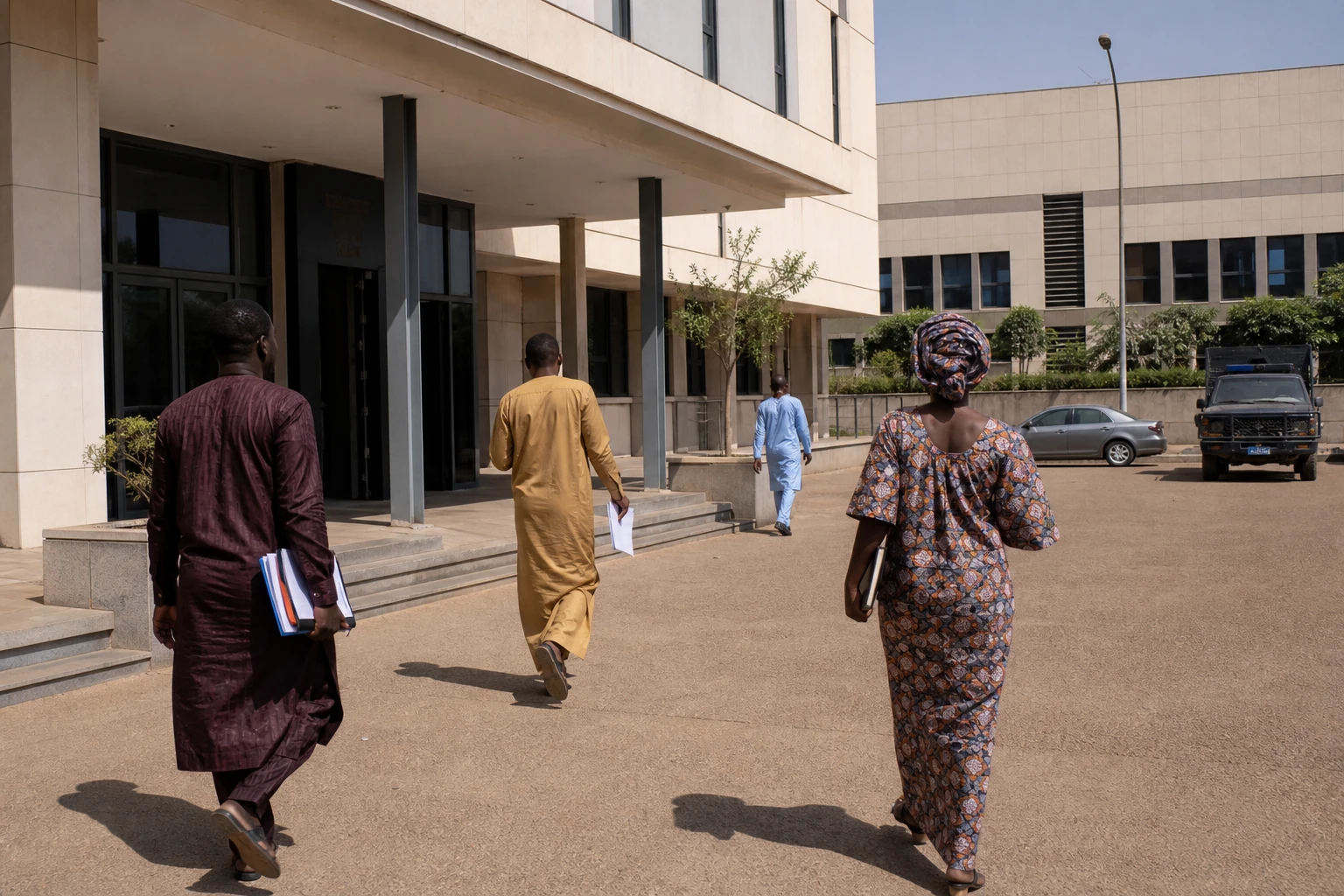
In northern Mali, the battle is no longer fought only on the ground
In Anéfis, in northern Mali, the war is waged as much through weapons as through narratives. Who controls the road to Gao and Timbuktu, who speaks for Tuareg communities, who announces a victory or a death: these factors now carry almost as much weight as military positions themselves. In this unstable landscape, Mali remains at the heart of a conflict in which the state, its Russian partners and local armed coalitions are each seeking to impose their version of events.
The focus of this latest phase is the Kidal region, long a symbol of Bamako’s fragile authority in the north. Anéfis is not just a point on a map: it is a logistical chokepoint between Kidal and Gao, and therefore a strategic passage for military movements and convoys. Since the coordinated offensives in July, followed by counter-offensives announced by the Malian army, the area has become a test of endurance for the Malian Armed Forces, fighters from the Azawad Liberation Front (FLA) and JNIM jihadists, al-Qaeda’s Sahelian affiliate.
A warlord turned symbol of the shifting northern front
Mbareck Ag Akli’s name circulated amid this fog of war. Presented as the FLA’s chief of staff and described by his allies as a “defence minister” of the rebellion, he embodies the convergence of insurgent memory, knowledge of the terrain and information warfare. Reports published in early July said he had been killed after fighting in the Anéfis area. Yet he reappeared shortly afterwards in a video circulated through the rebel camp’s propaganda channels. This episode illustrates less a “resurrection” than a constant of the conflict in Mali: the extreme unreliability of casualty announcements, especially when they come from parties to the fighting.
In this case, claims must be treated with caution. The Malian army has reported intense fighting around Anéfis and operational successes. Independent sources, including Reuters and the Associated Press, have also reported heavy clashes in the same area, with attacks on positions held by the FAMa and their Russian supporters, followed by separatist fighters’ withdrawals or retreats. Precise casualty figures, however, remain disputed and vary widely depending on the parties involved. This is an essential point: in northern Mali, each side seeks to turn a military episode into a political victory.
The presence of the Africa Corps alongside Bamako gives this war a new dimension. This Russian force, which has replaced the Wagner structure in several African theatres, supports the FAMa on the ground. But its involvement also fuels the rhetoric of opponents of the transitional authorities, who portray the conflict as a struggle against the Malian state and its foreign allies. This is precisely what Mbareck Ag Akli exploits in his discourse when he claims a tactical alliance with JNIM. The alliance remains paradoxical: the FLA wants to influence the political future of the north, while JNIM pursues a jihadist agenda. Yet both sides share an immediate objective: to weaken Bamako and its partner forces.
What this tactical alliance reveals about Mali today
For the transitional authorities in Bamako, in power since the coups of 2020 and 2021, the stakes go beyond the defence of Anéfis alone. They must prove that the state still controls its territory, particularly the corridors linking the north to the rest of the country. For civilians, the question is more tangible still: the movement of goods, access to markets, the safety of roads and the protection of displaced families. Every military shift therefore affects the informal economy, trans-Saharan trade and trust in the administration.
The conflict also reveals a major political paradox. Bamako champions a stronger notion of sovereignty and a break with former foreign tutelages. Yet on the ground, this sovereignty now rests on military cooperation with Russia. In response, armed groups in the north are building opportunistic alliances that blur the traditional lines between separatism, community-based insurgency and jihadism. In the Sahel, this reshaping of fronts shows that a conflict is not merely a series of attacks; it is also a struggle to control alliances, routes and the legitimate narrative.
The issue also touches on Mali’s place in its regional environment. The country has left ECOWAS alongside Burkina Faso and Niger, and the three states of the Alliance of Sahel States are now seeking to give shape to closer cooperation. At the same time, their football federations have seen the CAF endorse their declaration of interest in a joint bid to host the 2032 Africa Cup of Nations. This sporting project is not incidental: it expresses a desire to make a collective mark on a stage other than security, projecting capacity, organisation and regional ambition. The CAF has stressed that recognition of interest does not amount to an award, but it has opened the way for a bid.
Between the military front and continental ambition
This coexistence of war and symbolic projection says much about the current moment in Mali. On one side, the fighting in Anéfis and the circulation of contradictory information show that the north remains contested, with the Malian army and its Russian partners facing a mobile, well-informed coalition. On the other, the bid for the 2032 Africa Cup of Nations reflects an effort to normalise politics and assert collective influence within the AES. The two dynamics do not cancel each other out. They coexist, sometimes in the same week, sometimes in the same state narrative.
For African observers, the point to watch is clear: Mali’s trajectory will remain an indicator of the balance of power in the Sahel. If Bamako consolidates its military control in the north, this will strengthen the sovereignty-focused position advanced by the transition and its allies. If, on the contrary, FLA-JNIM coalitions continue to gain ground, political and security pressures will intensify across the central Sahel. In either case, developments to watch extend beyond a single front. They involve regional institutions, the movement of people and goods, and the ability of Sahelian states to turn a defensive alliance into a genuine project for stability.