Algeria
 Egypt
 Libya
 Morocco
 Sudan
 Tunisia
 Benin
 Burkina Faso
 Cabo Verde
 Côte d'Ivoire
 Ghana
 Guinea
 Guinea-Bissau
 Liberia
 Mali
 Niger
 Nigeria
 Senegal
 Sierra Leone
 The Gambia
 Togo
 Cameroon
 Central African Republic
 Chad
 DR Congo
 Equatorial Guinea
 Gabon
 Republic of the Congo
 São Tomé and Príncipe
 Burundi
 Comoros
 Djibouti
 Eritrea
 Ethiopia
 Kenya
 Madagascar
 Malawi
 Mauritius
 Mozambique
 Rwanda
 Seychelles
 Somalia
 South Sudan
 Tanzania
 Uganda
 Angola
 Botswana
 Eswatini
 Lesotho
 Namibia
 South Africa
 Zambia
 Zimbabwe
A residency card can open up access to work and reduce the fear of being stopped. But when obtaining one takes several months and applications are accepted only one day a week, regularisation remains incomplete in everyday life.
In Mauritania, the gap between the ambition to register foreign residents and the experience of people waiting for their papers is at the heart of the debate. In Nouakchott, migrants describe a process that can complicate travel and work before a permit is issued.
An registration policy launched in 2022
Since mid-2022, the Mauritanian authorities have stepped up the registration and regularisation of foreign nationals. The stated aim is to gain a better understanding of the people present in the country and issue them with residency permits. A regularisation campaign was organised at the time by the national civil registration services.
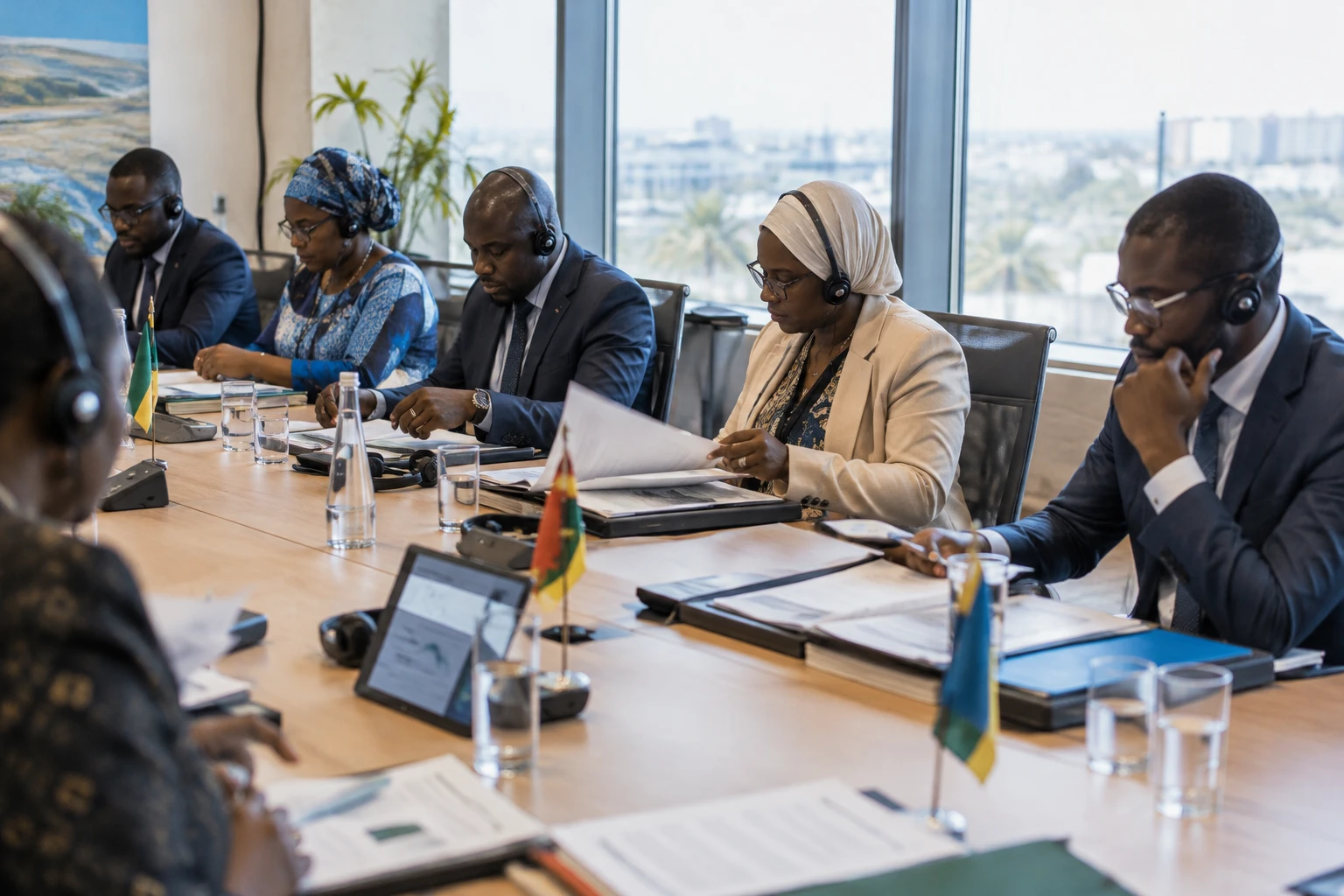
On 13 October 2026, in Nouakchott, the minister delegate responsible for decentralisation and local development announced that about 136,000 foreign nationals from 85 countries had received a regular, free residency permit since 2022. He also referred to the opening of 29 additional border crossing points, bringing the total to 82, and the creation of temporary accommodation centres in Nouakchott and Nouadhibou. These figures were provided by the government. The Mauritanian Information Agency and the Mauritanian outlet Nabd reported the same announcements, without providing an independent count. The official announcement on networks of mayors and regularisation.
The same meeting marked the launch of two networks of mayors: one focused on migration and asylum, the other on citizenship and social cohesion. Municipalities are thus expected to help relay national policies, particularly in border areas, and bring government services closer to local communities.
Between receiving a card and administrative delays
Accounts gathered in Nouakchott show what national statistics do not: the time taken to obtain the document. Ibrahima, who has lived in Mauritania since 2020, says not having a card made work and travel more difficult. He says he can now get around “without being afraid of being arrested by the police”, but reports that processing can take “more than 3 to 4 months”.
Kalidou, who had arrived three months earlier when he gave his account, was still waiting for his permit. He says applications were submitted on Saturdays and believes that accepting them several days a week would make the process easier. These accounts illustrate practical difficulties, but do not establish an average waiting time across the country or show whether the same arrangements apply in every city.
The issue goes beyond the issuing of a card. A prolonged delay can complicate access to formal employment, travel and administrative procedures. People whose livelihoods depend on a daily income have less flexibility to make several trips to the relevant services. Employers and government departments also have to deal with documents still being processed. No public figure cited at the launch of the networks measures the scale of these effects.
Municipalities close to local realities
Creating networks of mayors could improve co-ordination between municipalities, government services and communities. Local elected officials understand the needs of their areas and can flag practical obstacles: submission hours, information about required documents or the distance to service counters. But their role will depend on the resources and responsibilities they are actually given. The announcement of the network does not yet specify how complaints or delays will be tracked.
Official policy links border controls with access to regular residency. According to the minister, opening new crossing points is intended to limit the use of informal routes. For this to have the desired effect, however, administrative procedures must be accessible and predictable. The authorities present territorial control and respect for people’s dignity as two goals to be reconciled; the accounts highlight the potential tension between them when a document is slow to be issued.
Mauritania lies at the crossroads of the Maghreb and West Africa. It is a member of the Arab Maghreb Union and the African Union. It left the Economic Community of West African States (ECOWAS), the West African integration organisation, in 2000, then signed an association agreement with it in 2017. This position makes co-operation with neighbouring countries important, both for cross-border travel and for managing asylum applications and labour migration. An overview of Mauritania’s regional relations.
Tracking figures and waiting times
Regularisation announcements should also be treated with caution. In 2025, during the review of Mauritania by the UN Committee on Migrant Workers, the Mauritanian delegation cited nearly 147,000 foreign nationals regularised during the 2022 campaign. This figure and the 136,000 announced in October 2026 do not necessarily cover the same scope or period. Published information does not allow them to be compared directly. The difference underlines the value of public data specifying dates, permit categories and renewals. The report on the UN committee’s review of Mauritania.
The next challenge, then, will be less about announcing the number of cards issued than documenting how the service operates: waiting times, how often applications are accepted, geographical distribution and renewal arrangements. For the migrants concerned, a more consistent process will determine whether regularisation is merely a large-scale administrative exercise or a genuinely practical route to legal residency.