Algeria
 Egypt
 Libya
 Morocco
 Sudan
 Tunisia
 Benin
 Burkina Faso
 Cabo Verde
 Côte d'Ivoire
 Ghana
 Guinea
 Guinea-Bissau
 Liberia
 Mali
 Niger
 Nigeria
 Senegal
 Sierra Leone
 The Gambia
 Togo
 Cameroon
 Central African Republic
 Chad
 DR Congo
 Equatorial Guinea
 Gabon
 Republic of the Congo
 São Tomé and Príncipe
 Burundi
 Comoros
 Djibouti
 Eritrea
 Ethiopia
 Kenya
 Madagascar
 Malawi
 Mauritius
 Mozambique
 Rwanda
 Seychelles
 Somalia
 South Sudan
 Tanzania
 Uganda
 Angola
 Botswana
 Eswatini
 Lesotho
 Namibia
 South Africa
 Zambia
 Zimbabwe
A new school year is about more than staffing levels
In Nouakchott, the start of the school year is not simply about opening classrooms and handing out exercise books. It is a very practical test of the Mauritanian state’s ability to deliver on a political promise that has become central: making public school a shared place for all children, whatever their neighbourhood, family language or income. This is the challenge at the heart of the “republican school”, a key part of the education reform launched under President Mohamed Ould Cheikh El Ghazouani.
The issue goes beyond the school calendar. In Mauritania, the quality of education affects social cohesion, the mobility of urban and rural households, and the credibility of public policy. The country also operates in a regional environment where comparisons matter: it belongs to the African Union and the Arab Maghreb Union, but not ECOWAS. Its schools must therefore meet strong national expectations while remaining relevant in a Sahelian and Maghreb space where competition for skills is real.
The heart of the plan: recruit, reorganise, absorb
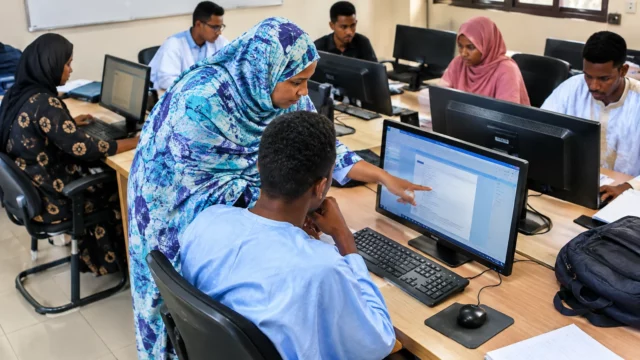
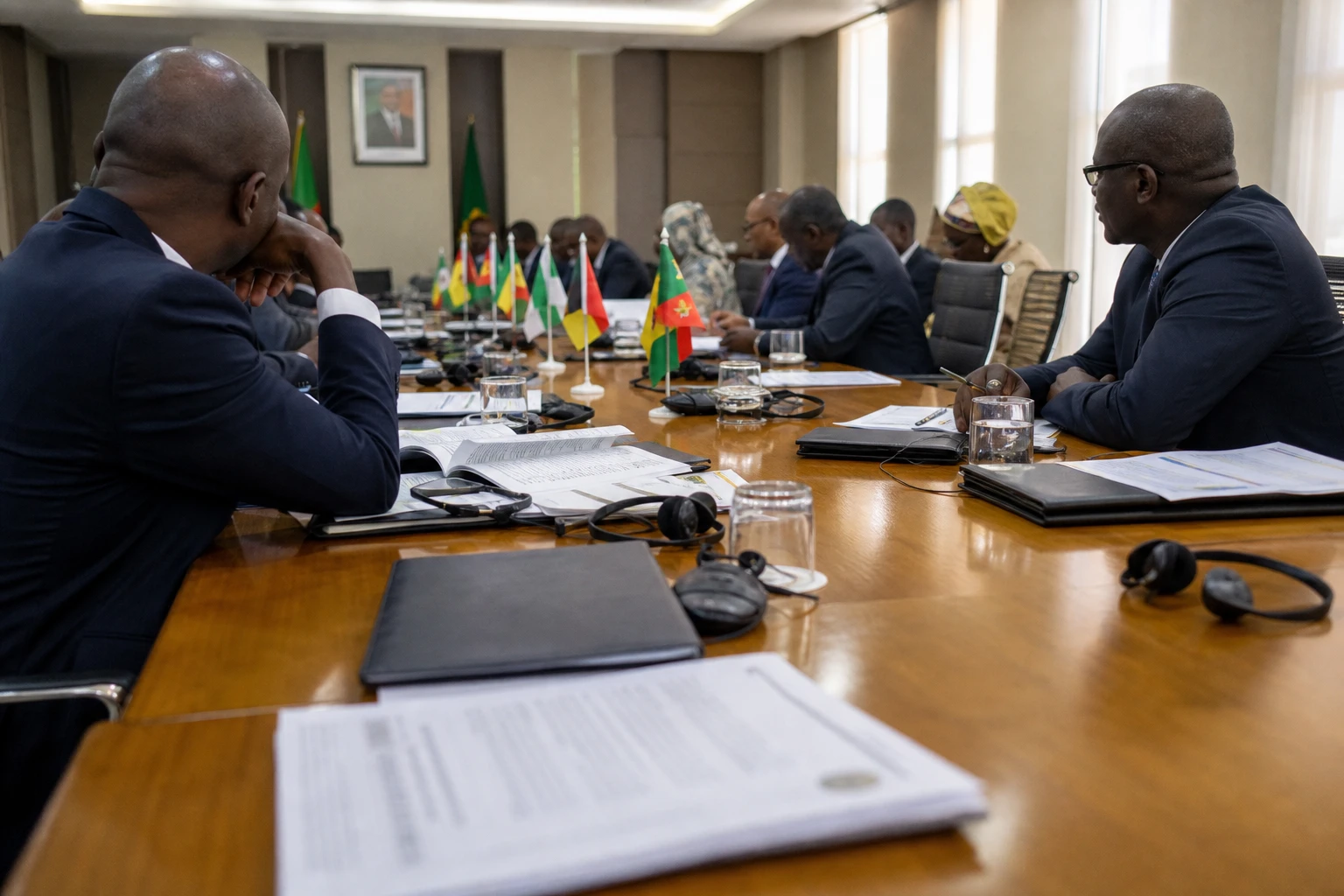
In mid-August 2026, Mauritania’s education ministry prepared a recruitment examination for 3 852 staff for the sector. The announcement was made in Nouakchott at a joint meeting with the civil service and digital transformation ministries and the National Competitions Commission. The government describes the operation as one of the largest in recent years, aimed at strengthening the education system’s human resources and supporting the expansion of the republican school.
In detail, the campaign is to cover several profiles, including 1 000 senior teachers, 1 000 teachers in training, 553 direct recruits and 167 contract staff whose positions are to be regularised, according to the government document reported by state media. This expansion addresses a straightforward constraint: without enough staff, a reform remains an architecture on paper. The ministry also stressed the use of digital solutions and the transparency of the examination, an important political signal in a country where access to public service jobs is closely watched.
This approach is not new. In 2022, the executive presented the reform as a fundamental overhaul, with unified curricula, harmonised examinations and stronger teaching teams. The authorities have also highlighted teacher training and curriculum revision, with the aim of giving all children a shared school system rather than one operating at several speeds.
Results still too weak to convince
The problem is that national examinations paint a less flattering picture than the official narrative. For the 2026 ordinary baccalaureate session, the education minister announced a pass rate of 13.56 %. The official results published on the ministry’s website include the document “2026 Baccalaureate Results”, while several independent Mauritanian media outlets have confirmed the figure, citing the same ministerial assessment.
The total is stark: 8 188 passes out of 60 376 actual candidates. This means that about 76 % of candidates failed the first session, according to data released after the results were announced. A year earlier, Mauritanian media had already reported a 28 % pass rate for an earlier session, pointing to a sharp deterioration in performance rather than sustained improvement.
The debate is all the more heated because weaknesses emerge long before the baccalaureate. The latest available data on the sector still show overcrowded classes and shortages of materials. UNICEF notes that primary schools had a ratio of 25.6 pupils per teacher in 2023-2024, with a shortage of 67 595 desk-benches in primary schools and 571 missing classrooms at secondary level, according to its budget analysis. The organisation also says that 45 % of school-age children in Mauritania are estimated to be out of school, or about 455 000 children.
Learning without mastering: the core problem
The most telling figures are not only pass rates, but actual learning outcomes. The 2024 SDI survey, referenced in the national statistical database, shows that foundational learning remains weak in Mauritania. According to results published by technical partners in the sector, only 35 % of pupils in the fourth year of primary school can read a simple sentence in Arabic, and even smaller proportions can do so in French; performance in mathematics is also very low.
These difficulties point to issues broader than failure in an examination. They reflect the language of instruction, teachers’ level of training, overcrowded classes and schools’ actual ability to turn enrolment into learning. In short, recruiting more staff is necessary, but not enough. Without appropriate textbooks, effective learning time, pedagogical support and ongoing training, schools take in children without always helping them progress at the expected pace.
The government is nevertheless seeking to show that there are pockets of success. It highlights the “Okhouwa” programme for pupils from disadvantaged backgrounds, which is said to have achieved a 64.3 % pass rate in the ordinary session. This is a useful but partial signal: it concerns a targeted population and is not enough to assess the system as a whole. The minister has also argued that an education system cannot be judged by the baccalaureate alone, a reasonable point as long as it does not obscure the gap between the reform’s ambitions and results that remain too fragile.
What Mauritania is watching, and what the region is observing
For families, the stakes are immediate: a more effective public school reduces dependence on private schools, which are often more expensive, and can ease the pressure on low-income households, particularly in Nouakchott’s working-class neighbourhoods and in rural areas where provision remains more limited. For the state, it is also a question of national cohesion. The republican school must bring together children from different backgrounds under a common framework, without creating an invisible hierarchy between regions, school tracks and languages.
At continental level, Mauritania’s case matters because it brings together several African challenges at once: expanding primary education, improving learning outcomes, training teachers, budget governance and territorial equity. What happens next will depend on the ministry’s ability to turn the 3 852 posts into a real presence in classrooms, and then into measurable progress in upcoming examination sessions. This is where the reform will be judged, far more than by announcements.