Algeria
 Egypt
 Libya
 Morocco
 Sudan
 Tunisia
 Benin
 Burkina Faso
 Cabo Verde
 Côte d'Ivoire
 Ghana
 Guinea-Bissau
 Liberia
 Mali
 Mauritania
 Niger
 Nigeria
 Senegal
 Sierra Leone
 The Gambia
 Togo
 Cameroon
 Central African Republic
 Chad
 DR Congo
 Equatorial Guinea
 Gabon
 Republic of the Congo
 São Tomé and Príncipe
 Burundi
 Comoros
 Djibouti
 Eritrea
 Ethiopia
 Kenya
 Madagascar
 Malawi
 Mauritius
 Mozambique
 Rwanda
 Seychelles
 Somalia
 South Sudan
 Tanzania
 Uganda
 Angola
 Botswana
 Eswatini
 Lesotho
 Namibia
 South Africa
 Zambia
 Zimbabwe
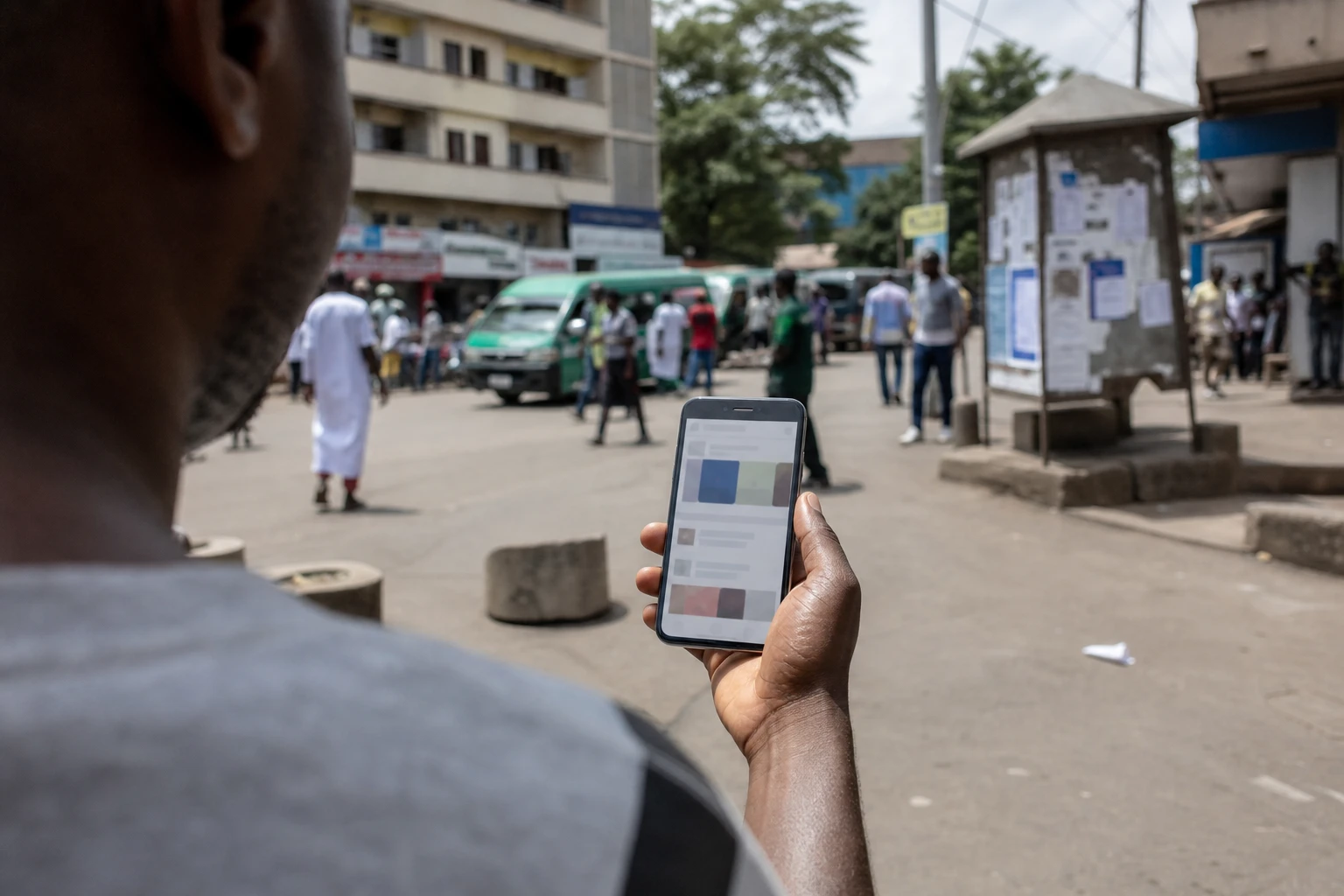
In Forécariah, a discovery that goes beyond a local tragedy
In Forécariah prefecture, in southern Guinea, the discovery of six bodies in a mass grave is not just a local tragedy. It touches on a broader issue: trust in the justice system, the protection of people and the Guinean state’s ability to establish the facts in a sensitive case. In this border area of Lower Guinea, near Sierra Leone, every unverified report quickly fuels rumours. That is also why the demand for precise answers is so strong.
The case comes as Forécariah occupies a strategic place in Guinea’s balance of interests. The prefecture is at the heart of several infrastructure projects linked to the Simandou project, particularly around the port of Morebaya, and remains an area shaped by issues of transport, security and land-use planning. At the same time, Guinea has been in political transition since the coup d’état of 5 September 2021, under General Mamadi Doumbouya, with strong expectations regarding the rule of law and institutional transparency.
What is known about the discovery
The established facts are as follows: on 24 August 2026, six unidentified bodies were discovered in a forested area in the Sabakhouré sector, in the sub-prefecture of Allassoyah, Forécariah prefecture. According to initial reports carried by several Guinean media outlets and the international press, all the victims were men. Their hands were tied and their eyes were blindfolded. The bodies were then taken to the mortuary at Forécariah prefectural hospital, where forensic examinations are expected to shed light on the causes of death.
Guinea’s judicial authorities have announced the opening of an investigation, but no detailed judicial statement has yet been made public. In a case of this kind, caution is essential: the victims’ identities, the circumstances of their deaths and any possible responsibility of armed or civilian actors must be established through physical evidence, autopsies and corroborated testimony. For now, these are hypotheses, not conclusions.
The reaction from Paris has added a diplomatic dimension to the case. France’s foreign ministry said it was “deeply moved” by the discovery of the six bodies and called for an investigation conducted “with complete independence and transparency”. This statement is not insignificant, but it obviously does not replace the work of Guinea’s justice system. Above all, it reflects the sensitivity of the case in a country where violence committed outside any judicial framework has fuelled civil society’s concerns for several years.
A case crystallising political and public expectations
In Guinea, civil society immediately called for the truth to be established. Organisations such as Tournons la page Guinée and the National Front for the Defence of the Constitution, the FNDC, have called for a serious investigation capable of identifying the victims and determining the causes of death. Their demand is rooted in a recent history marked by political violence, disputed arrests and recurrent allegations of abuses in the treatment of opponents or citizens perceived as hostile to the authorities.
The sensitive issue here is not just the discovery of the bodies. It is the judicial handling of a case that bears on the credibility of institutions. If the investigation progresses swiftly and on the basis of documented evidence, it could reinforce the idea that the authorities intend to break with opacity. If it stalls, it will instead fuel distrust, particularly at a time when Guinea’s transition is being closely watched by regional organisations and the Economic Community of West African States, ECOWAS, which is highly attentive to constitutional guarantees and a return to civilian rule.
For the people of Allassoyah and Forécariah, the issue is first and foremost concrete. They want to know who these men were, where they came from, who buried them there and why. For families, the investigation is often a time of anguish. For local authorities, it is a test of coordination between the police, the justice system, health services and the territorial administration. And for the security forces, it is an obligation to be clear, because any lack of transparency fuels suspicions of extrajudicial killings or score-settling.
What this investigation will say about Guinea
Forécariah is not just a point on the map. It is a frontier prefecture, crossed by trade routes and mining projects, and subject to the usual tensions of transit areas. What is discovered there, or left unclear, often has national significance. A credible investigation into this mass grave will say much about how Guinea handles sensitive cases during a transition: with robust procedures, or with announcements that lead nowhere.
The implications also extend beyond Guinea’s borders. In a West Africa marked by military transitions, crises of confidence and growing demands for public transparency, every case of this kind becomes a barometer. It shows whether the judicial system can work without pressure, whether local institutions report information rigorously, and whether potential victims finally receive an answer worthy of their fate. For Guinea and its neighbours, the real challenge is therefore not simply to announce an investigation. It is to pursue it to the end, with established facts, named responsibilities and results made public.
At this stage, the Sabakhouré case is a reminder of one simple point: in a country seeking to consolidate its institutions while pursuing major economic projects, citizens’ legal security matters as much as infrastructure. A mass grave discovered in Forécariah therefore tells a story that is about more than tragedy. It raises questions about the Guinean state’s ability to protect, investigate and account for its actions, without delay or ambiguity.