Algeria
 Egypt
 Libya
 Morocco
 Sudan
 Tunisia
 Benin
 Burkina Faso
 Cabo Verde
 Côte d'Ivoire
 Ghana
 Guinea
 Guinea-Bissau
 Liberia
 Mali
 Mauritania
 Niger
 Nigeria
 Senegal
 Sierra Leone
 The Gambia
 Togo
 Cameroon
 Central African Republic
 Chad
 Equatorial Guinea
 Gabon
 Republic of the Congo
 São Tomé and Príncipe
 Burundi
 Comoros
 Djibouti
 Eritrea
 Ethiopia
 Kenya
 Madagascar
 Malawi
 Mauritius
 Mozambique
 Rwanda
 Seychelles
 Somalia
 South Sudan
 Tanzania
 Uganda
 Angola
 Botswana
 Eswatini
 Lesotho
 Namibia
 South Africa
 Zambia
 Zimbabwe
In the east of the Democratic Republic of the Congo, armed violence threatens not only residents. It also cuts off roads, empties health facilities and complicates an Ebola response already under pressure. In Mambasa, Ituri, attacks attributed to the Allied Democratic Forces (ADF) have killed at least 35 people, according to a local toll updated on 13 November. Further incursions reported the previous day have no confirmed death toll.
Attacks spreading between Ituri and North Kivu
The latest incidents have taken place in a border area where the ADF has been active for years. The group, which originated in Uganda, operates in eastern Congo and pledged allegiance to the Islamic State group in 2019. The Congolese and Ugandan armies are conducting joint operations against it, but have not ended its attacks on civilians.
In Mambasa, a territory in Ituri province, residents were killed in several localities in the Babila Babombi chiefdom. The attacks hit Mingazi, Amani, Lelesi and Mitume, among other places. According to customary authorities and human rights defenders quoted by Radio Okapi, the toll stood at 35 dead and 14 people missing on Wednesday 11 November. Twelve houses and nine motorbikes were also reportedly set on fire.
The following day, Thursday 12 November, further incursions were reported in Dondola, Makembise and at Kisangani camp. As the locations are difficult to reach, local sources were unable to establish the toll. The territory administrator says military operations are under way. Customary authorities and human rights activists, meanwhile, are calling for greater protection for residents.
These figures should be treated with caution. The affected areas remain partly inaccessible and the tolls change as residents return. Another local alert, published on 10 November, reported at least 40 bodies found since the beginning of the month in several villages in the Bakaiku groupement. This toll covers a period and locations that may overlap with other reports, so it cannot simply be added to the 35 deaths recorded subsequently.
In Cantine, insecurity also disrupts Ebola care
The surge in violence follows a deadly attack in Cantine-Aloya, in Beni territory, North Kivu, on the night of 5–6 November. Africa CDC, the African Union’s public health agency, condemned the attack on 8 November and attributed it to the ADF, with the caveat that it “was reportedly carried out” by the group. A local civil society official had put the provisional toll at at least 33 dead. This figure is not a final toll.
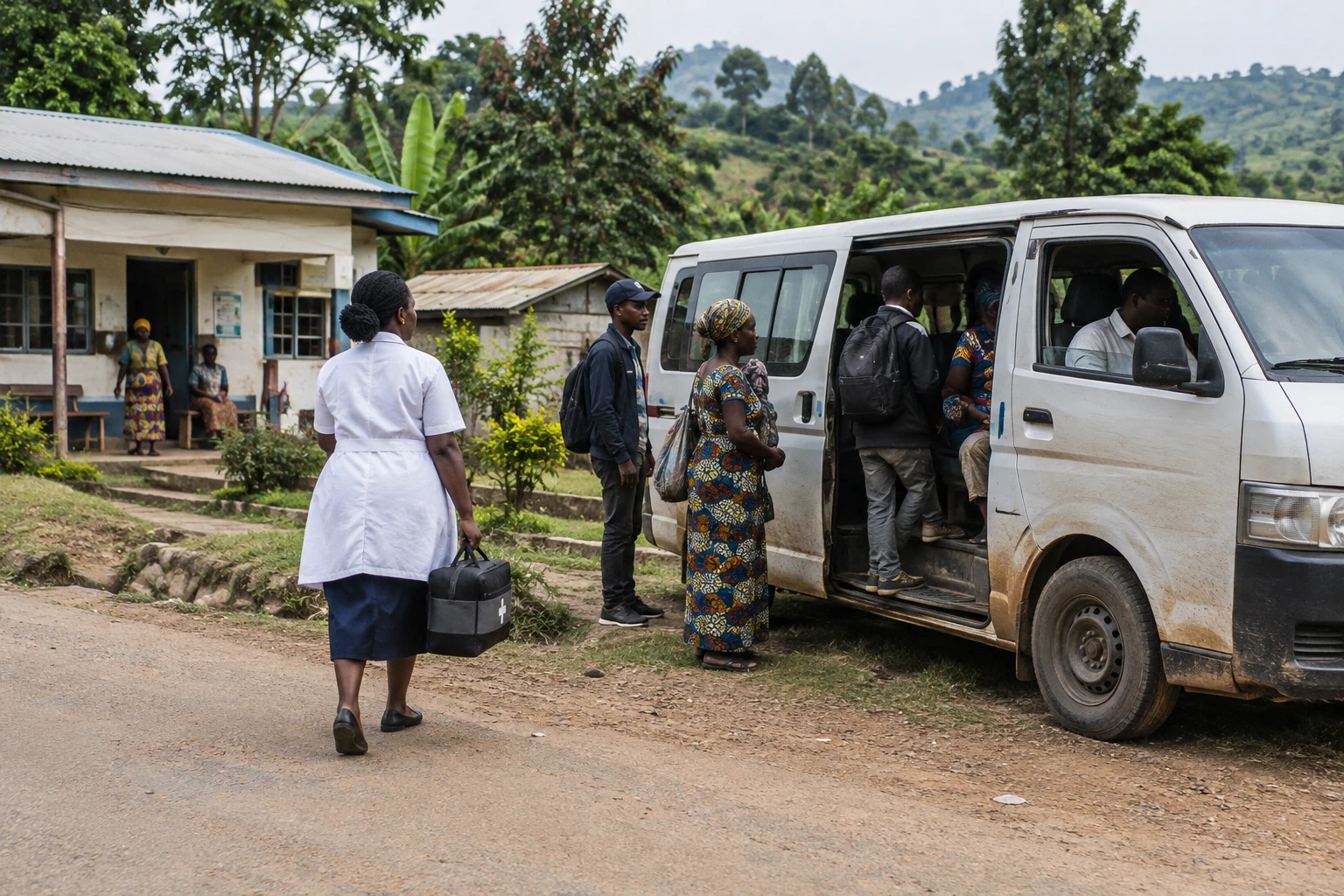
The attack also disrupted medical care. Patients fled Kelekele hospital, some of whom were suspected of having Ebola, according to medical officials quoted by Actualité.cd. Africa CDC warned of the risks associated with interrupted treatment, monitoring of contacts and disease surveillance. The agency called for civilians, medical teams and health facilities to be protected.
The context makes these departures particularly concerning. The ongoing Ebola outbreak affects Ituri and North Kivu, two provinces where insecurity already limits access to communities. In its situation report as of 1 November, the Congolese health ministry reported confirmed cases and deaths in several health zones in these provinces. In rural areas, displacement can interrupt medical monitoring and make it harder to identify people who have been in contact with a patient.
Consequences beyond the death toll
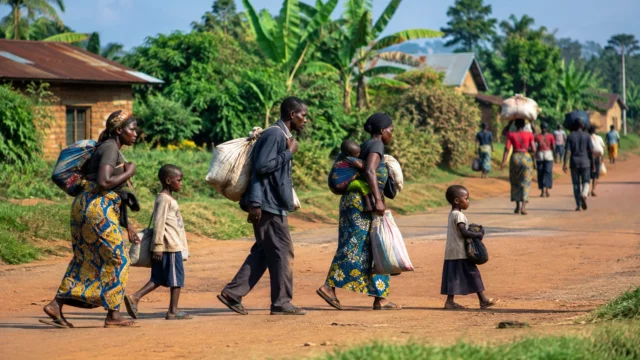
In Mambasa, the attacks are also hitting everyday activities. Local sources report that residents are being targeted in villages and agricultural areas. Fields, journeys between localities and markets are becoming more dangerous. For households dependent on farming or small-scale trade, a blocked road or a hurried flight often means lost income and reduced access to essential goods.
The crisis affects different groups in different ways. Families in the targeted localities face deaths and destruction directly. Displaced people have to seek shelter elsewhere, while healthcare workers and surveillance teams may lose access to their patients. Residents of more distant centres are also affected when transport routes are disrupted and services have to meet new needs.
The region is also marked by the presence of several armed forces and operations on both sides of the border between the DRC and Uganda. This military cooperation does not remove the difficulties of protecting people on the ground. Local officials report an insufficient security force presence in some areas, while the administration says operations are under way. These accounts reflect differing assessments of the situation; on their own, they do not make it possible to gauge the effectiveness of the operations.
A regional security and public health challenge
For the DRC, the urgent priorities are twofold: protecting residents and keeping health services accessible. Ituri and North Kivu are Congolese provinces, but population movements and cross-border links give security and health surveillance a regional dimension. A prolonged disruption to care could complicate the response beyond a single locality, although this does not mean cross-border transmission has already been established.
The response involves both Congolese authorities and continental institutions. Africa CDC has stressed that health facilities and workers must be able to operate without violence. The African Union has also expressed support for coordination of the Ebola response in the DRC and Uganda. The challenge is to turn these calls into safe, regular access to affected localities, while ensuring provisional tolls are not presented as final.
In the coming days, changes in the toll in Mambasa, access to villages that remain isolated, and the resumption of monitoring of patients and contacts after the Cantine attack will be key indicators. Military authorities say operations are under way; communities are calling for greater protection. Between these two assessments, the ability to secure roads and maintain healthcare will show whether residents can resume their activities without risking further incursions.