Algeria
 Egypt
 Libya
 Morocco
 Sudan
 Tunisia
 Benin
 Burkina Faso
 Cabo Verde
 Côte d'Ivoire
 Ghana
 Guinea
 Guinea-Bissau
 Liberia
 Mauritania
 Niger
 Nigeria
 Senegal
 Sierra Leone
 The Gambia
 Togo
 Cameroon
 Central African Republic
 Chad
 DR Congo
 Equatorial Guinea
 Gabon
 Republic of the Congo
 São Tomé and Príncipe
 Burundi
 Comoros
 Djibouti
 Eritrea
 Ethiopia
 Kenya
 Madagascar
 Malawi
 Mauritius
 Mozambique
 Rwanda
 Seychelles
 Somalia
 South Sudan
 Tanzania
 Uganda
 Angola
 Botswana
 Eswatini
 Lesotho
 Namibia
 South Africa
 Zambia
 Zimbabwe
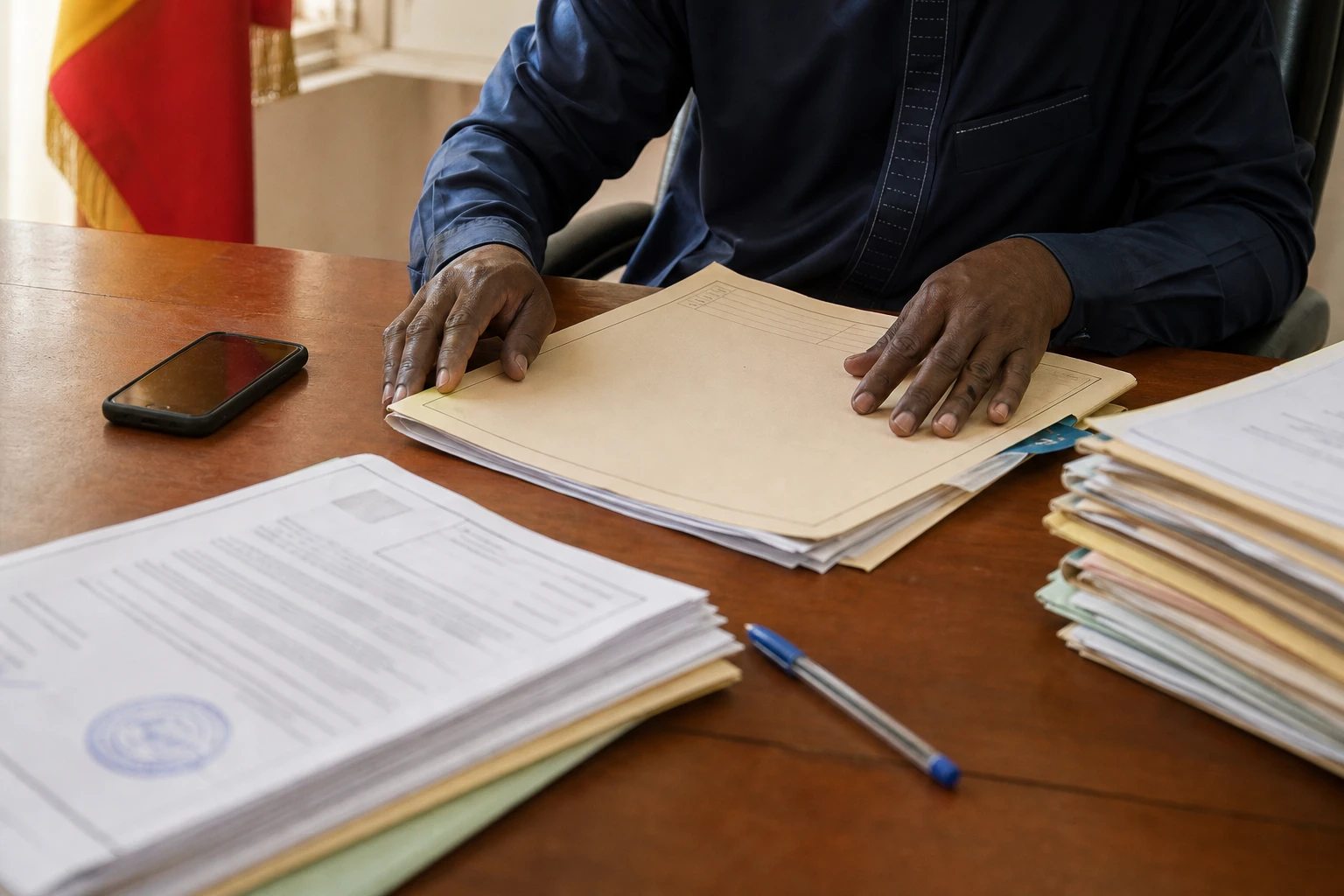
In Bamako, the question is not only military. It is first and foremost about sovereignty, everyday security and the message sent to the entire Sahel region.
For several days, a troubling rumour has been circulating about Mali: the United States is reportedly examining military options against JNIM, the Group for the Support of Islam and Muslims, which is active in several parts of the country. In Bamako, the foreign ministry has responded cautiously. It says it has received no official confirmation from Washington and stresses that no partnership can be built without respect for Mali’s sovereignty. In a country where war already weighs on roads, markets and travel, the slightest prospect of foreign intervention immediately becomes a major political issue.
A Mali already reshaped by war, diplomatic ruptures and alliances of convenience
The context is familiar, but it has changed quickly. Mali has no longer been a member of ECOWAS since 29 January 2025, following the joint departure of Burkina Faso and Niger, a rupture that has redrawn the West African balance. At the same time, Bamako has drawn closer to its partners in the Alliance of Sahel States, created in September 2023 with Ouagadougou and Niamey. This realignment weighs on any outside reading of the Malian situation, because a US intervention would not be an isolated act: it would take place in a Sahelian region now less anchored to the West African institutional frameworks of the past.
The situation on the ground remains unstable. In April 2026, coordinated attacks struck several Malian localities. Casualty figures were difficult to establish immediately, but both the authorities and international agencies confirmed the offensive’s seriousness. On 4 July 2026, the African Union condemned further coordinated attacks in the north, centre and south of the country. A few weeks earlier, the Malian army said it had repelled attempted assaults in Gao, Sévaré and Aguel-Hoc. These developments show one simple thing: security pressure is no longer confined to a single region, and it no longer affects only the army. It also affects civilians, trade routes and the authority of the state.
Verified facts: an option discussed in Washington, but not confirmed in Bamako
The controversy began with a 22 July 2026 report that the Trump administration was studying military options in Mali against JNIM. The issue resurfaced on 24 July, when remarks attributed to Mali’s foreign minister, Abdoulaye Diop, were reported in Bamako: he did not rule out cooperation with the United States, but said that, at this stage, there was neither official US confirmation nor a formal announcement of an operation. This distinction is essential. It separates what is a press report about a possibility from what constitutes a state decision. As of now, the only firm fact is that political discussions have taken place and Bamako is monitoring the situation closely, not that an intervention has begun or been approved.
The issue is all the more sensitive because relations between Bamako and Washington have recently become strained, while channels remain open. The US State Department updated its travel advisory for Mali on 2 July 2026, citing the presence of terrorist groups including JNIM and ISIS-Sahel, as well as severe travel restrictions. For its part, the Malian government has suspended the issuance of visas to US citizens since 1 January 2026, with limited exceptions. Yet diplomats continue to talk: on 30 June 2026, Mali’s foreign minister took part in a celebration in Bamako marking the 250th anniversary of US independence. This confirms a frequent diplomatic reality in the Sahel: even when political positions harden, channels remain open.
What a US presence in Mali would — or would not — change
Substantively, a possible US military option would raise three questions. First, the mandate. A targeted strike, discreet cooperation or a longer-term presence do not carry the same political meaning. Second, the local partner. Mali has made sovereignty a central marker of its military-led transition, and any foreign cooperation would be judged by that standard. Finally, effectiveness. The attacks of 2026 have shown that a security apparatus, even when supported by new allies, is not enough on its own to regain the upper hand when armed groups move between the north, centre and borders. For the population, the issue is not diplomatic prestige; it is much more concrete: being able to travel, farm, trade, send children to school and maintain basic services.
The equation is also regional. Mali, Burkina Faso and Niger have chosen to leave ECOWAS and move forward within the AES, an architecture that is still young but already visible politically and in security matters. A US action, even a limited one, would immediately be seen in Niamey and Ouagadougou as a test of sovereignty for the Sahelian confederation. It would also be watched in Algiers, Dakar, Abuja and Addis Ababa, as the African Union seeks to prevent the Sahel from sliding into a succession of uncoordinated interventions. The positions taken by the AU and its Commission on Human and Peoples’ Rights after the July attacks illustrate precisely this concern: to contain the violence without detaching the security response from African frameworks.
Continental significance: the Sahel remains a political laboratory as much as a security front
In Mali, the episode is a reminder of a very current African constant: responses to terrorism are no longer shaped solely on the military front. They also depend on the legitimacy of authorities, regional coordination, the flow of information and states’ ability to speak with one voice. If Washington goes further, it will have to navigate a fragmented Sahelian environment, authorities protective of their autonomy and public opinion that has already seen several security paradigms come and go. If, by contrast, this is merely a diplomatic trial balloon, then the episode will mainly show this: Mali remains a major focal point for security rivalries in the Sahel, and Bamako still intends to control the narrative of its own war.